





Definition and Meaning of a Project Charter
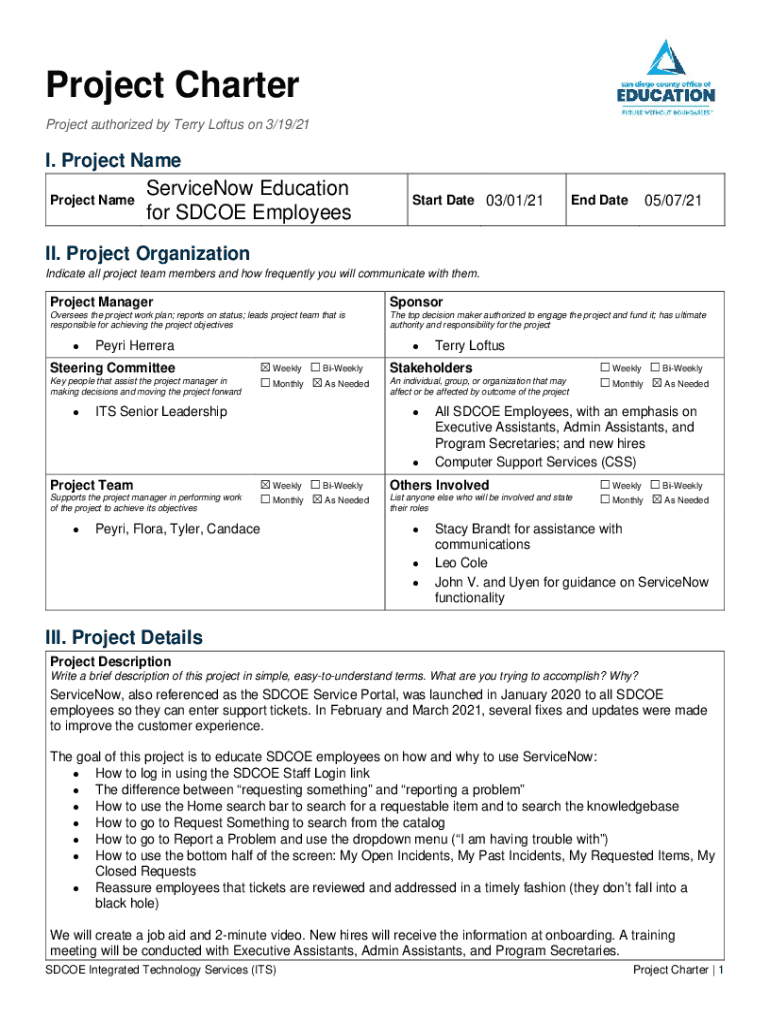
A Project Charter is a foundational document in project management that outlines the objectives, governance, and scope of a project. Serving as an agreement between the project's sponsor and the project manager, it delineates critical components such as goals, deliverables, timelines, and resources. This document is pivotal for aligning all stakeholders on the project's purpose and scope. It establishes authority and defines the roles involved, thus acting as a vital reference throughout the project's lifecycle. A well-crafted Project Charter acts as both a guide and a contract, ensuring clarity of purpose and direction for all team members.
Key Elements of the Project Charter
The Project Charter comprises several essential elements to function effectively as a guiding document.
- Project Objectives: Clearly articulated goals that the project aims to achieve.
- Scope Statement: Defines what is included in the project and what is excluded.
- Stakeholders: Identification of key stakeholders, including sponsors, team members, and end-users.
- Milestones and Deliverables: Specific phases and outputs that must be completed for project success.
- Budget and Resources: Financial resources and other assets required to complete the project.
- Risk Management: Potential obstacles and strategies for mitigation.
Each component serves a unique purpose, offering a comprehensive overview of the project from its initiation to its conclusion.
How to Use the Project Charter
The Project Charter is not just a static document; it is a dynamic tool utilized by project managers and stakeholders throughout the project lifecycle. Initially, it provides a framework for planning and sets the boundaries within which the project must operate. As the project progresses, it acts as a reference point to monitor and ensure alignment with initial objectives. For stakeholders, it serves as a point of communication and agreement, helping to avoid scope creep and misalignments. Its use in tracking progress and validating deliverables is crucial to maintaining project integrity and successfully reaching project goals.
Creating and Completing a Project Charter
Completing a Project Charter involves several key steps to ensure it is thorough and accurate.
- Define Objectives: List the core objectives that align with organizational goals.
- Identify Stakeholders: Recognize all parties involved and clarify their roles.
- Outline Scope: Clearly delineate what the project will and will not cover.
- Establish a Timeline: Develop a schedule with key milestones and deliverables.
- Allocate Resources: Determine budgetary and resource requirements.
- Assess Risks: Document potential risks and mitigation strategies.
- Approval and Sign-off: Secure agreement from stakeholders and sponsors.
Each step requires collaboration and validation to ensure that the Charter serves as an accurate repository of project intent and guidelines.
Who Typically Uses a Project Charter
The usage of a Project Charter is primarily associated with project managers and their teams, but its importance extends to sponsors and stakeholders. Project managers use it as a blueprint for directing project activities and decision-making. Sponsors refer to it for approval processes, ensuring that the project aligns with high-level organizational goals. Team members utilize the Project Charter to understand their roles, deliverables, and the broader objectives. Thus, a well-established Project Charter facilitates communication and aligns the expectations of every individual involved in the project.
Legal Use of the Project Charter
Although not a legal document in the traditional sense, a Project Charter holds significant legal weight within the framework of project management. It serves as a documented agreement between the project sponsor and the project manager, often detailing scope, deliverables, and resource allocations formally. As such, changes to the Project Charter typically require formal approval processes, making it a quasi-legal document that governs the project. Its function in defining roles, responsibilities, and expectations can help prevent misunderstandings that could lead to legal disputes over project execution and outcomes.
Examples of Using a Project Charter
Project Charters are utilized in various industries, serving diverse purposes in initiating and guiding projects. A software development project may employ a Project Charter to outline feature requirements, timelines, and resource allocations. Conversely, in construction, a Project Charter could map out project phases, safety considerations, and regulatory requirements. Each scenario demonstrates the document’s flexibility and adaptability, ensuring that projects across different sectors benefit from a structured and coherent plan aligning with strategic objectives.
Business Types That Benefit Most from a Project Charter
While Project Charters are integral to any project-based endeavor, certain business types benefit significantly from their use.
- IT and Software Development: Provides clarity in rapidly changing environments.
- Construction and Engineering: Essential for managing large, complex projects.
- Healthcare: Facilitates project alignment with regulatory compliance.
- Financial Services: Ensures projects meet stringent auditing and compliance needs.
In each instance, the Project Charter serves as an invaluable tool, aligning tactical project activities with strategic business goals, enhancing efficiency, accountability, and success.