






Definition & Meaning
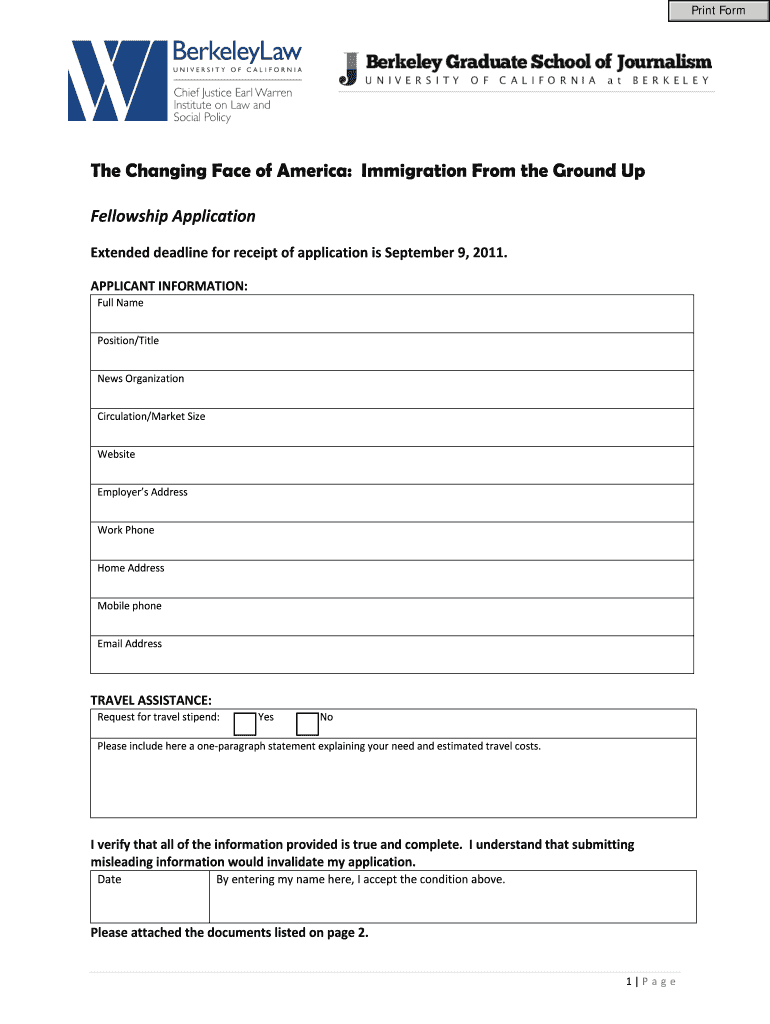
The "Print Form The Changing Face of America: Immigration From the Ground Up Fellowship Application Exten" refers to an application form used for a specific fellowship program. This program focuses on understanding and analyzing the dynamics of immigration in the United States from a grassroots perspective. The fellowship is designed to support applicants who are engaged in this field, offering them opportunities for deeper exploration and dissemination of their research findings.
- Purpose: The form serves to gather detailed information on potential candidates to assess their suitability for the fellowship.
- Structure: It typically includes sections for personal information, academic and professional background, and details on how the applicant plans to contribute to the goals of the fellowship.
Steps to Complete the Fellowship Application
Completing the fellowship application involves several structured steps to ensure all necessary information is accurately provided.
-
Gather Required Documents: Assemble your resume, letter of interest, letters of support, and work samples. These showcase your qualifications and intent.
-
Fill Out Personal Information: Provide your name, contact details, and other identifying information.
-
Detail Your Professional Background: Include your educational history, work experience related to immigration studies, and any relevant skills.
-
Outline Your Project Proposal: Clearly articulate your research or project plan, detailing how it aligns with the fellowship’s mission.
-
Seek Supporting Endorsements: Secure letters of support from mentors or colleagues who can attest to your capability and commitment.
-
Verify Information and Submit: Carefully review your application for completeness and accuracy before submission via the method specified in the instructions.
Required Documents
Applicants must submit several key documents as part of their fellowship application. These documents validate the applicant’s qualifications and provide insights into their research potential.
-
Letter of Interest: This should detail why you're interested in the fellowship and how it fits with your career goals.
-
Resume: Highlight your academic and professional history, focusing on experiences that relate directly to immigration studies.
-
Letters of Support: Provide two to three letters from credible references who can speak to your research abilities and commitment to the field.
-
Work Samples: Include samples of previous work relevant to the fellowship theme, such as published articles, research papers, or case studies.
Application Process & Approval Time
The application process for the fellowship is designed to be thorough yet straightforward, ensuring candidates have ample opportunity to present their qualifications.
-
Application Submission: Applicants are required to submit their completed forms and supporting documents by email to the provided address.
-
Review Period: Once submitted, applications undergo a review process that typically lasts six to eight weeks, during which the selection committee evaluates each candidate’s suitability.
-
Notification: Successful candidates are informed through formal communication, detailing the next steps and any additional requirements.
Eligibility Criteria
The fellowship has specific eligibility criteria that applicants must meet to be considered.
-
Demographic Focus: Primarily open to individuals residing in the United States who are engaged in immigration-focused research or activities.
-
Academic Requirements: Generally requires a background in social sciences, humanities, or related fields with a demonstrated interest in immigration issues.
-
Professional Experience: Experience in research, policy analysis, or community engagement related to immigration is preferred.
-
Commitment: Applicants should demonstrate a commitment to contributing to the goals of the fellowship through their research or community activities.


Form Submission Methods
The fellowship application can be submitted through various methods, depending on the applicant's convenience and the instructions provided.
-
Email Submission: The most common method, where applicants are instructed to attach their forms and required documents and send them to the designated email address.
-
Postal Mail: In some cases, a hard copy submission may be acceptable if specified in the application instructions.
-
In-Person Delivery: This is less common but may be an option for local applicants if explicitly allowed by the organizing committee.
Legally Binding Considerations
Using the form involves certain legal and procedural considerations that applicants need to be aware of.
-
Confidentiality: Information shared in the application is typically protected and used solely for the purpose of fellowship selection.
-
Agreement to Terms: By submitting the application, candidates often agree to abide by the fellowship’s terms and conditions.
-
Verification: All submitted information must be accurate; any discrepancies could lead to disqualification.
State-Specific Rules
While the fellowship is U.S.-centric, applicants should be aware of any state-specific rules that might impact their application, particularly those related to research activities.
-
Research Permissions: Some states may have specific regulations regarding data collection and community engagement in immigration-related research.
-
Funding Use: Restrictions on how fellowship funds can be used may vary by state, especially concerning travel and local research activities.
Understanding and adhering to these state-specific guidelines can help prevent any legal or procedural issues during the fellowship tenure.