






Definition and Meaning
Interdisciplinary undergraduate internship opportunities offer students a unique blend of hands-on experience and academic learning, tailored to those interested in integrating multiple academic disciplines. These internships are primarily designed for undergraduate students, aiming to provide valuable real-world experience that complements their interdisciplinary studies. Rather than focusing on a single area, these programs foster a holistic educational environment, empowering students to explore and apply knowledge from various fields. For instance, a student may participate in a program combining environmental studies, anthropology, and media relations, which fosters a more comprehensive understanding of their subjects.
Benefits of Interdisciplinary Undergraduate Internship Opportunities
Engaging in interdisciplinary internships expands the academic perspective of students by blending theory with practice. These opportunities encourage critical thinking, adaptability, and innovation, crucial traits in a rapidly evolving job market. By participating in such internships, students not only enhance their resumes but also gain insider knowledge of industries that embrace multidisciplinary approaches. For example, a student working in cultural resource management with the Museum of Northern Arizona could also gain skills in data collection and campaign organization, thus broadening their career prospects and professional experience.
Real-World Applications
- Students acquire practical skills through diverse roles and responsibilities.
- Exposure to various sectors allows students to determine career preferences and strengths.
- Mentorship from professionals in multiple fields enriches the learning experience.
Application Process and Approval Time
Applying for interdisciplinary undergraduate internships involves several key steps. First, students must research available opportunities, assessing programs that align with their academic pursuits and professional goals. They should gather relevant documents, such as transcripts and letters of recommendation, which substantiate their eligibility and academic aptitude. Organizations often have distinct timelines for application reviews and approvals. For example, the Arizona PIRG might have an earlier deadline than the White Mountain Apache Tribe Heritage Program. Understanding these timelines ensures timely submissions and responses.
Steps to Apply
- Identify potential internships that align with academic and professional objectives.
- Gather necessary application materials, including resumes and recommendation letters.
- Complete applications with attention to detail and adherence to organizational requirements.
- Submit applications by respective deadlines and follow up for application status updates.
Eligibility Criteria
Eligibility for interdisciplinary undergraduate internship opportunities typically requires students to meet certain academic and experiential standards. These prerequisites ensure that participants have a foundational understanding of relevant fields and the potential to contribute meaningfully. Common criteria include being currently enrolled in an undergraduate program, maintaining a minimum GPA, and having completed specific coursework related to the internship's focus area. Examples may include coursework in media relations or cultural studies for relevant internship placements.


Common Requirements
- Current undergraduate student status.
- Minimum GPA requirement (often around 2.5 or 3.0).
- Completion of key coursework or prior relevant experience.
Key Elements of Interdisciplinary Undergraduate Internship Opportunities
These internships include several core elements that distinguish them from traditional internships. They often involve collaborative projects where students from different disciplines work together to achieve common goals. The curriculum may include seminars and workshops that support interdisciplinary learning and provide additional context to the hands-on work experience. The internships also typically offer stipends or course credits to acknowledge the time and effort students contribute.
Core Components
- Collaborative projects integrating multiple academic fields.
- Seminars and workshops for supplemental learning.
- Stipend or academic credit as compensation.
Examples of Using Interdisciplinary Undergraduate Internship Opportunities
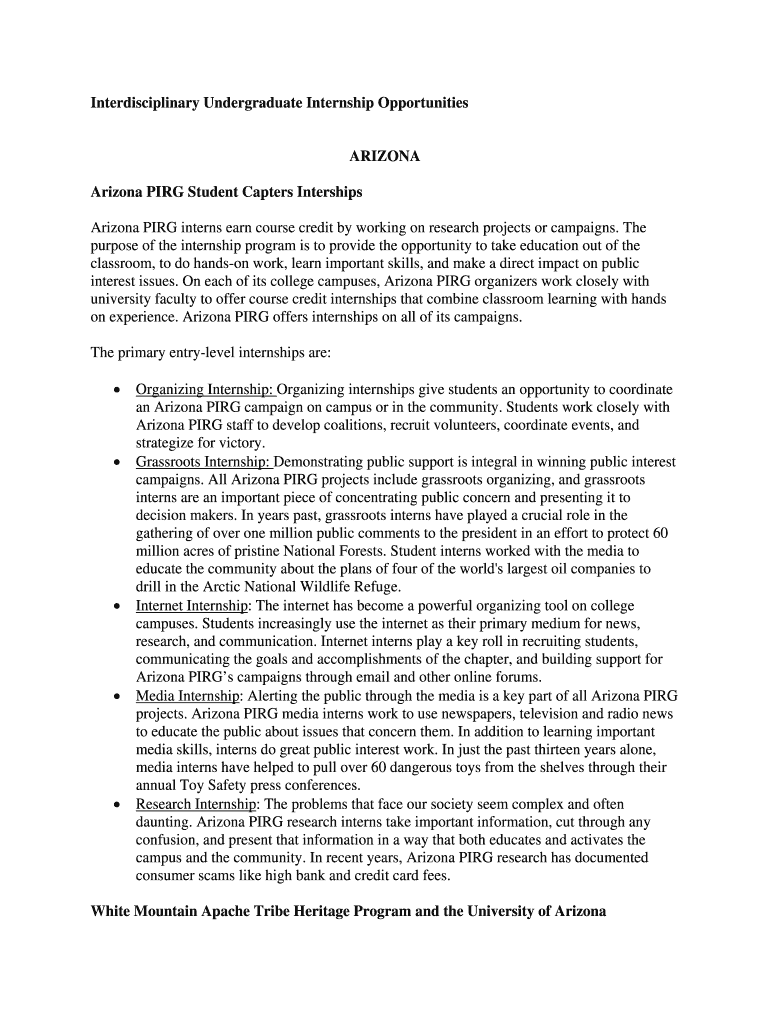
Organizations such as Arizona PIRG, the Museum of Northern Arizona, and the White Mountain Apache Tribe Heritage Program offer practical examples of these internships in action. Students can choose from opportunities in organizing campaigns, conducting research, or engaging in cultural resource management. These internships showcase how students can apply academic knowledge to real-world scenarios, developing skills that are pertinent to future employment opportunities.
Case Studies
- Arizona PIRG: Students work on policy advocacy and public campaign organization.
- Museum of Northern Arizona: Opportunities in research, data collection, and exhibition planning.
- White Mountain Apache Tribe Heritage Program: Involvement in cultural preservation and community outreach initiatives.
Important Terms Related to Interdisciplinary Undergraduate Internship Opportunities
Understanding key terminology is crucial for students pursuing interdisciplinary internships. Terms such as "interdisciplinary" itself—referring to programs that span multiple academic disciplines—are essential to grasp. Other significant terms include "experiential learning," which denotes learning through practical application, and "hands-on experience," referencing the active engagement with real-world tasks.
Key Terms
- Interdisciplinary: Integrating multiple academic disciplines.
- Experiential learning: Gaining skills through direct application.
- Hands-on experience: Involvement in tasks that simulate professional work environments.
Who Typically Uses Interdisciplinary Undergraduate Internship Opportunities
Interdisciplinary undergraduate internships are geared toward students with diverse academic backgrounds who wish to explore careers that transcend a single area of study. These are particularly beneficial for students pursuing majors such as environmental science, cultural studies, or media relations, as the internships offer practical experiences that compliment their interdisciplinary academic focus.
Target Audience
- Students pursuing multidisciplinary studies.
- Individuals seeking careers that combine multiple fields of interest.
- Undergraduates looking to gain practical work experience that complements their academic pursuits.