






Definition & Meaning
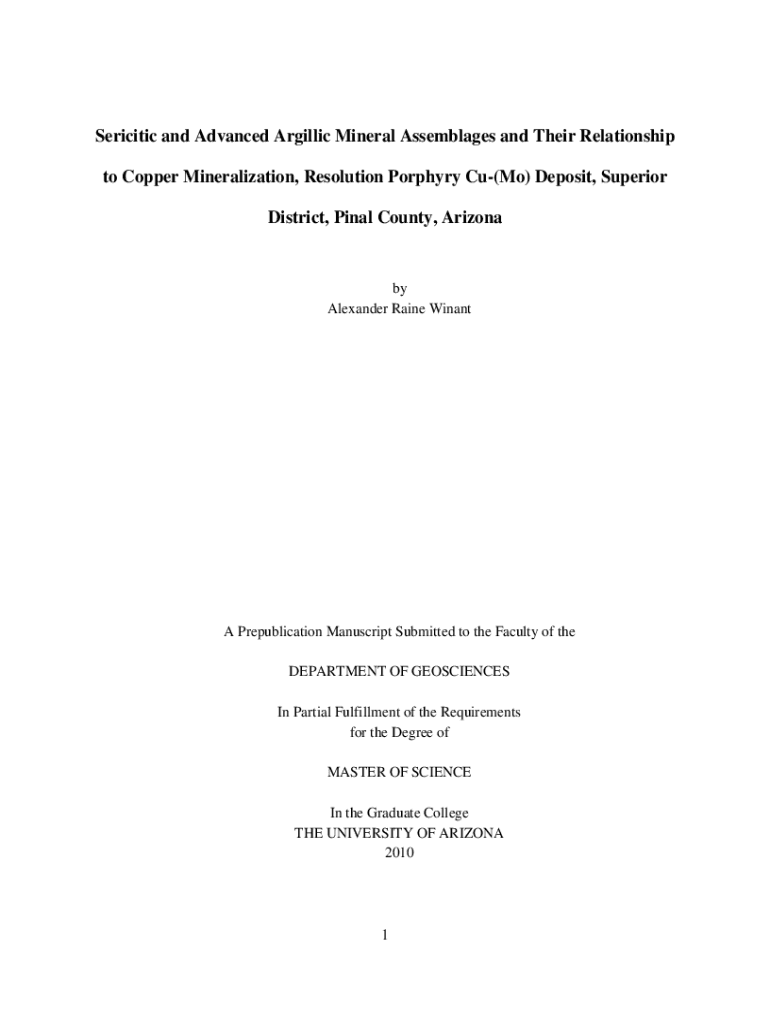
Sericitic and advanced argillic mineral assemblages are significant geological formations often associated with copper mineralization. These assemblages are formed from acidic hydrothermal fluids that alter surrounding rock, creating unique environments rich in minerals like sericite and kaolinite. This process is critical for understanding copper deposits, as these assemblages can indicate the presence of high-grade copper content. By studying these formations, geologists aim to predict areas with potential copper mining opportunities, enhancing exploration efficiency and success rates.
Key Elements of the Assemblages
The composition of sericitic and advanced argillic assemblages includes several key minerals and features:
- Sericite: A fine-grained mica, often resulting from the alteration of feldspar. It is a common component in these mineral assemblages.
- Kaolinite: A type of clay that is usually found in advanced argillic alteration zones.
- Pyrophyllite and topaz: These minerals appear in advanced stages, often signaling intense hydrothermal activity.
- Alteration halos: Zones around copper deposits that exhibit these mineral changes, providing clues to the location and extent of copper mineralization.
Such elements are crucial for geologists to map mineralization processes and target areas for further exploration.
Why Study These Mineral Assemblages?
Understanding sericitic and advanced argillic mineral assemblages offers several benefits:
- Exploration Guidance: Identifying these assemblages can help direct mining efforts more efficiently.
- Economic Insight: High copper content often correlates with specific mineral zones, providing economic insights for stakeholders.
- Geochemical Understanding: Studies enhance knowledge about the conditions and processes of mineral deposition, aiding academic research and practical applications.
Recognizing these advantages emphasizes the importance of both academic and commercial pursuits in this field.
Who Typically Uses This Information?
Several groups benefit from studying these mineral formations:
- Geologists and Mining Engineers: Use this information to guide exploration and assess potential mining sites.
- Mining Companies: Leverage insights to decide where to invest in exploration and development.
- Academic Researchers: Study mineral assemblages to contribute to scientific understanding of geological processes.
- Environmental Consultants: Evaluate the impact of potential mining projects based on geological data.
Understanding user demographics helps tailor research outputs to maximize applicability and impact.
Steps to Analyze Assemblages
Analyzing sericitic and advanced argillic mineral assemblages involves several structured steps:
- Field Sampling: Collect rock samples from potential sites.
- Laboratory Analysis: Use techniques such as X-ray diffraction (XRD) to determine mineral composition.
- Geochemical Modeling: Simulate hydrothermal alteration processes to understand mineral formation.
- Data Interpretation: Analyze collected data to assess the likelihood of copper mineralization.
- Reporting Findings: Document results to guide further exploration or research.
These precise steps ensure thorough examination of mineral assemblages and informed decision-making.
Examples of Copper Mineralization
Several regions showcase the relationship between these mineral assemblages and copper deposits:
- Arizona, USA: Home to the Resolution porphyry Cu-(Mo) deposit, noted for its rich and varied mineral composition.
- Chilean Copper Belt: Known for extensive copper deposits associated with sericitic alteration zones.
- Mongolia's Oyu Tolgoi: Features advanced argillic alteration, indicating significant copper reserves.
Real-world examples illustrate the global relevance and potential of studying these geological features.
Legal Considerations in Mining
Legal frameworks play a crucial role in the exploration and development of mineral resources:
- Permitting Processes: Involve acquiring licenses for exploration and operation.
- Environmental Regulations: Mandate studies and measures to minimize impact on ecosystems.
- Land Rights: Ensure rightful access and use of land for extraction activities.
Understanding such legal aspects is essential for compliant and sustainable mining operations.
Digital vs. Paper Methods in Analysis
Modern technology has transformed how geologists and researchers handle mineralogical data:
- Digital Tools: Software and modeling tools enhance accuracy and efficiency in analyzing mineral compositions.
- Traditional Methods: Still play a role, particularly in fieldwork and sample collection.
Combining both approaches can lead to more robust findings and streamline research or industrial activities.