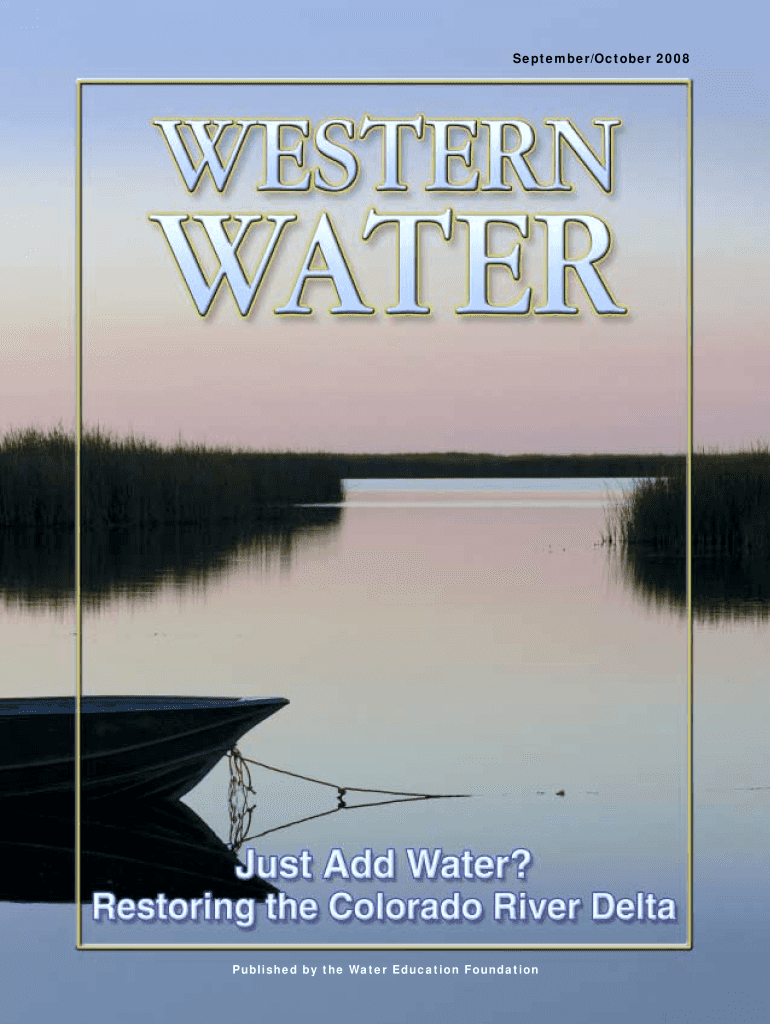







Definition and Overview of September October 2008 - Department of Geosciences - University - geo arizona
The "September October 2008 - Department of Geosciences - University - geo arizona" appears to be a document or dataset relevant to the academic fields within the Department of Geosciences at a university, likely situated in Arizona. This captures a period marked by significant research or publications that could have delved into geological studies, environmental science, and related topics, offering insights into both academic and regional geological dynamics.
Key Aspects
- Focuses on geoscience research, likely including studies about the Arizona region’s geological features.
- Potentially highlights collaborations and development within the university setting.
How to Use the September October 2008 Document
The document serves multiple purposes for students, researchers, and geoscientists aiming to gain historical insights into academic and environmental studies conducted during the specified timeframe.
Utilization Strategies
- Review for historic geological studies and research methodologies.
- Use as a reference for ongoing projects or comparative studies in geoscience.
- As a teaching resource to understand past academic and geological collaboration efforts.
Obtaining the September October 2008 Document
Accessing this document is a crucial step in leveraging its information for scientific research and educational purposes.
Acquisition Steps
- University Library: Check if the document is available in the university’s institutional repository or library archives.
- Online Databases: Utilize academic databases such as JSTOR, ScienceDirect, or specific geoscience databases that might host historical documents or publications.
- Direct Inquiry: Contact the Department of Geosciences directly to inquire about access to the document or its contents.
Steps to Complete the Document Analysis
Completing an analysis of the September October 2008 document involves a detailed examination of its content and context.
- Initial Review: Read through the document to understand its scope and key topics.
- Data Extraction: Identify significant data points or conclusions related to geoscience.
- Contextual Analysis: Place the findings within the context of the time, comparing with other publications from the same period or region.
- Conclusion Formulation: Develop conclusions based on the analysis and suggest areas for further research or study.
Audience and Typical Users
Understanding who utilizes this document is essential for tailoring its use effectively.
Primary Users
- Students: Those studying geosciences and related fields within the university.
- Researchers: Individuals conducting studies in environmental science, geology, and geography.
- Educators: Professors and academic staff incorporating historical research into curricula.
Important Terms Associated with the Document
Familiarity with specific terminology enhances understanding and analysis.
Glossary of Terms
- Geoscience: Study of Earth's physical structure and substance, its history, and processes.
- Environmental Science: Interdisciplinary study of environmental systems, focusing on interactions between the physical, chemical, and biological components.
- Regional Geology: Examination of geology specific to a particular area, in this case, Arizona.
Examples and Applications in Practice
Practical applications of the document can significantly impact ongoing work in geoscience and academia.
Application Scenarios
- Research Projects: Use data as a benchmark for current geological studies.
- Curriculum Development: Implement findings to inform course content and student research projects.
- Policy Making: Inform environmental policy development with historical geological information.
Document Accessibility and State-Specific Rules
Understanding how state regulations may affect document usage is critical, especially if it involves sensitive data or specific environmental guidelines.
State Compliance
- It’s vital to consider whether there are any privacy concerns or state legislation that could influence how the document’s data are used, especially concerning geological and environmental information.
For comprehensive analyses and advanced research, ensuring adherence to state-specific academic or geoscience regulations is necessary.