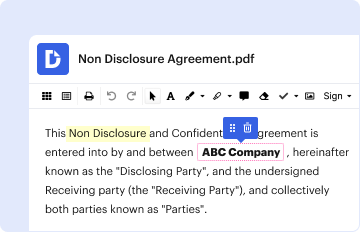
Type text, add images, blackout confidential details, add comments, highlights and more.
02. Sign it in a few clicks
Draw your signature, type it, upload its image, or use your mobile device as a signature pad.
03. Share your form with others
Send it via email, link, or fax. You can also download it, export it or print it out.
How to use or fill out Drilling holes in the ice for water sampling, Photo by J with our platform
Ease of Setup
DocHub User Ratings on G2
Ease of Use
DocHub User Ratings on G2
Click ‘Get Form’ to open it in the editor.
Begin by entering your project ID at the top of the form. This helps in tracking and organizing your data effectively.
Fill in the date of sampling. Accurate dating is crucial for maintaining a reliable record of your water quality assessments.
In the location section, specify the exact site where you will be drilling. This ensures that all data collected can be accurately referenced later.
Proceed to document measurements such as ice thickness and snow depth. Use our platform's tools to easily input these values directly into the designated fields.
For each measurement taken, ensure you note down any relevant observations regarding weather conditions or other environmental factors that may affect your results.
Once all fields are completed, review your entries for accuracy before saving or exporting the document for further analysis.
Start using our platform today to streamline your water sampling documentation!
Fill out Drilling holes in the ice for water sampling, Photo by J online It's free
As snow at the surface gets buried and compressed, it form layers of solid ice. This ice carries with it information about the state of the climate when the snow originally fell. By drilling down into a glacier and recovering old ice, information about past climate can be extracted.
Why do people cut holes in ice?
The reason is probably most trivial: greater surface area allows for a greater rate of cooling. Holes are a neat way to increase surface area without increasing overall dimensions of the ice cube.
Why are scientists drilling into the Antarctic ice?
Scientists say ice core samples are useful tools for investigating how the planets climate has changed over time. When snowflakes fall in the polar regions, they capture chemicals and particles from the air, according to the National Science Foundation.
How does ice drilling work?
0:31 4:36 The inner barrel spins the outer barrel stays stationary. Its that difference um that actuallyMoreThe inner barrel spins the outer barrel stays stationary. Its that difference um that actually drives the chips to the top. And gets them out of the hole so that we can then take the core.
Why do scientists drill into the ice?
Ice drilling allows scientists studying glaciers and ice sheets to gain access to what is beneath the ice, to take measurements along the interior of the ice, and to retrieve samples.
Related Searches
Ice CoringHow does ice core drilling workAntarctica core samplesAntarctic drillingHow to read ice coresHow are ice cores analyzedIce core samples climate changeOldest ice core samples
Related links
Water sampling - UWDC - UW-Madison Libraries
Date. March 25, 1985 ; Summary. Close-up of John J. Magnuson drilling hole for sampling through ice. ; Part of: John J. Magnuson Collection.
Cookie consent notice
This site uses cookies to enhance site navigation and personalize your experience.
By using this site you agree to our use of cookies as described in our Privacy Notice.
You can modify your selections by visiting our Cookie and Advertising Notice.