






Definition & Meaning
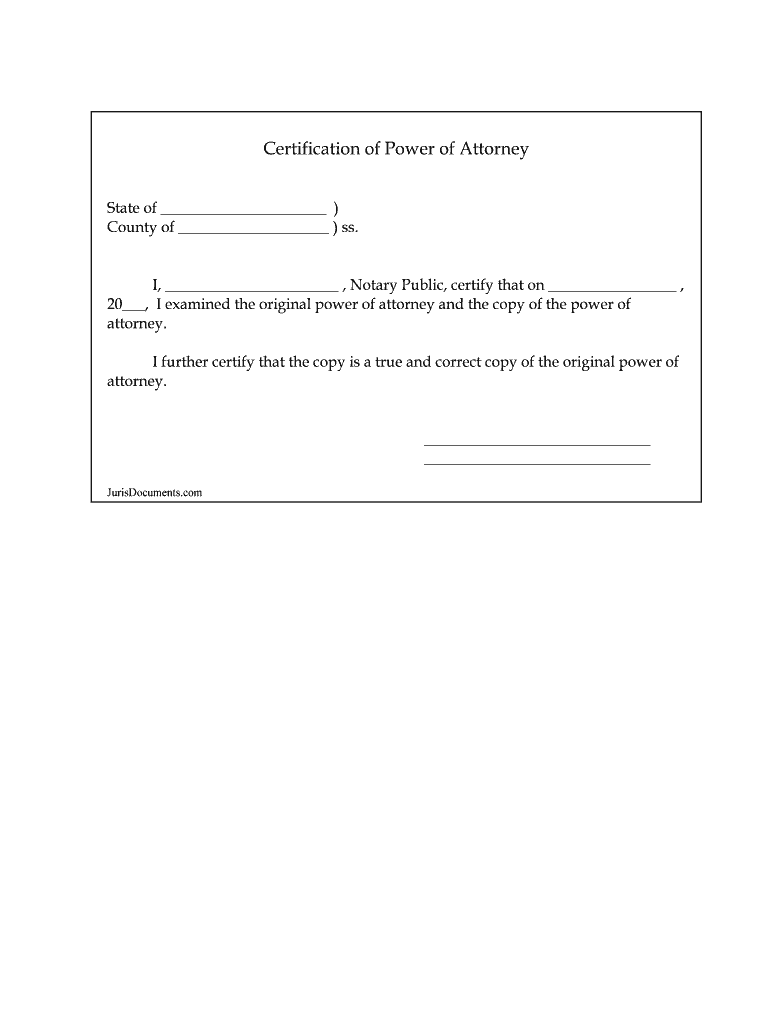
The Certification of Power of Attorney - JurisDocuments is a formal attestation by a Notary Public or similar authority confirming that a power of attorney document is a true copy of its original. This certification serves to verify the authenticity and integrity of the power of attorney, ensuring that it holds legal weight when presented in various scenarios, such as real estate transactions, legal proceedings, or financial dealings. The certification might include specific details about the location, such as the state or county where it was certified, and the date of certification.
How to Use the Certification of Power of Attorney - JurisDocuments
Using the Certification of Power of Attorney - JurisDocuments involves several steps that ensure its legal efficacy. You must first ensure that the power of attorney document, of which you are obtaining a certification, is complete and complies with jurisdictional requirements. Next, present this document to a Notary Public for certification. The Notary will compare the original document with the copy to verify their congruency. Once certified, this document can be used in legal and financial transactions requiring proof of the authority granted to a designated individual.
Steps to Complete the Certification of Power of Attorney - JurisDocuments
- Prepare the Document: Ensure that the power of attorney document is fully completed, signed, and dated by the appropriate parties.
- Find a Notary Public: Locate a licensed Notary Public to certify the document.
- Present the Original and Copy: Both the original power of attorney and the copy intended for certification must be presented to the Notary.
- Verification Process: The Notary will examine both documents to confirm that the copy is true and correct compared to the original.
- Certification: Once verified, the Notary will provide a certification on the copy, including a seal, signature, date, and location details.
- Retain and Use the Certified Copy: Keep the certified copy for use in any situations requiring validated proof of the power of attorney.
Who Typically Uses the Certification of Power of Attorney - JurisDocuments
This certification is commonly used by individuals who need to delegate decision-making authority to someone else. It is also frequently utilized by businesses and financial institutions to ensure compliance and proper authorization when dealing with transactions controlled by a power of attorney. Legal professionals, such as attorneys handling estate planning or family law matters, often rely on certified copies to protect their clients' interests and ensure all parties recognize the granted authority.


Legal Use of the Certification of Power of Attorney - JurisDocuments
The Certification of Power of Attorney - JurisDocuments is legally binding and plays a critical role in establishing the legitimacy of a power of attorney. It is essential in scenarios such as property sales, banking transactions, medical decisions, and other legal negotiations where an agent acts on behalf of the principal. It validates that the document in question is an accurate representation of the original, thus assuring third parties of its legitimacy.
Key Elements of the Certification of Power of Attorney - JurisDocuments
- Identification Details: The certification will list the names of the parties involved, including the principal and the designated power of attorney holder.
- Certification Information: This includes the Notary’s signature, seal, and the date of certification.
- Jurisdictional Details: Information about the state and county of certification may be included to situate the document within a legal framework.
State-Specific Rules for the Certification of Power of Attorney - JurisDocuments
Certification requirements can vary by state, affecting aspects like the format of the document or additional validation procedures. Some states may mandate specific language to be used in certifications, while others might have different stipulations regarding the role of witnesses or additional documentation. Always verify state laws to ensure compliance with local regulations.
Important Terms Related to Certification of Power of Attorney - JurisDocuments
- Principal: The person who grants authority to another through a power of attorney.
- Agent or Attorney-in-Fact: The individual designated to act on behalf of the principal.
- Notary Public: A legally authorized individual who performs the act of certification.
- Power of Attorney Document: The legal document granting specified powers from the principal to the agent.
Examples of Using the Certification of Power of Attorney - JurisDocuments
Consider a scenario where an elderly individual wants to ensure their nephew can manage their financial matters. A properly certified power of attorney document allows the nephew to access bank accounts and make related decisions easily. Another example involves real estate, where someone traveling abroad might need their representative to handle the sale of a property. Having a certified power of attorney ensures transactions proceed smoothly and are legally accepted.
In all examples, the certified document underpins the agent's authority, providing comfort and legality to all parties involved.