




01. Edit your form online
Type text, add images, blackout confidential details, add comments, highlights and more.

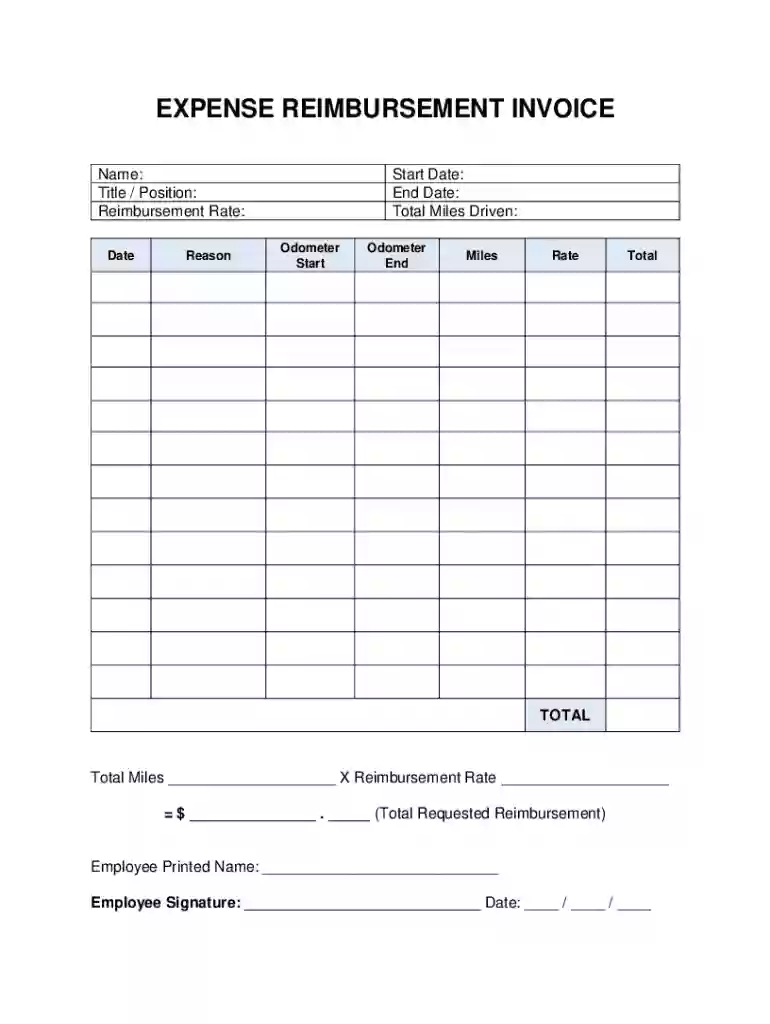
Type text, add images, blackout confidential details, add comments, highlights and more.

Draw your signature, type it, upload its image, or use your mobile device as a signature pad.

Send it via email, link, or fax. You can also download it, export it or print it out.
A Mileage Reimbursement Invoice Template - Invoice Maker is a structured document template designed to facilitate the preparation and submission of reimbursement requests for travel-related expenses. This form captures crucial information such as the employee or contractor details, mileage rates, travel dates, distance covered, and the total amount due for reimbursement. These invoices ensure that the reimbursement process is transparent and systematic, adhering to company policies and potentially aligning with IRS guidelines for mileage deductions.
Mileage reimbursement invoices are essential for both employees and businesses, as they enable a clear record of travel expenses incurred as part of work duties. This documentation helps organizations manage and track travel costs, while also providing evidence in case of audits or reviews.
Using the Mileage Reimbursement Invoice Template is straightforward but requires attention to detail to ensure accuracy:
Download the Template: Access the template through trusted resources or an invoice maker tool like DocHub, ensuring it matches your organization's specific requirements.
Enter Personal & Business Information: Fill in details such as the employee or contractor's name, business address, and contact details. Include unique invoice numbers for tracking purposes.
Record Travel Details: Document the travel dates, starting and ending locations, and the purpose of travel. This information justifies the travel as work-related.
Calculate Total Miles and Reimbursement Rate: Input the total miles driven. Use the IRS standard mileage rate or any company-specific rate to calculate the reimbursement amount.
Review and Finalize: Double-check all entered data for accuracy. Confirm calculations and ensure all necessary information is present before submission.
Completing the Mileage Reimbursement Invoice involves several key steps:
Prepare the Required Information: Gather all necessary travel receipts and documents that outline the purpose of travel and distances covered.
Fill Out the Template:
Verification: Ensure that all calculations match the documented travel details and that the final amount due is accurate.
Submission: Submit the completed invoice through the preferred method, which can be online, via mail, or in-person, depending on company policies or specific instructions.
Several critical elements comprise an effective mileage reimbursement invoice:
These elements ensure the invoice is comprehensive and aligns with standard accounting practices.
The template is widely used across various sectors and professions:
These users rely on such templates to support accurate and simplified submission and processing of travel reimbursement claims.


The IRS provides standardized mileage rates that businesses and individuals can use. The rates tend to change annually and cover vehicle operating costs such as fuel, maintenance, tires, insurance, and depreciation.
For legal compliance:
Using the template correctly supports legal compliance and transparency in expense management.
Completing a mileage reimbursement invoice typically requires:
Having these documents prepared enhances the accuracy and expedites the reimbursement process.
At DocHub, your data security is our priority. We follow HIPAA, SOC2, GDPR, and other standards, so you can work on your documents with confidence.


