Definition & Meaning
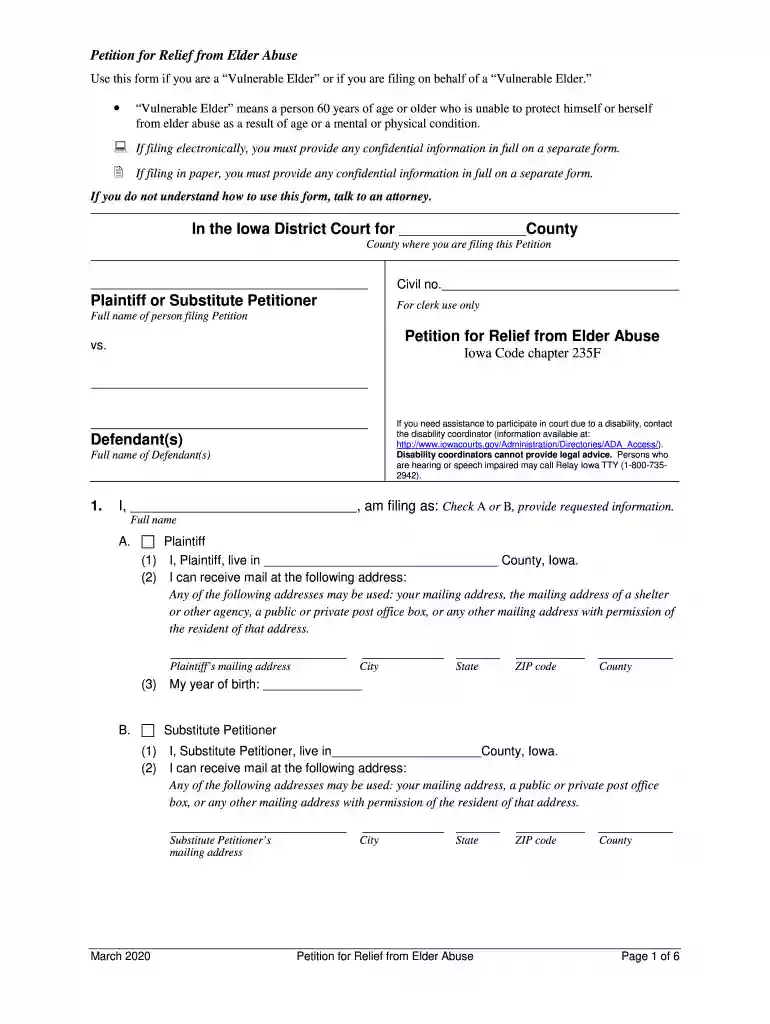
"Elder Abuse and Financial Exploitation - Iowa Legal Aid" is a legal document that provides a formal procedure for vulnerable elders aged 60 and older who are experiencing, or are at risk of, abuse. It is specifically designed for those who cannot protect themselves effectively from neglect or exploitation. Typically, this form is used to outline the legal process for filing a petition for relief from elder abuse in the Iowa District Court. The document includes crucial information about the parties involved, the specifics of the allegations, and the types of court orders that can be pursued, such as temporary restraining orders or financial account protections.
How to Use the Elder Abuse and Financial Exploitation - Iowa Legal Aid
To make effective use of this form, individuals, or their legal representatives should follow a structured approach:
- Review: Understand the form's requirements, including eligibility and necessary information.
- Collect Evidence: Gather evidence of abuse or exploitation, including witness statements, financial records, or medical reports.
- Complete the Form: Fill out the form with the required details about the elder, the alleged abuser, and the nature of the abuse.
- Seek Legal Counsel: Consulting a legal professional can provide guidance on specific statutory requirements and improve the form's reliability upon submission.
- File with the Court: Submit the completed form to the appropriate district court, adhering to local guidelines.
Real-world examples include cases where the form has been used to intervene in financial scams targeting seniors or to protect an elder from a caregiver suspected of neglect.
Steps to Complete the Elder Abuse and Financial Exploitation - Iowa Legal Aid
Completing this form requires careful attention to detail:
- Personal Details: Enter the elder’s and alleged abuser’s personal information, such as names, addresses, and relationship.
- Descriptive Allegations: Clearly describe the abuse or exploitation incidents, providing dates, locations, and types of abuse.
- Legal Rights Documentation: Include information about rights being infringed upon, citing specific Iowa laws if possible.
- Court Orders Requested: Specify the types of legal protection or intervention requested from the court.
- Signature and Date: Ensure it’s signed and dated by the petitioner or their legal representative.
Each step should be validated with supporting documentation, such as medical reports or bank statements, to strengthen the case.
Who Typically Uses the Elder Abuse and Financial Exploitation - Iowa Legal Aid
This form is predominantly utilized by:
- Vulnerable Elders: Individuals aged 60 and older unable to safeguard themselves against abuse.
- Family Members/Guardians: Relatives or legal guardians acting on behalf of the elder.
- Legal Practitioners: Attorneys providing legal aid services to older adults.
- Social Workers and Advocates: Professionals assisting at-risk seniors in securing legal protections.
These stakeholders use the form to initiate protective legal measures against exploitative actions or individuals.

Important Terms Related to Elder Abuse and Financial Exploitation - Iowa Legal Aid
- Vulnerable Elder: An individual, generally aged 60 or older, who is unable to protect themselves from abuse due to physical or mental impairments.
- Financial Exploitation: The illegal or improper use of an elder’s funds, property, or assets by another individual.
- Petition for Relief: A formal request to the court seeking legal protection for the elder from further abuse or exploitation.
- Restraining Order: A legal order issued by a court to protect an elder from harassment, abuse, or financial exploitation.
Understanding these terms is essential for accurately completing the form and ensuring the petition's effective processing.
Legal Use of the Elder Abuse and Financial Exploitation - Iowa Legal Aid
In Iowa, this form serves a legal function by providing:
- Court-Ordered Protections: Enables the court to enact precautionary measures safeguarding an elder from further harm.
- Formal Documentation: Creates an official record of abuse allegations and legal actions requested.
- Credibility in Legal Proceedings: When completed accurately and supported by evidence, it enhances the credibility of abuse claims in court.
In legal disputes, the document aids by presenting a structured narrative of abuse incidents and requests for judicial intervention.
State-Specific Rules for the Elder Abuse and Financial Exploitation - Iowa Legal Aid
Iowa law mandates specific guidelines:
- Court Jurisdiction: Petitions must be filed in the Iowa District Court where the abuse is alleged to have taken place.
- Burden of Proof: The petitioner must provide convincing evidence of the alleged abuse or potential for harm.
- Statutory Compliance: Ensure compliance with Iowa Code Chapter 235F, detailing elder abuse and financial exploitation statutes.
These rules are designed to protect elders' rights while ensuring due process in the Iowa legal system.
Examples of Using the Elder Abuse and Financial Exploitation - Iowa Legal Aid
Practical applications include:
- Financial Exploitation Cases: Elders scammed by caregivers or relatives can file for protective financial conservatorship.
- Physical Abuse Allegations: Instances where medical personnel report potential abuse can lead to immediate legal action.
- Neglect Claims: Failure of a caretaker to provide essential services can be addressed through legal petitions demanding accountability and corrective measures.
These examples demonstrate how filing the form can help address diverse types of elder abuse scenarios, providing necessary legal remedies.
Required Documents
Using this legal aid form necessitates supporting documentation:
- Medical Certificates: Statements from healthcare professionals evidencing physical or emotional harm.
- Financial Records: Bank statements or transaction records highlighting questionable activity.
- Witness Affidavits: Testimonies from individuals aware of the abuse circumstances.
- Photographic Evidence: Visual proof of physical harm or living conditions.
These documents bolster the petition’s claims and support the case’s credibility in court proceedings.