







Definition & Meaning
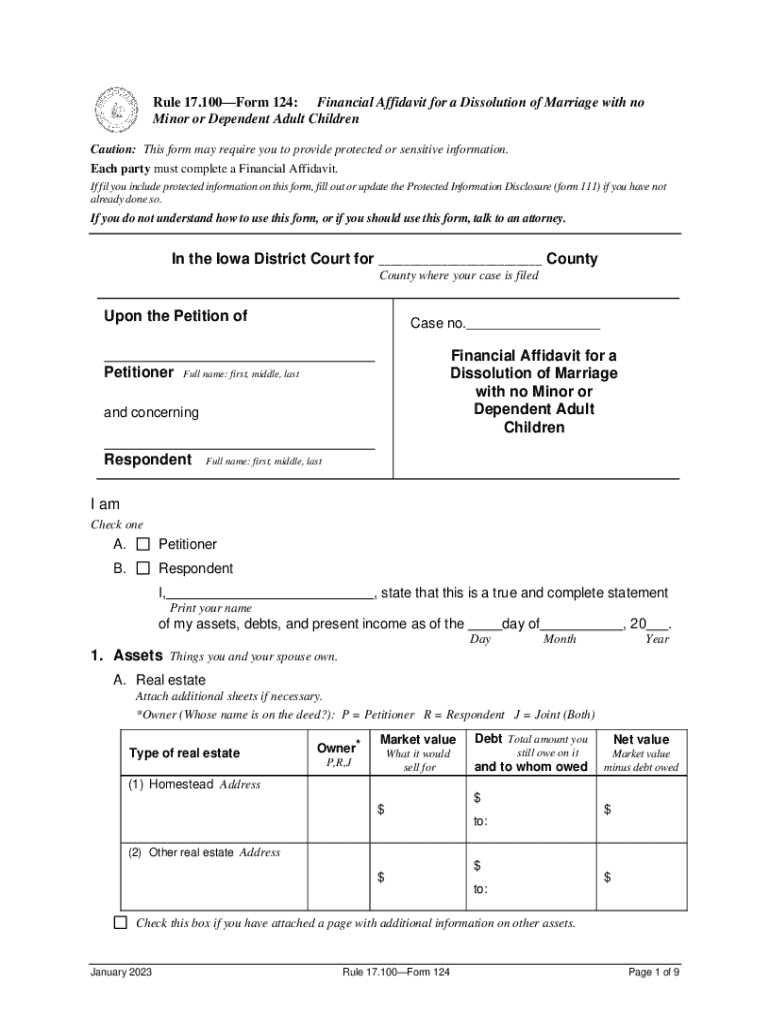
The Financial Affidavit for a Dissolution of Marriage With No Minor or Dependent Adult Children is a legal form used during the divorce process. Specifically tailored for situations where the couple does not have any minor or dependent adult children, this affidavit plays a crucial role in transparently disclosing each party's financial situation. This form is required to ensure an equitable distribution of marital assets and liabilities, reflecting a comprehensive account of individual income, expenses, assets, and debts.
Key Elements of the Financial Affidavit
The affidavit's primary sections require detailed financial information, including:
- Income: Both parties must list all sources of income, including wages, bonuses, investments, and other financial gains.
- Assets: This includes real estate, vehicles, bank accounts, retirement funds, and personal property.
- Liabilities: Debts such as mortgages, credit card balances, personal loans, and other financial obligations are recorded here.
- Expenses: Routine expenditures like housing, utilities, food, and transportation are itemized to assess each party's financial needs and obligations.
Steps to Complete the Financial Affidavit
- Gather Financial Documents: Collect pay stubs, bank statements, tax returns, investment account summaries, and loan documents.
- Fill Out Income Information: Enter monthly gross and net income based on recent earnings.
- Document Assets and Liabilities: List all owned assets and owed debts, using current estimates where exact numbers aren't available.
- Detail Monthly Expenses: Accurately record all recurring expenses, ensuring full transparency.
- Review and Submit: Double-check all entries for accuracy before submission, as incomplete or incorrect forms could result in delays or legal complications.
Legal Use of the Financial Affidavit
This affidavit serves multiple legal purposes during divorce proceedings:
- Equitable Distribution: Judges use the affidavit to divide marital property fairly, considering each individual's financial standing.
- Spousal Support: It helps determine eligibility and necessary amounts for alimony or spousal support.
- Judicial Transparency: Provides a clear financial picture to the court, which is essential for making informed legal decisions.
Who Typically Uses the Financial Affidavit
- Divorcing Couples: Specifically, those without minor or dependent children are the primary users, as the affidavit is tailored to their unique circumstances.
- Attorneys: Legal professionals assist clients in completing the form, ensuring accuracy and compliance with legal standards.
- Judges: Courts rely on these affidavits to make judicious rulings concerning asset distribution and financial support.


State-Specific Rules for the Financial Affidavit
Different states may have varying requirements for financial disclosures during divorce:
- Iowa Example: Utilizes Rule 17.100—Form 124 for couples without minor or dependent children, outlining specific financial disclosure requirements.
- Variations by Jurisdiction: Some states may necessitate additional documentation or have unique formats for submission, necessitating a thorough understanding of local legal requirements.
Required Documents
Completing the affidavit requires access to various supporting documents:
- Income Verification: Recent pay stubs, W-2 forms, and tax returns
- Asset Documentation: Deeds, titles, and account statements
- Debt Records: Loan agreements, credit card statements, and mortgage documents
Penalties for Non-Compliance
Failing to accurately complete the financial affidavit can result in legal repercussions:
- Fines and Sanctions: Courts can impose financial penalties and other sanctions for non-disclosure or misrepresentation.
- Adverse Legal Outcomes: Inaccurate affidavits can influence the court's decision, potentially disadvantaging the non-compliant party.
Examples of Using the Financial Affidavit
- Case Study: In a hypothetical scenario, a couple in Iowa without dependent children uses the financial affidavit to reach a fair settlement, documenting their assets and debts to facilitate equitable distribution.
- Practical Application: A lawyer advises a client to meticulously complete the form, using accurate financial documentation to support claims for spousal support.




