01. Edit your form online
Type text, add images, blackout confidential details, add comments, highlights and more.

Type text, add images, blackout confidential details, add comments, highlights and more.

Draw your signature, type it, upload its image, or use your mobile device as a signature pad.

Send it via email, link, or fax. You can also download it, export it or print it out.
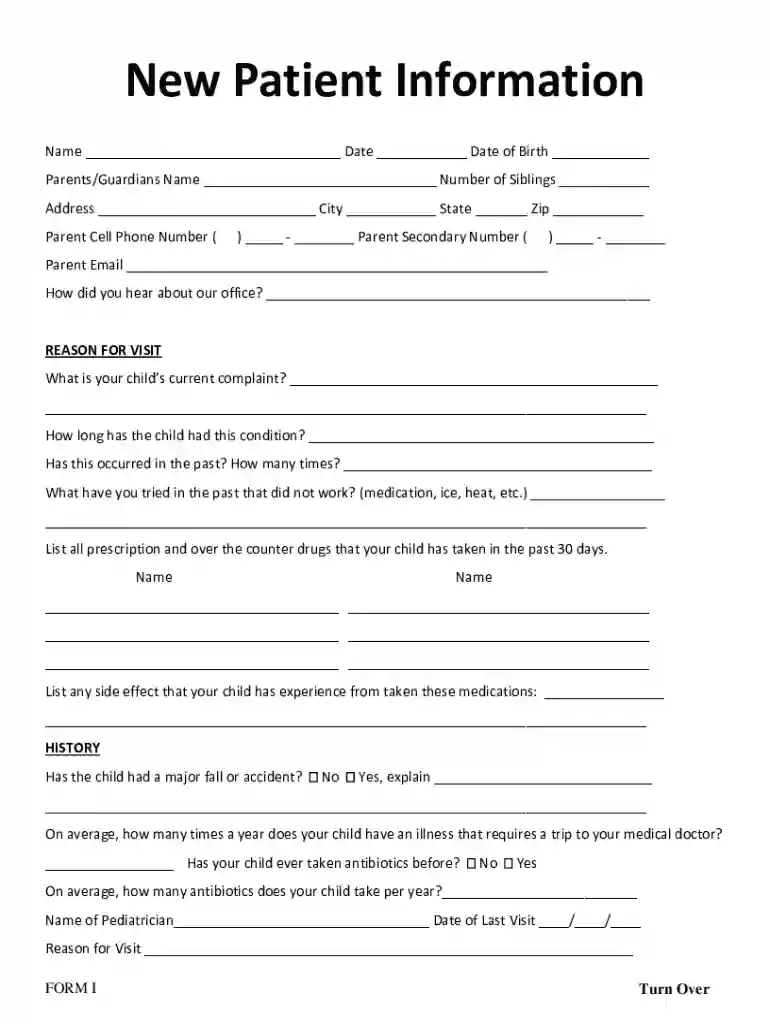
The New Patient Information form is an essential document designed to collect comprehensive health and personal information from new patients at a chiropractic office. This form facilitates the gathering of crucial details about a child's medical history and current health complaints. The primary objective is to provide chiropractors with a detailed view of a patient's background to tailor treatment plans effectively. By understanding past medical events, medication usage, allergies, and other relevant health information, chiropractic professionals can focus on correcting subluxations rather than diagnosing or treating diseases.
A significant section of the New Patient Information form delves into the patient's medical history. This includes a record of past illnesses, surgeries, and conditions that might influence current health. It also requires patients to list any medications they are currently using. This information is crucial because it helps chiropractors consider potential interactions or side effects that could affect treatment outcomes. For instance, a child taking anti-inflammatory medication may experience reduced symptoms that could mask underlying issues, prompting chiropractors to adjust their examination and treatment approach.
Allergy information is another critical component of the form, as it dictates treatment safety and efficacy. The documentation of allergies ensures that any therapeutic interventions or recommendations made by the chiropractor do not inadvertently trigger allergic reactions. This is particularly important when recommending supplements or therapeutic exercises.
Completing the New Patient Information form involves providing detailed responses to various sections aimed at gathering comprehensive health data.
Patient Personal Details: Initially, basic personal information such as name, date of birth, and contact details needs to be documented. This ensures accurate identification and communication with the patient or their guardians.
Parental Information: If the new patient is a child, parental or guardian information is also required. This section includes contact details and relationship to the patient, which is essential for consent and emergency communication.
Current Health Complaints: Patients are prompted to describe their current health complaints, including symptoms duration and severity. Providing specific details helps chiropractors diagnose and create focused treatment plans.
Consent for Treatment: Finally, patients or their guardians must provide consent for the proposed chiropractic treatment. This section is crucial for legal compliance and ensures that all parties understand and agree to the treatment approach.
Consider a scenario where a parent brings a child to a chiropractor due to frequent headaches. Completing the New Patient Information form would involve noting the frequency, duration, and potential triggers of the headaches. The chiropractor might then use this information to investigate spinal alignment issues that could be contributing to the symptoms, thereby customizing the treatment protocol for the best results.
The New Patient Information form must adhere to legal requirements such as patient confidentiality and consent for treatment. Under U.S. laws, particularly the Health Insurance Portability and Accountability Act (HIPAA), patient data collected through these forms must be protected against unauthorized access. This legal framework ensures that chiropractors handle patients’ personal health information responsibly.
The consent section of the form ensures that treatments administered are legally authorized, safeguarding both the chiropractor and the patient. A clear understanding and agreement on treatment plans protect against potential legal disputes and enhance the trust between the patient and the provider.
Several key elements make the New Patient Information form an invaluable tool for chiropractors:
The process of using the New Patient Information form starts when a new patient schedules an appointment. The form is typically filled out prior to the initial consultation so the chiropractor can review and consider the information during the clinical assessment.
In modern chiropractic practice, the use of digital versions of the New Patient Information form increases efficiency. Platforms like DocHub offer solutions that allow forms to be completed electronically, facilitating storage, retrieval, and analysis of patient data. Integration with Google Workspace ensures that these forms can be effectively incorporated into existing digital workflows, enhancing the overall patient management system. This Electronic Patient Record (EPR) approach ensures records are accurate and easily accessible, supporting both clinical and administrative functions in the practice.
Digital forms provide advantages such as ease of data entry, reducing paper use, and simplifying updates or corrections. However, practices may still offer paper forms for those preferring a traditional approach. Offering both options helps meet diverse patient preferences and ensures inclusivity in healthcare services.
By understanding the components and proper use of the New Patient Information form, chiropractic practices can deliver tailored and effective care, ensuring patient safety and satisfaction while maintaining regulatory compliance.
We've got more versions of the New Patient Information form. Select the right New Patient Information version from the list and start editing it straight away!
At DocHub, your data security is our priority. We follow HIPAA, SOC2, GDPR, and other standards, so you can work on your documents with confidence.