






Definition & Meaning
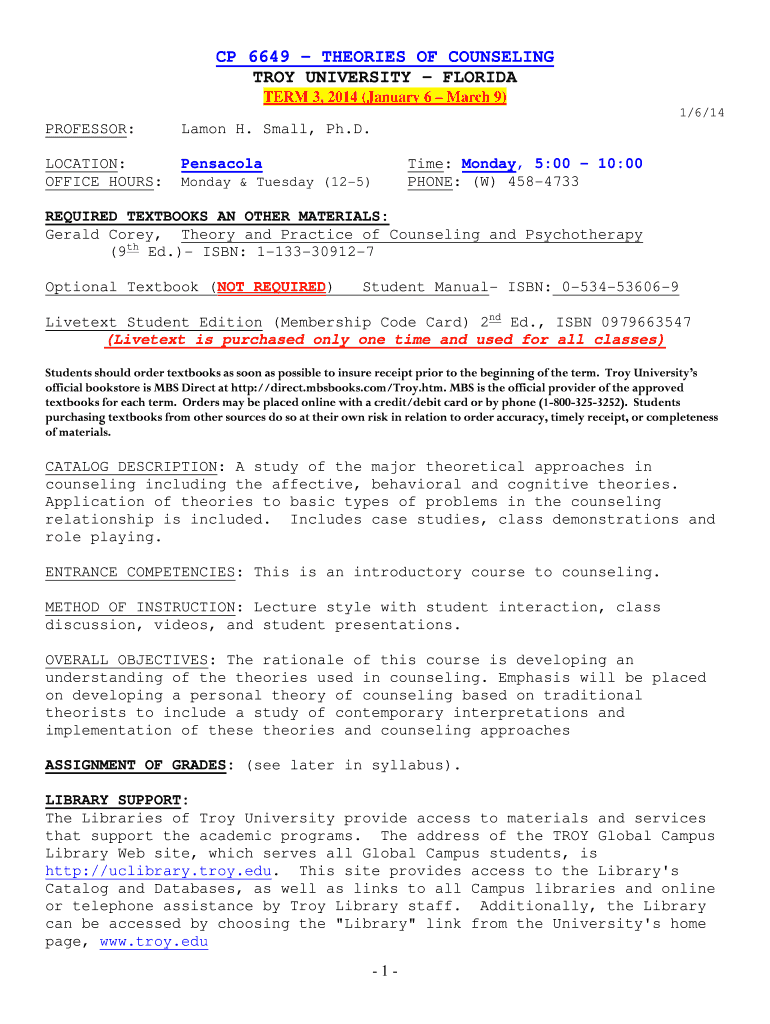
The "CP 6649 - Theories of Counseling" at Troy University, Florida, is a course dedicated to exploring various counseling theories. This includes an in-depth analysis of the core principles underpinning major counseling frameworks and methodologies. The course aims to equip students with the ability to develop personalized counseling models that are adaptable to a multicultural context. Through lectures and practical assignments, students are expected to delve into theoretical constructs and their applications in real-world counseling scenarios.
Key Elements of the CP 6649 Course
- Course Objectives: Understanding major theories of counseling is at the forefront, where students learn to critically analyze these theories.
- Instructional Methods: The course employs lectures, group work, discussions, and practical application assignments to foster a comprehensive learning experience.
- Evaluation Criteria: Students' grasp of the subject matter is assessed through exams, presentations, and written assignments.
How to Obtain the CP 6649 Syllabus
Troy University provides access to the syllabus for the CP 6649 course through its official online portals. Students enrolled in the university can access these resources via their student dashboard after logging in with their university credentials. It is also advisable to contact the course coordinator or academic advisor to ensure that you receive the most recent version of the syllabus.
Steps to Complete the CP 6649 Course
- Registration: Enroll via Troy University's course registration platform during the enrollment period.
- Material Acquisition: Gather all required textbooks and materials as specified in the syllabus.
- Attendance and Participation: Regularly attend lectures and actively participate in discussions to refine understanding and application of counseling theories.
- Assignment Submission: Complete and submit all assignments and projects within the stipulated deadlines.
- Examinations: Prepare for and perform well in exams through a deep understanding of course materials and participation in study groups.
Important Terms Related to CP 6649
- Multicultural Counseling: Adapting counseling practices to address and respect the diverse cultural backgrounds of clients.
- Theoretical Analysis: Examining the frameworks and assumptions that form the basis of different counseling theories.
- Counseling Models: Structured approaches developed from theories to aid counselors in effectively assisting clients in diverse scenarios.
Legal Use of the CP 6649 Syllabus
The CP 6649 syllabus is a proprietary document belonging to Troy University; it outlines the academic framework for the course. It is crucial for enrolled students to adhere to the university's guidelines regarding the use of the syllabus, ensuring it is not redistributed or used for commercial purposes outside the intended educational context. This ensures compliance with academic integrity and copyright laws governing educational materials.
Examples of Using the CP 6649 Course Materials
- Case Study Analysis: Apply theoretical knowledge to real-life counseling scenarios to explore different outcomes based on varying methodologies.
- Group Presentations: Engage with peers to present on specific counseling theories or case studies, enhancing collaborative learning.
- Personal Model Development: Utilize the course principles to create a personalized counseling model, reflective of individual beliefs and cultural considerations.
Who Typically Uses the CP 6649 Course
This course is designed primarily for Troy University students pursuing a degree in counseling or a related field. It is especially relevant for those aiming to gain comprehensive insights into counseling theories and applications. It may also serve professionals in the mental health sphere seeking to enhance their theoretical knowledge or broaden their practical application skills in counseling practices.


Versions or Alternatives to the CP 6649 Course
Troy University may offer other courses that complement CP 6649, such as specialized electives focused on advanced counseling techniques or multicultural counseling practices. Students are encouraged to consult with academic advisors to identify courses that align with their career aspirations and educational goals, providing a well-rounded understanding of counseling disciplines.