






Definition and Meaning
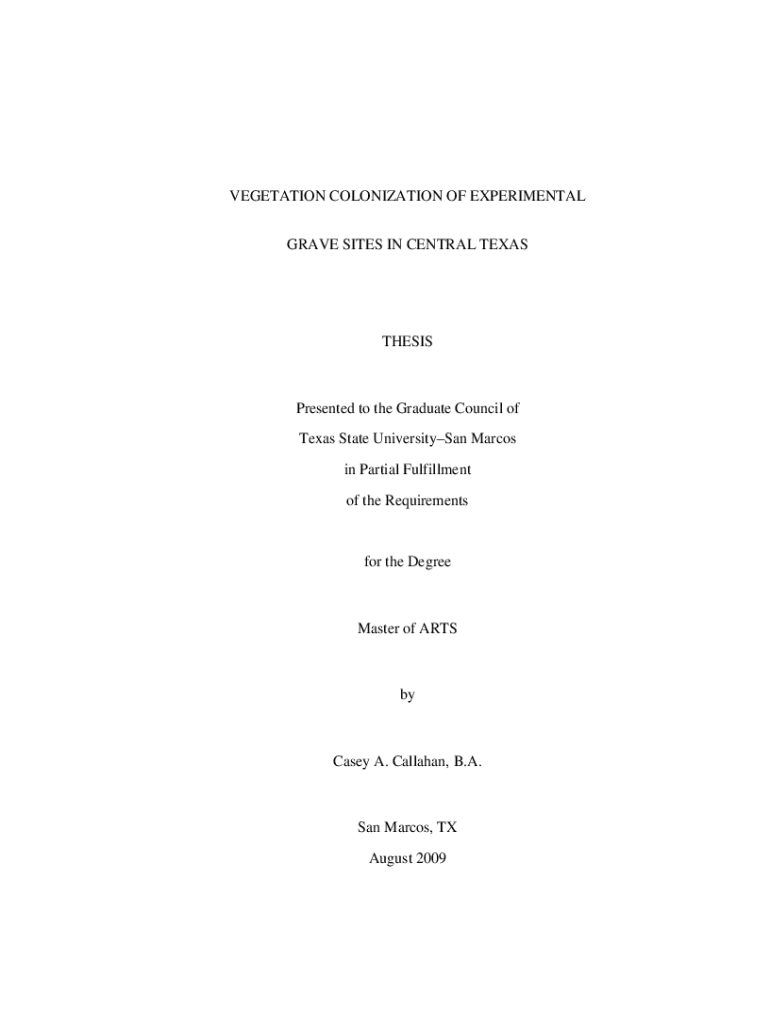
The study on "Vegetation Colonization of Experimental Grave Sites in Central Texas" focuses on understanding how plant life establishes itself on grave sites. This research examines how decomposition processes affect surrounding vegetation, specifically assessing the types of plants that pioneer in disturbed soil environments. Conducted at a forensics facility, it provides insights into how different organic material, such as pig and human remains, influence plant growth compared to undisturbed areas.
Importance of Vegetation Colonization Studies
Research in this area is vital for multiple reasons. Understanding plant colonization patterns helps forensic scientists in locating unmarked or clandestine graves based on the vegetation's characteristics. This scientific approach aims to develop innovative methods for grave detection that do not involve invasive ground-disturbing techniques. Additionally, it provides ecological insights that contribute to our broader understanding of plant ecological succession and soil health following disturbances.
Steps to Conduct Vegetation Colonization Research
Performing a study on grave site vegetation colonization involves several key steps:
- Selecting Research Location: Choose a controlled environment, such as a forensic research facility, to set up experimental graves.
- Setting Up Experimental Plots: Establish grave sites with different variables, including pig cadavers, human cadavers, and control sites.
- Monitoring Over Time: Observe and record plant growth on the plots systematically over predetermined time intervals.
- Data Collection and Analysis: Gather data on plant species, abundance, and other ecological variables for analysis.
- Interpreting Results: Compare findings across different sites to draw conclusions on how decomposition influences vegetation patterns.
Key Elements of Vegetation Colonization Research
- Pioneer Species Identification: Determine which plant species first appear in the disturbed grave site environments.
- Decomposition Impact Assessment: Understand the influence of decomposing cadavers on soil nutrients and plant growth.
- Compound Analysis: Investigate the chemical compounds released during decomposition that may attract certain plant species.
- Control Sites Comparison: Use control sites without cadavers to establish baseline vegetation growth patterns.
Who Typically Undertakes These Studies
Such studies are typically conducted by forensic scientists, ecologists, and other researchers interested in plant-animal-soil interactions. These individuals often collaborate across disciplines, combining knowledge in forensics, botany, and ecology to advance understanding in both scientific and applied forensic realms.
Notable Findings and Applications
- Detecting Clandestine Graves: Utilizing vegetation patterns as non-invasive indicators of burial sites is a notable forensic application.
- Ecological Implications: Findings contribute to knowledge about ecological succession and how disturbances such as burials alter plant communities.
- Forensic Anthropology Advances: Research aids forensic anthropologists in developing new methodologies for site investigation and analysis.
Essential Terms Related to the Study
- Pioneer Species: Initial plant species that colonize new or disturbed land, indicative of soil and environmental conditions.
- Ecological Succession: The sequence of changes in an ecosystem when a new habitat becomes available or after a disturbance.
- Soil Nutrient Dynamics: Changes in soil nutrients that occur due to natural processes like decomposition, impacting plant growth.
Challenges and Considerations in Conducting the Study
- Ethical Concerns: Handling human remains involves ethical considerations and requires strict adherence to legal protocols.
- Environmental Variability: Weather and other environmental factors can significantly affect vegetation growth, necessitating careful control and consistent monitoring.
- Data Collection: Requires meticulous documentation and data management to ensure comprehensive and accurate analysis.
Legal and Ethical Frameworks
Research involving grave sites must comply with legal standards and ethical guidelines. This includes obtaining necessary permissions for using human remains and ensuring that research objectives respect the dignity of the deceased. Adherence to these frameworks is critical in maintaining scientific integrity and public trust.