






Definition and Purpose of the CH-120
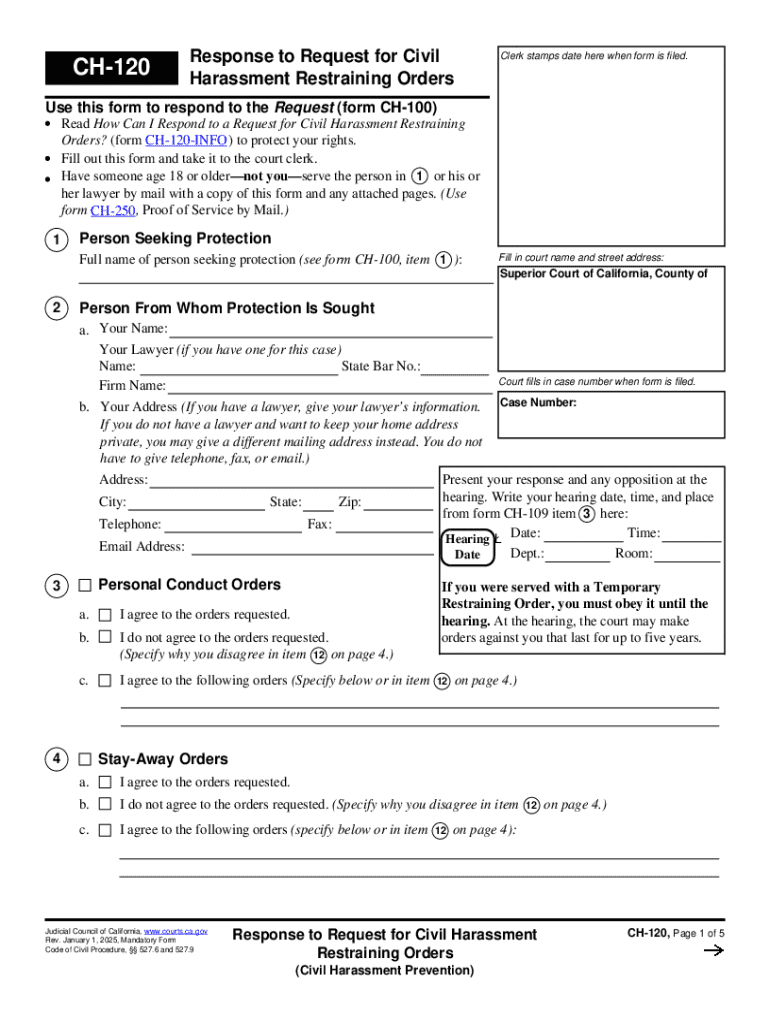
The CH-120 is a legal response form used in California to address requests for Civil Harassment Restraining Orders. This form allows individuals, who have been served with such orders, to formally communicate their agreement or disagreement with the requests made against them. It serves as a critical component in the legal proceedings surrounding civil harassment cases, enabling respondents to present their side of the story and assert their rights within the judicial framework.
Key Elements of the CH-120
- Response to Orders: Obligates the respondent to indicate agreement or disagreement with each requested order.
- Explanation Section: Provides space for respondents to justify their objections or actions.
- Firearms Declaration: Includes sections where respondents must address possession of firearms.
- Fee Waiver Option: Allows respondents to request a waiver for filing fees, which can be crucial for those facing financial hardship.
- Legal Costs Provision: Offers respondents the opportunity to seek payment for legal costs incurred.
Steps to Complete the CH-120
Completing the CH-120 form requires careful attention to detail and understanding of the allegations made in the original request for the restraining order. Each section must be filled out accurately to ensure the respondent’s position is clearly communicated.
- Review the Request: Examine the original restraining order request carefully to understand each of the allegations and requested orders.
- Fill Out Personal Information: Enter all required personal and contact details to identify yourself as the respondent.
- Respond to Orders: Indicate agreement or disagreement with each specific order in the space provided.
- Provide Justifications: Use the designated sections to explain your reasons for disagreeing with any orders, if applicable.
- Address Firearms Possession: Declare possession or non-possession of firearms as required by the form.
- Request Fee Waiver: Apply for a waiver of court fees if applicable, providing documentation of financial status if needed.
- Sign and Date the Form: Ensure that the form is signed and dated before submission.
Important Considerations
- Legal Assistance: It can be beneficial to seek legal advice to complete the form properly.
- Documentation: Keep copies of all documents and communications related to the case for future reference.
Obtaining the CH-120
The CH-120 form can be obtained through several channels in California to ensure accessibility for all potential respondents.
- Online Access: Available for download on the California courts’ official websites. This digital availability ensures easy access and the ability to print the form as needed.
- Court Clerk’s Office: Forms can be picked up in person at the clerk’s office of the courthouse where the original restraining order was filed.
- Legal Aid Offices: Some legal aid organizations provide physical copies and guidance on filling out the form.
Distribution Methods
- Digital Download: Recommended for quick access and convenience.
- In-Person Collection: Ideal for those who prefer direct assistance from court personnel.
Legal Use of the CH-120
The CH-120 serves not only as a means to respond to allegations but also as a protective measure to ensure that respondents have an opportunity to present their side of the case in a legal setting.
Legal Considerations
- Filing Deadlines: Timely submission of this form is crucial to ensure your response is considered in court proceedings.
- Court Hearings: Completing this form is a part of due process, and respondents may be required to present further evidence at a court hearing.
Potential Consequences
Failure to respond using the CH-120 can result in the court granting the restraining order without considering the respondent’s input, potentially impacting their legal rights and personal situation.
Examples of Using the CH-120
Various scenarios illustrate how the CH-120 can be effectively used in legal settings:
- Disagreement with All Requests: A respondent disagrees with all requested restraining orders, providing detailed justifications and supporting evidence.
- Partial Agreement: A respondent agrees to some orders but objects to others, such as those involving firearms possession.
- Fee Waiver Applications: Respondents who face financial constraints successfully obtain fee waivers, allowing them to participate in legal processes without financial burden.
Case Studies
- John’s Story: John effectively uses the CH-120 to contest a restraining order he believes unjust, detailing false allegations and providing validation through witnesses.
- Maria’s Outcome: Maria navigates the financial challenge of legal proceedings by securing a fee waiver through proper documentation, ensuring her ability to respond without the stress of additional financial strain.
State-Specific Rules for the CH-120
Given that the CH-120 is specific to California, state laws and regulations will directly affect its application and interpretation.
California-Specific Procedures
- Judicial Guidelines: California law outlines specific protocols for how respondents must be notified and how they can contest restraining orders.
- Court Requirements: The CH-120 must be filed in the same jurisdiction where the original restraining order request was made.
Variations Across Jurisdictions
While the form itself remains consistent, procedures for service and deadlines may vary slightly across different counties within California, necessitating careful attention to local judicial guidelines.
Required Documents for CH-120 Filing
Supporting documents enhance the credibility and effectiveness of the CH-120 response. Proper documentation may include:
- Evidence of Allegations: Any documentation that supports or refutes allegations made in the original request.
- Financial Statements: For fee waiver applications, current financial records must be provided.
- Witness Statements: Written statements or affidavits from individuals who can support your claims.
Submission Recommendations
- Organized Filing: Ensure all documents are clearly labeled and organized for efficient review by court officers.
- Multiple Copies: Retaining copies of all submissions ensures that you have complete records for your own reference and ongoing legal advice.
Eligibility Criteria for Using CH-120
The CH-120 is aimed at individuals served with a request for a Civil Harassment Restraining Order in California. The following criteria determine its applicability:


Who Can File
- Served Individuals: Only those who have been directly served with a restraining order request are eligible to file the CH-120.
- Legal Representatives: Attorneys acting on behalf of a respondent may file the form provided they have appropriate legal authority.
When Filing is Appropriate
- Upon Receiving a Request: The ideal time to file the CH-120 is immediately upon receiving the request for a civil harassment order, ensuring all deadlines are met.
- Setting Hearings: As part of the court's due process, respondents may request hearings when their initial response does not align with the court's provisional orders.
With these comprehensive guidelines, individuals engaging with the CH-120 form are equipped with the knowledge to navigate the legal landscape effectively, asserting their rights within the California judicial system.