01. Edit your form online
Type text, add images, blackout confidential details, add comments, highlights and more.

Type text, add images, blackout confidential details, add comments, highlights and more.

Draw your signature, type it, upload its image, or use your mobile device as a signature pad.

Send it via email, link, or fax. You can also download it, export it or print it out.
The application for admission to the Maryland Bar via the Uniform Bar Examination (UBE) is a formal legal document required for individuals seeking licensure to practice law in the state of Maryland. This application is crucial for ensuring that applicants meet the necessary educational and ethical standards set by the Maryland Board of Law Examiners. The UBE provides a standardized testing framework that enables aspiring attorneys to gain admission in multiple jurisdictions that recognize the UBE score.
Candidates must fulfill certain eligibility criteria to apply for admission to the Maryland Bar. These include:
Meeting these criteria ensures that the applicant is prepared for the professional responsibilities of practicing law in Maryland.


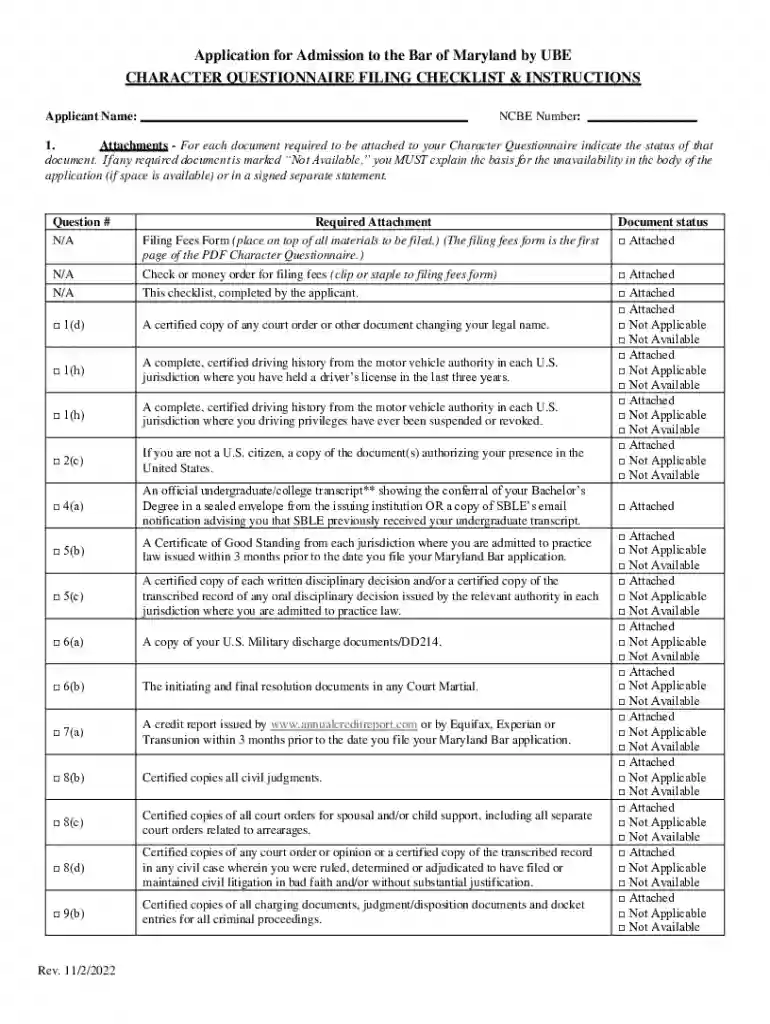
Applicants must compile and submit several key documents along with their application. These documents include:
Accurate and complete submission of these documents is critical to avoid delays in processing.
Each step must be carefully followed to ensure that the application is processed without errors.
Adherence to deadlines is vital for the timely submission of the application. Key dates include:
Missing these deadlines can result in delayed admission or ineligibility to sit for the exam.
Applicants have several options for submitting their forms:
Understanding the advantages and limitations of each method helps applicants choose the best option for their needs.
The application consists of several integral parts, including:
Each section must be completed thoroughly to ensure the application is evaluated on time.
Non-compliance with the application process can result in several consequences:
Applicants must be diligent in meeting every requirement to avoid these penalties.
We've got more versions of the Application for Admission to the Bar of Maryland by Ube form. Select the right Application for Admission to the Bar of Maryland by Ube version from the list and start editing it straight away!
At DocHub, your data security is our priority. We follow HIPAA, SOC2, GDPR, and other standards, so you can work on your documents with confidence.