






Definition and Meaning of Incident Report for Animal Facilities
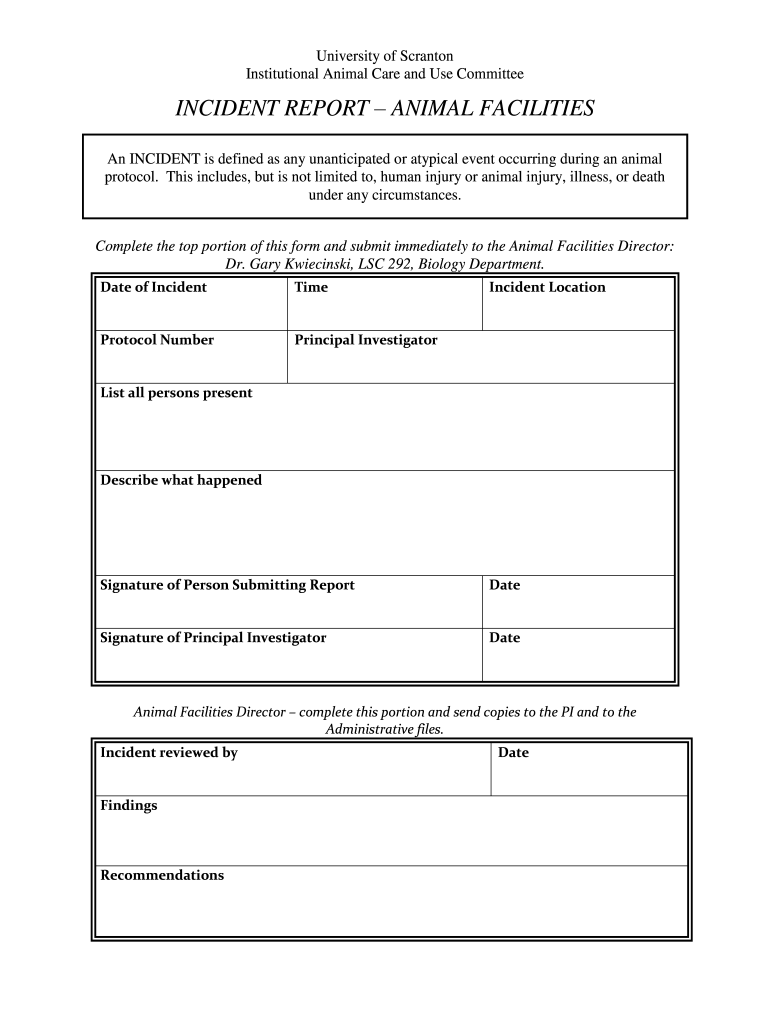
An Incident Report for Animal Facilities is a form used within veterinary environments, research institutions, and animal care facilities to document any unplanned events, unusual occurrences, or accidents involving animals. This document ensures transparency and accountability by detailing specific incidents, such as injuries, unexpected deaths, or deviations from standard procedures. Typically structured to include fields for date, time, description of the incident, the individuals involved, and any corrective actions taken, this form is an essential tool for maintaining compliance with regulatory standards and fostering a safe environment for animal care.
How to Use the Incident Report Form
Using the Incident Report for Animal Facilities involves a methodical process to ensure accurate documentation:
- Identify the Incident: Recognize a situation that deviates from normal procedures, whether an accident involving an animal or a protocol breach.
- Collect Details: Gather all relevant information regarding the incident, including date, time, location, and individuals present.
- Fill the Form: Use the provided sections to detail the incident clearly and concisely. Ensure legibility and use factual language.
- Submit the Report: Once completed, the form should be submitted to the designated authority, such as the Animal Facilities Director, for review and action.
This process not only aids in addressing immediate concerns but also contributes to long-term safety and procedural improvements within the facility.
Steps to Complete the Incident Report
Completing the Incident Report for Animal Facilities requires diligence to ensure all information is thorough and accurate:
-
Header Information:
- Record the date and time of the incident.
- Specify the location within the facility.
- Include the protocol number if applicable.
-
Incident Description:
- Provide a narrative of the events. Use clear, objective language without interpreting or assigning blame.
- Include specifics such as animal species involved, exact location, and sequence of events.
-
Involved Personnel:
- List names and roles of all individuals involved, including staff members and any witnesses.
-
Immediate Actions Taken:
- Document any steps taken to address the incident, such as medical treatment or procedural adjustments.
- Note any equipment used and its condition post-incident.
-
Corrective Measures:
- Suggest actions to prevent future incidents, which could involve staff training, equipment updates, or procedural changes.
-
Review and Signatures:
- Ensure the form is signed by the incident reporter and any supervisors or additional required parties.
These structured steps ensure comprehensive documentation and facilitate analysis for future prevention strategies.
Key Elements of the Incident Report
The Incident Report for Animal Facilities encompasses several key elements to ensure full transparency and accountability:
- Detailed Incident Account: Involves a comprehensive description of what transpired, emphasizing clarity and objectivity.
- Involved Parties: Names and roles of those involved in or witnessing the event are crucial for accountability.
- Chronology: Precise date and time stamps help delineate the timeline of the incident.
- Corrective Action: Details measures taken to amend the situation and prevent recurrence.
Each of these elements is critical to understanding the circumstances, outcomes, and preventive strategies related to the incident.
Legal Use and Compliance
Ensuring compliance with applicable regulations is crucial when filing an Incident Report for Animal Facilities. These reports are often mandated by institutional policies or federal and state animal welfare laws to ensure ethical treatment and handling of animals. The form must accurately reflect the situation without omissions or misstatements to avoid legal consequences or endanger institutional credibility.
- Regulatory Standards: Abiding by legal requirements helps maintain operational integrity and compliance with government standards, such as those put forth by the Institutional Animal Care and Use Committee (IACUC).
Failure to comply may result in legal ramifications, including fines or sanctions.
Who Typically Uses this Form
Various professionals within animal facilities engage with the Incident Report form regularly:
- Veterinarians: Often responsible for diagnosing and treating animals involved in incidents.
- Animal Care Technicians: These individuals might be the first to witness incidents and are pivotal in reporting them.
- Facility Managers: Oversee the review and submission of incident reports, ensuring they are complete and accurate.
The form serves as a communication tool amongst these roles, ensuring accountability and transparency.
Examples and Scenarios of Use
To illustrate the utility of the Incident Report for Animal Facilities, consider the following scenarios:
- Unexpected Injury: An animal sustains an injury during routine handling. The caregiver completes the report detailing the event, environmental conditions, and immediate medical response.
- Unplanned Deviation from Protocol: A procedure is executed incorrectly, jeopardizing animal safety. Reporting ensures the situation is documented and adjustments are made to the protocol to prevent future occurrences.
- Animal Death: Immediate and detailed reporting of circumstances helps facilitate a thorough investigation into cause and necessary operational changes.
These scenarios underscore the form’s importance in fostering a culture of safety and continuous improvement within animal facilities.
Digital vs. Paper Version
Incident Reports can be maintained in both digital and paper formats, each with distinct advantages:
-
Digital Format:
- Efficiency: Allows for faster completion and sharing.
- Accessibility: Enables easier storage and retrieval, often integrating with document management systems like DocHub.
- Editability: Simplifies updates and corrections with tracked changes for accountability.
-
Paper Format:
- Tangible Record: Useful in settings where electronic devices are restricted or unavailable.
- Simplicity: No need for digital literacy or technology access, although it may be more time-consuming and prone to misplacement.
The choice between formats affects how facilities manage their incident reporting process, weighing factors such as speed, accessibility, and operational preferences.