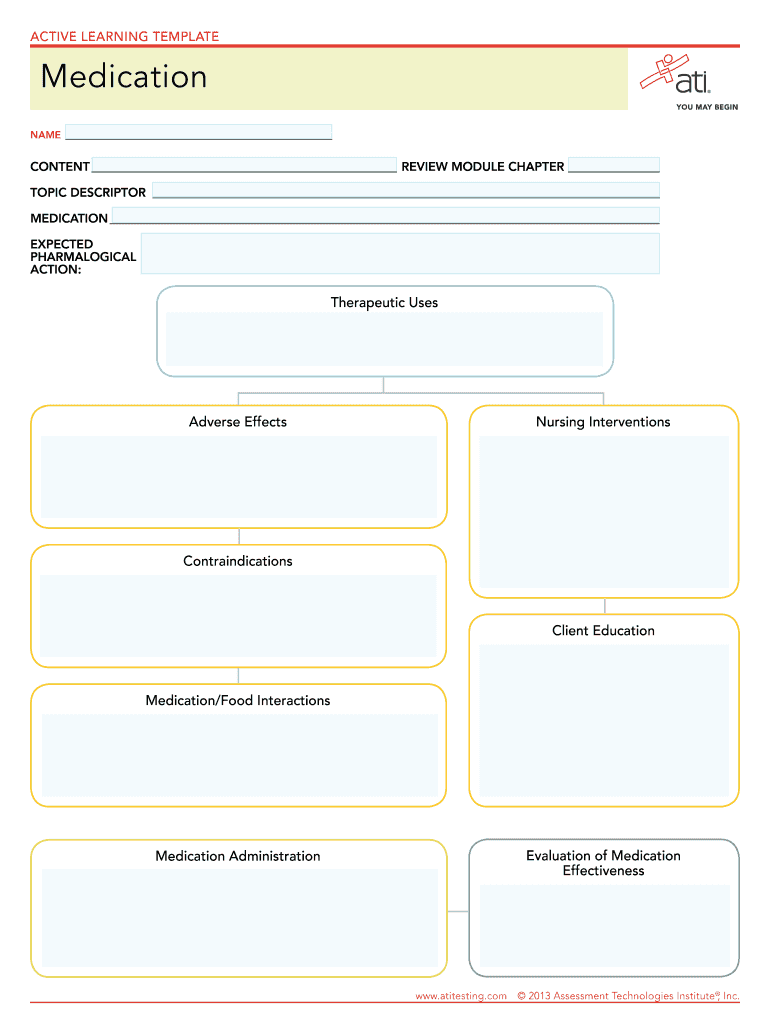







Understanding the ATI Medication Template
The ATI medication template serves as a structured tool to facilitate a comprehensive medication review process. This template encompasses essential elements that healthcare professionals need to evaluate the effectiveness and safety of medications. It enables users to compile critical information, ensuring a well-rounded understanding of pharmacological treatments.
Key Elements of the ATI Medication Template
The template is designed to capture multiple aspects of a medication, including:
- Medication Name: The official name of the drug, along with any generic names commonly associated.
- Pharmacological Action: A brief description of how the medication operates within the body, including its mechanism of action and therapeutic classifications.
- Therapeutic Uses: Details regarding the conditions or diseases for which the medication is prescribed.
- Adverse Effects: A thorough list of potential side effects that patients may experience, both common and serious.
- Nursing Interventions: Recommendations for nursing actions before, during, and after medication administration to ensure safety and effectiveness.
- Contraindications: Specific conditions or factors that would prevent the use of the medication due to the risk of severe adverse effects.
- Client Education: Important information that should be communicated to patients regarding their medication, including dosage, timing, and potential interactions with food or other medications.
- Medication Administration: Guidelines for how the medication is to be administered, including preferred routes and any special preparations needed.
- Evaluation of Effectiveness: Criteria for assessing the medication's efficacy and monitoring patient outcomes.
Each of these components provides a framework for healthcare professionals, ensuring that every critical aspect of medication management is addressed.
How to Use the ATI Medication Template
Using the ATI medication template effectively requires familiarity with its structure and function. Follow these steps to maximize its utility:
- Select a Medication: Begin by identifying the medication you will be reviewing and gather all relevant resources.
- Complete the Medication Name Section: Clearly state both the brand name and generic name to avoid confusion.
- Fill in Pharmacological Action: Describe how the medication works at a biological level, and include its classification (e.g., analgesic, antibiotic).
- Document Therapeutic Uses: State the approved indications for using the drug, supported by evidence from clinical guidelines.
- List Potential Adverse Effects: Review pharmacological literature or databases to compile a comprehensive list of side effects.
- Outline Nursing Interventions: Specify necessary assessments, monitoring parameters, and any pre-administration checks.
- Identify Contraindications: Gather information on any factors that could compromise patient safety when administering the medication.
- Draft Client Education Points: Highlight the most critical information patients need regarding their treatment and any lifestyle considerations.
- Describe Administration Techniques: Detail how the medication should be given, including patient positioning or dosage adjustments.
- Establish Evaluation Metrics: Define how the effectiveness of the medication will be assessed over time.
Each step ensures that the template is used comprehensively and effectively.
Important Terms Related to the ATI Medication Template
Understanding key terminology is crucial for accurately using the ATI medication template in clinical practice. Important terms include:
- Pharmacodynamics: The study of the effects of drugs and the mechanism of action.
- Pharmacokinetics: How the body processes a drug, including absorption, distribution, metabolism, and excretion.
- Adverse Drug Reactions (ADRs): Negative or harmful reactions experienced by patients upon taking medications.
- Medication Errors: Mistakes in prescribing, dispensing, or administering medications that can lead to harm.
- Evidence-Based Practice: A conscientious approach to decision-making in healthcare based on the best available evidence.
- Clinical Pharmacology: The branch of pharmacology concerned with the study of medications in humans.
Acquiring an understanding of these terms enhances the ability to navigate the complexities of medication management and optimize patient care.
Steps to Complete the ATI Medication Template
Completing the ATI medication template involves several key actions to ensure thorough documentation:
- Preparation: Collect all relevant information about the medication, including the latest research and clinical guidelines.
- Audience Identification: Consider the intended reader of the completed template (e.g., nursing students, practitioners).
- Section by Section Completion:
- Begin with core information like the medication name.
- Add pharmacological action and therapeutic uses in concise yet informative language.
- Inclusion of Evidence: Where possible, cite clinical studies or guidelines that validate the therapeutic uses and safety of the medication.
- Review and Revise: After completing the template, review it for clarity and accuracy, ensuring that it fulfills the educational objectives.
Following these systematic steps promotes effective learning and application of the ATI medication template in practice.
Who Typically Uses the ATI Medication Template
The ATI medication template is widely utilized by various healthcare professionals and students, including:
- Nursing Students: As part of their educational curriculum to facilitate learning about pharmacology and medication management.
- Registered Nurses: To prepare for medication administration and ensure adherence to best practices.
- Pharmacists: For ensuring accurate dispensing and providing patient education regarding the use and effects of medications.
- Healthcare Educators: To teach students the critical components of medication safety and proper administration techniques.
These users benefit from its structured approach, enhancing their understanding of medications and improving patient care outcomes.