






Key Elements of the Seasonal System Start-up Requirements Checklist
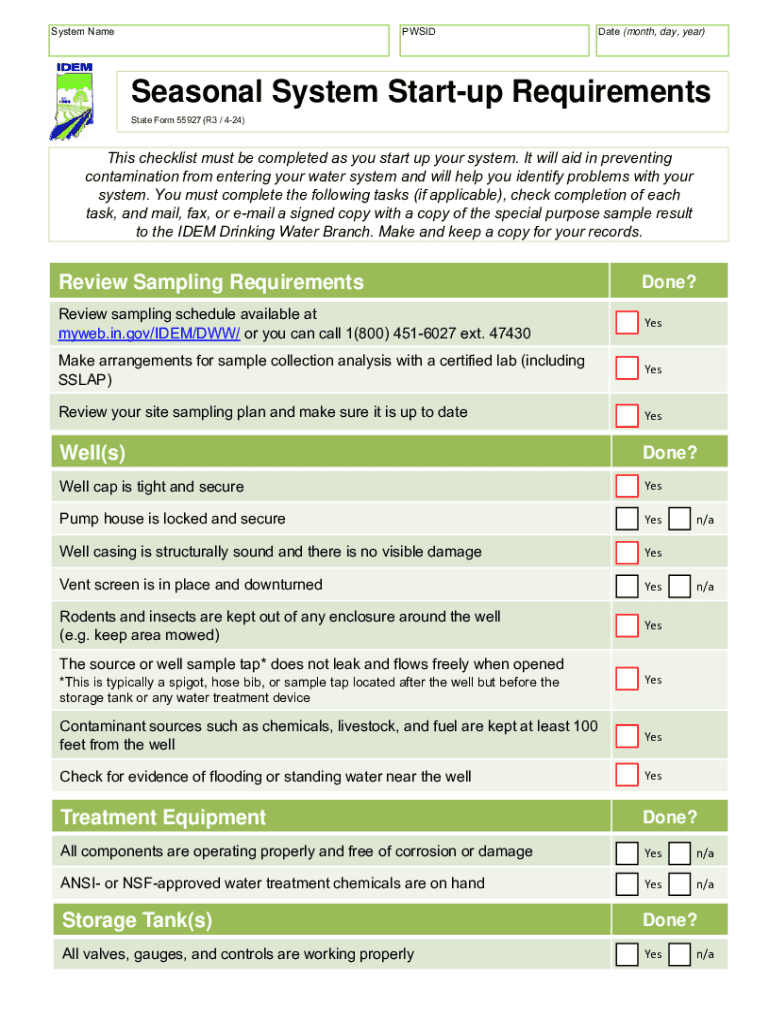
The Seasonal System Start-up Requirements Checklist is designed to ensure the safe operation and maintenance of water systems. It is crucial for preventing contamination and identifying potential issues before reactivating a system after a period of inactivity. This section provides a detailed overview of the main components that typically constitute this checklist.
Well Maintenance
- Inspection: Conduct a thorough inspection of the wellhead and casing for cracks or any form of damage. This helps in ensuring that there are no entry points for contaminants.
- Cleaning: Remove debris and ensure that the well is clean and free of any biofilm or sediment that could affect water quality.
- System Flushing: Perform a complete flushing of the system to remove stagnant water that may have collected during the offseason.
Treatment Equipment Verification
- Equipment Check: Verify that all treatment equipment, such as filters or water softeners, is functioning correctly. Replace or repair any faulty components.
- Chemical Levels: Check and adjust chemical feed systems to ensure that dosages are appropriate for water quality standards.
- Calibration: Regularly calibrate instruments to maintain accurate readings and efficient operation.
Storage Tanks and Distribution
- Tank Inspection: Examine storage tanks for any signs of damage or contamination. It's essential to prevent cross-contamination from external or internal sources.
- Cleaning and Disinfection: Clean and disinfect storage tanks and distribution lines to eliminate any potential microbial contamination.
- Pressure Testing: Conduct pressure tests to ensure the integrity of distribution lines and avoid leaks that could lead to water loss or contamination.
Legal Use of the Seasonal System Start-up Requirements Checklist
Using the checklist fulfills mandatory legal obligations in many states, particularly in compliance with public health and safety regulations. This section explores the legal framework governing the checklist's use.
Legal Compliance
- Submission: In many jurisdictions, the checklist must be submitted to the relevant environmental or health department, such as the Indiana Department of Environmental Management.
- Documentation: Keeping comprehensive documentation ensures accountability and provides a paper trail in case of compliance audits.
Regulatory Standards
- Water Quality Standards: Adhering to state and federal water quality standards is mandatory, and the checklist helps maintain these standards.
- Audit Trails: Regulators may require proof of checklist completion as part of routine inspections or audits.
Who Typically Uses the Seasonal System Start-up Requirements Checklist
The checklist is essential for a range of professional stakeholders involved in the management of water systems. Understanding who primarily relies on this checklist can provide insights into its widespread applications.

Water System Operators
- Responsibilities: Operators are responsible for ensuring the system meets the required standards before activation. The checklist is a critical tool for documenting all necessary steps.
- Training and Knowledge: Operators must be well-versed in using the checklist and understanding each item to ensure compliance.
Environmental Inspectors
- Verification: Inspectors use the checklist to verify that all necessary steps have been completed following regulatory standards.
- Reporting: Inspectors may rely on this documentation when filing reports or making recommendations for compliance improvements.
Steps to Complete the Seasonal System Start-up Requirements Checklist
Completing the checklist involves a methodical approach to prevent missing any critical tasks. This procedural section outlines the key steps necessary for completing the checklist effectively.
- Initial Assessment: Begin with a comprehensive assessment of the water system to determine the scope of work required.
- Task Prioritization: Identify and prioritize tasks based on system needs and potential risks.
- Checklist Execution: Methodically go through each item on the checklist, ensuring all tasks are performed thoroughly.
- Documentation: Record all actions taken during the process to ensure transparency and facilitate audits.
- Final Verification: Before submission, verify the completion of all tasks and ensure all required documents are attached.
Examples of Using the Seasonal System Start-up Requirements Checklist
Real-world scenarios offer valuable insights into how the checklist is utilized in practice. This portion discusses practical examples of its application.
Municipal Water Systems
In a municipal setting, completing the checklist ensures that the community's water supply is safe and meets all health regulations before being distributed.
Industrial Applications
Industries using private water systems rely on the checklist to maintain their systems, safeguarding against operational disruptions and maintaining stringent quality controls.
State-Specific Rules for the Seasonal System Start-up Requirements Checklist
While the core components of the checklist are generally consistent, variations may exist based on state-specific regulations and environmental conditions.
Indiana Requirements
- Specific Documentation: Indiana requires the submission of sample results alongside the checklist to the Department of Environmental Management.
Regional Variations
- Climate Considerations: In areas with extreme temperatures, additional steps related to insulation and temperature management might be required.
Important Terms Related to Seasonal System Start-up Requirements Checklist
Understanding the terminology related to the checklist can enhance comprehension and execution of the checklist.
Key Terms
- Contamination: Introduction of hazardous substances into the water system that may pose health risks.
- Calibration: Adjusting equipment to ensure accurate measurements and optimal performance.
- Hydraulic Testing: A process to test the water system for leaks and maintain pressure integrity.
Required Documents
Gathering and submitting the correct documentation is crucial when preparing the checklist. This section details the necessary paperwork.
Essential Documents
- Maintenance Logs: Records of previous maintenance activities performed on the system.
- Water Quality Reports: Recent reports that reflect the current status of the water's quality.
- Inspection Certificates: Certificates from licensed inspectors ensuring each system component meets regulatory requirements.