01. Edit your form online
Type text, add images, blackout confidential details, add comments, highlights and more.

Type text, add images, blackout confidential details, add comments, highlights and more.

Draw your signature, type it, upload its image, or use your mobile device as a signature pad.

Send it via email, link, or fax. You can also download it, export it or print it out.
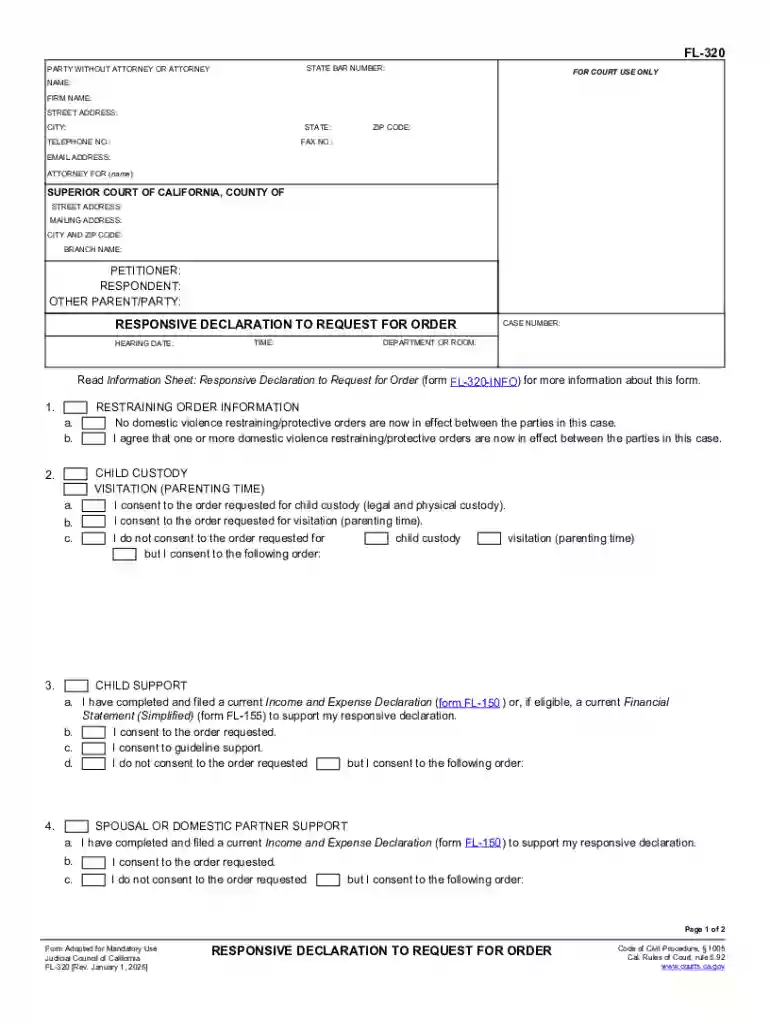
The FL-320 form, known as the Responsive Declaration to Request for Order, is a legal document utilized in California's family law cases. This form allows a responding party to address and oppose requests made by another party in a family law matter. The form requests detailed information related to various family law issues, such as restraining orders, child custody, and support modifications. Because it serves as an official response to a motion, it's crucial that the declarant affirms the information as accurate under penalty of perjury.
Completing the FL-320 involves meticulous attention to detail to ensure all necessary sections are filled out accurately.
Identification Information
Case Information
Responding to Requests
Statements and Declarations
Verification
Using the FL-320 is vital in family law proceedings as it enables parties to formally express their stance regarding requests made by the other party. The form offers an avenue for:
The FL-320 form is generally used by individuals involved in California family law cases. This includes:


While the FL-320 is specific to California, understanding its usage within the context of California’s legal system is crucial.
Consider a parent contesting a proposed increase in child support. The parent can use the FL-320 to detail their financial situation, provide supporting documents, and explain why the increase should not be granted. Similarly, a spouse might use the form to argue against a proposed change in spousal support terms.
Failing to file the FL-320 timely can result in the court proceeding without your input, possibly leading to unfavorable decisions. Non-compliance with the court's timelines or providing false information can have legal consequences, including penalties or contempt of court charges.
We've got more versions of the fl-320 form. Select the right fl-320 version from the list and start editing it straight away!
At DocHub, your data security is our priority. We follow HIPAA, SOC2, GDPR, and other standards, so you can work on your documents with confidence.