
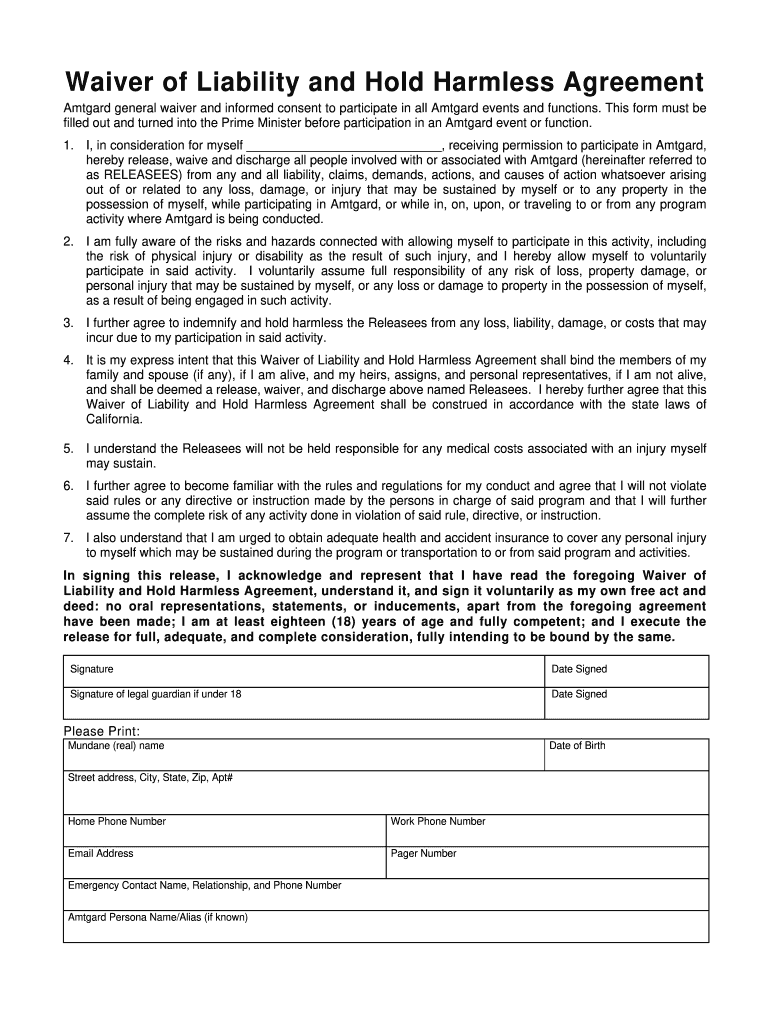







Definition & Meaning of a Hold Harmless Agreement in Florida
A hold harmless agreement is a legal document that protects one party from liability for risks or damages resulting from specific activities or circumstances. In Florida, this agreement is often used in various contexts, including real estate transactions, event participation, and service agreements. The core function of a hold harmless agreement is to release one party from liability for any injuries or damages that might occur during the execution of the agreement.
This type of agreement clearly outlines the responsibilities of each party involved and specifies that one party agrees not to hold the other liable for certain actions. For example, in real estate, a property owner may require a contractor to sign a hold harmless agreement prior to performing work on their property, ensuring that the contractor cannot sue the owner for injuries sustained while on the job.
Key components of a hold harmless agreement typically include:
- Identification of Parties: Names and addresses of all parties involved in the agreement.
- Scope of Work: Details of the activities or services being undertaken.
- Liability Waiver: Clear statement indicating that one party is not liable for damages or injuries.
- Duration: Timeframe for which the agreement is valid.
- Governing Law: Specification that Florida law governs the agreement.
Understanding the definition and implications of a hold harmless agreement is essential for parties intending to protect themselves legally when engaging in various activities.
How to Use the Hold Harmless Agreement in Florida
Using a hold harmless agreement in Florida involves specific steps to ensure that it is effective and legally binding. Proper execution is essential to mitigate risks and protect parties from liability. Below are crucial considerations for using a hold harmless agreement:
- Determine the Need: Identify situations where the agreement is necessary, such as events, construction work, or activities that involve significant risks.
- Draft the Agreement: Create a document that clearly outlines the terms, including the scope of the activity, parties involved, and liabilities waived.
- Consult a Legal Professional: It is advisable to have a lawyer review or draft the agreement to ensure it complies with Florida laws and adequately protects your interests.
- Sign in Presence of Witnesses: While not always required, having witnesses or a notary public can add a layer of validity to the agreement.
- Maintain Copies: Each party should keep a signed copy for their records, ensuring that all involved can reference the terms if needed.
By following these guidelines, parties can effectively use a hold harmless agreement to protect themselves from potential legal issues related to liability.
Steps to Complete the Hold Harmless Agreement in Florida
Completing a hold harmless agreement in Florida requires attention to detail and adherence to legal requirements. The following steps outline the process:
- Identify the Parties: Clearly define who is entering into the agreement. List the full names and addresses of all parties involved.
- Describe the Activity: Specify the activity or service that the agreement covers. This could be construction work, events, or use of property.
- Outline Liability Waivers: Clearly state that one party will not hold the other liable for damages or injuries that may occur during the specified activity.
- Include Governing Law Clause: Specify that Florida state law governs the agreement, providing clear jurisdiction for any disputes.
- Signature Section: Leave space for signatures and date lines for all parties to sign, ensuring that the agreement is formally executed.
- Consider Notarization: Depending on the context, having a notary public witness the signatures can enhance the agreement's validity.
Following these steps can ensure that the hold harmless agreement is completed correctly, providing legal protection for the involved parties.
Importance of a Hold Harmless Agreement in Florida
A hold harmless agreement serves multiple beneficial purposes in Florida, making it an essential legal tool in various situations. Here are some significant reasons to consider:
- Risk Management: The agreement mitigates risks associated with activities that may lead to injuries or damages. By clarifying liability boundaries, participants can engage more confidently in activities.
- Protection from Legal Claims: Having a well-drafted hold harmless agreement can prevent lawsuits from arising due to accidents or injuries, safeguarding both parties' interests.
- Clarity in Responsibilities: The agreement articulates each party's responsibilities and potential liabilities, reducing the likelihood of misunderstandings.
- Encouraging Participation: Individuals and organizations may be more willing to participate in events or projects when they know legal protections are in place.
- Real Estate Transactions: In real estate, these agreements allow property owners and contractors to clarify roles and liabilities, facilitating smoother transactions and project executions.
Utilizing a hold harmless agreement can significantly enhance protection and clarity in various activities, making it a vital document for everyday transactions.
Key Elements of a Hold Harmless Agreement in Florida
To create an effective hold harmless agreement in Florida, certain key elements must be included to ensure its validity and effectiveness. These elements are as follows:
- Parties Involved: Clearly state all parties who are entering into the agreement, including their roles.
- Detail of Activities: Describe the specific activities covered by the agreement, ensuring there is no ambiguity.
- Liability Waivers: Include explicit language indicating the waiver of liability for specific incidents related to the outlined activities.
- Indemnification Clause: This clause specifies that one party agrees to indemnify the other against losses resulting from claims related to the outlined activity.
- Governing Law: Clearly indicate that the agreement is governed under Florida law, ensuring compliance with state-specific legal standards.
- Duration of Agreement: Specify how long the agreement will remain in effect, particularly for ongoing activities.
- Signature Lines: Provide space for signatures from all parties, as this is vital for the agreement’s enforceability.
Incorporating these elements into a hold harmless agreement ensures comprehensive coverage and legal robustness while protecting the interests of all involved parties.




