01. Edit your form online
Type text, add images, blackout confidential details, add comments, highlights and more.

Type text, add images, blackout confidential details, add comments, highlights and more.

Draw your signature, type it, upload its image, or use your mobile device as a signature pad.

Send it via email, link, or fax. You can also download it, export it or print it out.
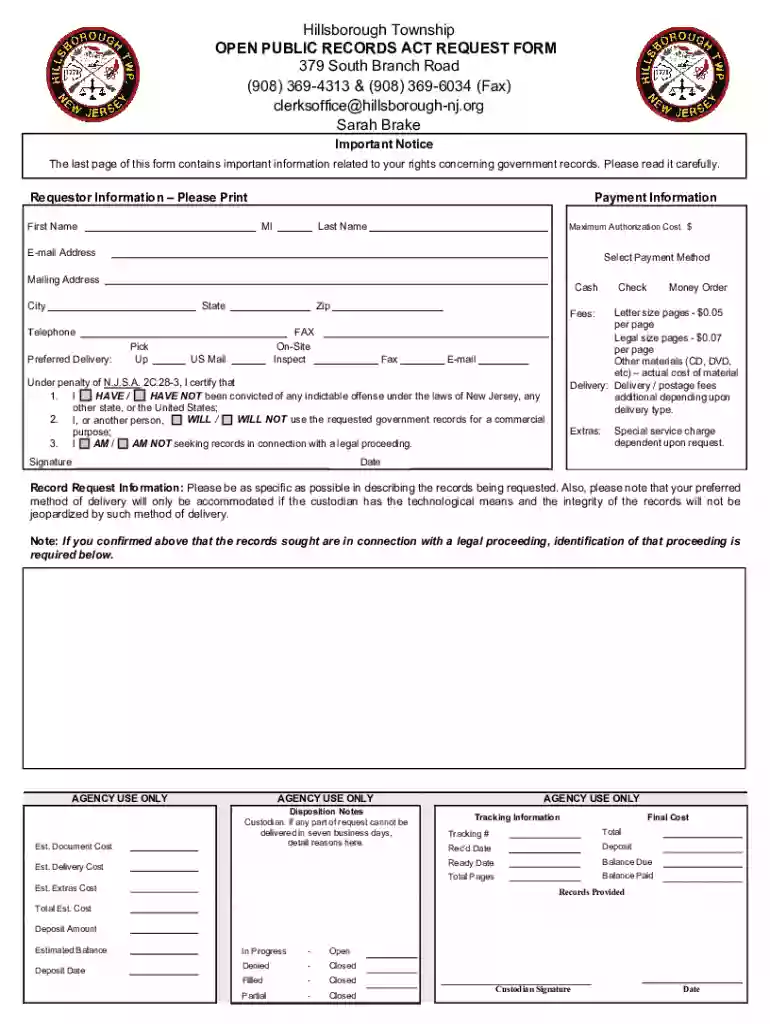
The Open Public Records Act (OPRA) request form is a legal document designed to facilitate the transparency of government operations by allowing individuals to request access to public records. This form is primarily used in New Jersey to ensure the public’s right to information, enabling citizens to access, inspect, and duplicate public records held by government agencies. The goal of the OPRA request is to promote openness, accountability, and a more informed citizenry, fostering civic engagement and participation in democratic processes.
To effectively use the OPRA request form, follow these steps:
Understanding key terms associated with the OPRA request form is essential for accurate comprehension and processing:
Completing the OPRA request form involves several key steps:
The legal framework governing the OPRA request ensures compliance with state laws, defining the obligations of government agencies and the rights of requestors. The act outlines specific exemptions where records may not be disclosed, such as those involving privacy, public safety, or trade secrets. Agencies are required to provide a written explanation for any denial of access, ensuring accountability and recourse for requestors to appeal decisions.
Using the OPRA request form can vary across different contexts:
These examples illustrate the form’s versatility and utility in promoting transparency and accountability.
The OPRA request form is structured to ensure comprehensive coverage of all necessary information:
Each section plays a vital role in facilitating the accurate and efficient processing of record requests.
While OPRA is specific to New Jersey, similar public records legislation exists in other states, each with unique rules and guidelines. Understanding the nuances of New Jersey's OPRA can aid in recognizing regional differences, such as response times, applicable fees, and types of records available for disclosure. Requestors must be aware of these specifics to ensure compliance and successful navigation of public records requests.
We've got more versions of the OPRA (Open Public Records Act) Request Form form. Select the right OPRA (Open Public Records Act) Request Form version from the list and start editing it straight away!
At DocHub, your data security is our priority. We follow HIPAA, SOC2, GDPR, and other standards, so you can work on your documents with confidence.