01. Edit your form online
Type text, add images, blackout confidential details, add comments, highlights and more.

Type text, add images, blackout confidential details, add comments, highlights and more.

Draw your signature, type it, upload its image, or use your mobile device as a signature pad.

Send it via email, link, or fax. You can also download it, export it or print it out.
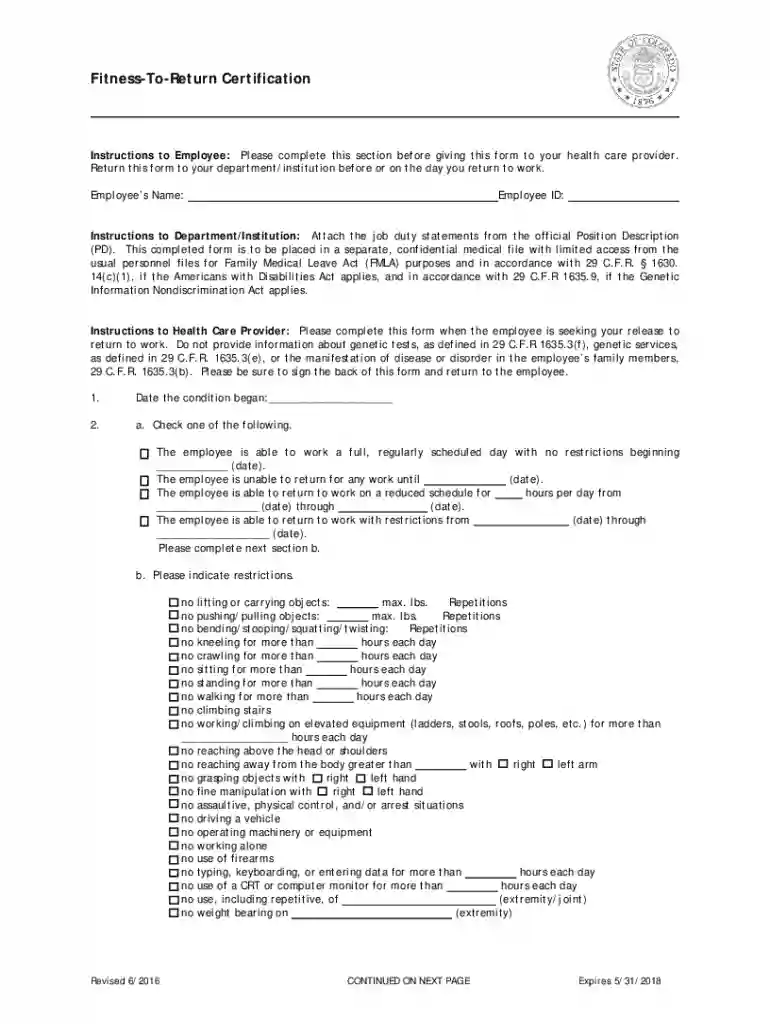
Fitness-to-return Certification is a document that verifies an employee's health status and their ability to resume work after a period of illness or injury. It ensures both the safety of the returning employee and the workplace environment. The certification provides confirmation from a healthcare provider that the employee is well enough to perform job duties without risking further injury or compromising the health of others. The document is essential for maintaining compliance with labor and employment regulations, supporting both employers and employees in managing workplace health standards.
Utilizing the Fitness-to-return Certification involves several steps. Employers typically require this document as part of their return-to-work protocol:
Identify the Requirement: Companies clarify situations in which an employee must provide the certification, such as after extended medical leave or significant health events.
Submission: The employee submits the completed certification to the HR department before returning to work. This may include details like dates of absence, diagnosis, treatment, and any workplace accommodation needs.
Verification: HR representatives review the certification to ensure it meets workplace standards and adheres to legal requirements.
Record Keeping: The certification is securely filed per confidentiality protocols, ensuring compliance with privacy laws such as HIPAA.
To obtain the Fitness-to-return Certification, employees must consult a healthcare provider who will assess their condition:
Schedule a Consultation: The employee books an appointment with a primary care physician or specialist to evaluate their readiness to return to work.
Medical Assessment: The healthcare provider conducts a thorough examination, checking recovery progress, addressing ongoing symptoms, and determining work-related capabilities.
Documentation: The provider completes the certification, detailing the employee's current health status and any limitations or accommodations required.
Delivery: The employee delivers the certification to their employer for review.
Completing the certification involves specific steps:
The document serves multiple important functions:
Various parties typically employ this certification:
Key components include:
Legal use involves adherence to privacy laws and ethical handling of personal health information. Employers must:
We've got more versions of the Fitness-to-return Certification form. Select the right Fitness-to-return Certification version from the list and start editing it straight away!
At DocHub, your data security is our priority. We follow HIPAA, SOC2, GDPR, and other standards, so you can work on your documents with confidence.