






Definition & Meaning
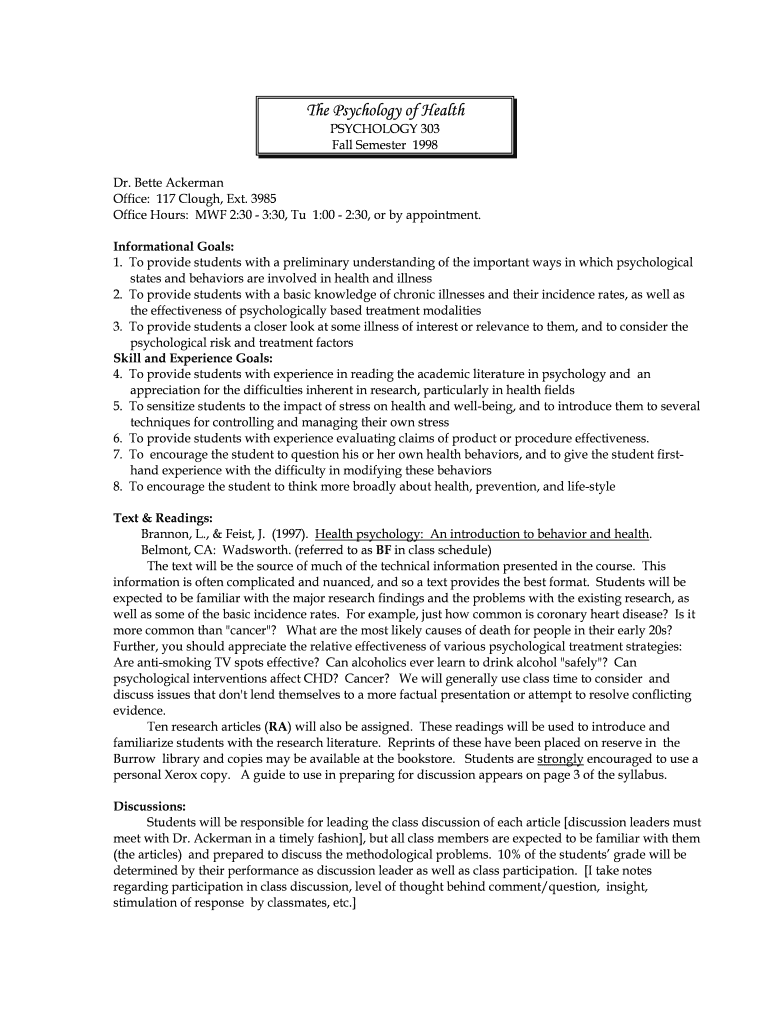
The Psychology of Health – DLynx at Rhodes College is a course designed to explore the psychological factors influencing health, illness, and healthcare practices. It aims to provide students with an understanding of how mindsets, emotions, and behaviors affect physical health, particularly in the context of chronic illnesses and treatments. The course emphasizes the importance of psychological principles in understanding health and developing effective wellness strategies.
Steps to Complete the Course
-
Enroll in the Course: Students interested in understanding the psychological aspects of health must first enroll in the course through Rhodes College's official channels.
-
Attend Lectures and Participate: Active attendance and participation in lectures and discussions are crucial for gaining insights from the course. Engage in discussions and ask questions to deepen your understanding.
-
Complete Assignments: The course involves several assignments, including reading, class discussions, and exams. It's important to stay updated with the syllabus and complete each assignment within deadlines.
-
Engage in Panel Presentations: Participate in panel presentations on topics like herbal remedies and wellness activities. This encourages collaborative learning and a deeper exploration of health psychology topics.
-
Submit a Topic Paper: Towards the end of the course, students must submit a topic paper that reflects their understanding and integrates the different aspects of health psychology. This paper should analyze a specific health-related topic through the psychological lens.
Key Elements of the Course
-
Course Structure: It includes a mix of lectures, readings, discussions, and assignments with a focus on developing practical skills in evaluating health claims.
-
Focus Areas: The course explores chronic illnesses, treatment modalities, wellness activities, and personal health assessments.
-
Academic Engagement: Students will engage with academic literature to broaden their understanding of health psychology.
Why Study The Psychology of Health
Studying The Psychology of Health offers valuable insights into the connections between mind and body, helping students understand how psychological factors impact health outcomes. It equips students with the knowledge to assess health behaviors and promote healthier lifestyles. This understanding is crucial for careers in healthcare, mental wellness, and research.
Who Typically Uses This Course
The course is designed predominantly for undergraduate students enrolled at Rhodes College, particularly those pursuing studies in psychology, health sciences, or related fields. Students aspiring to work in healthcare, therapeutic, or counseling roles can benefit significantly from this course.
Important Terms
-
Health Psychology: A field of psychology focusing on how biological, social, and psychological factors influence health and illness.
-
Wellness Activities: Activities and lifestyle changes aimed at enhancing an individual's overall health and well-being.
-
Herbal Remedies: Natural treatments using plant extracts to address or alleviate health issues.
How to Use the DLynx at Rhodes College
DLynx is the digital archive of Rhodes College, which can be accessed by students to find course materials and academic resources related to The Psychology of Health. The platform supports students in gathering information, research, and study materials relevant to their coursework.
Legal Use and Compliance
Courses and materials accessed via DLynx must be used in compliance with educational fair use policies. It’s crucial to ensure any dissemination or utilization of course materials adheres to copyright laws and institutional guidelines.
Examples of Applying Course Concepts
-
Case Studies: Students might explore case studies on how psychological interventions have improved treatment adherence in chronic illness patients.
-
Behavioral Assessments: Apply learned theories by conducting behavioral assessments to determine the impact of stress on physical health outcomes.
Digital vs. Paper Versions
With the integration of modern technologies, course materials and submissions can often be handled digitally through platforms like DLynx. This transition facilitates easy access and storage of educational resources, though traditional methods, like printed course materials, may still play a role in some contexts.
Quick Facts
- The Psychology of Health course was conducted in Fall 1998 by Dr. Bette Ackerman and included a comprehensive overview of health psychology aspects.
- The DLynx archive makes these materials accessible for learning and research, benefiting students and researchers alike.