A COMPARATIVE SURVEY OF COVENANT MARRIAGE 2025

Get Form
A COMPARATIVE SURVEY OF COVENANT MARRIAGE Preview on Page 1

Here's how it works

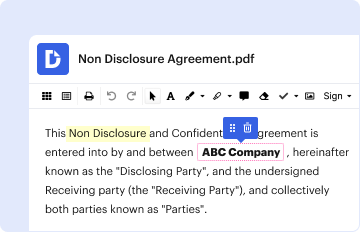
01. Edit your form online
Type text, add images, blackout confidential details, add comments, highlights and more.
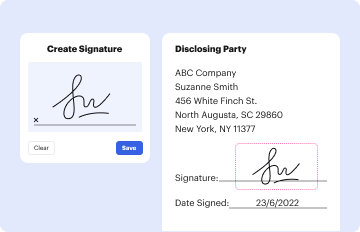
02. Sign it in a few clicks
Draw your signature, type it, upload its image, or use your mobile device as a signature pad.
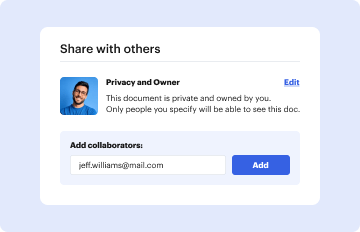
03. Share your form with others
Send it via email, link, or fax. You can also download it, export it or print it out.

How to use or fill out A COMPARATIVE SURVEY OF COVENANT MARRIAGE with our platform

Form edit decoration
9.5
Ease of Setup
DocHub User Ratings on G2
9.0
Ease of Use
DocHub User Ratings on G2
  1. Click ‘Get Form’ to open it in the editor.
  2. Begin by reviewing the introduction section, which outlines the purpose of the survey. This will help you understand the context before filling out any fields.
  3. Move to Section I, where you will find questions regarding your understanding of covenant marriage concepts. Fill in your responses based on your knowledge or research.
  4. In Section II, provide details about any existing legislation in your state related to covenant marriage. Use our platform's text tools to format your answers clearly.
  5. Proceed to Section III, where you may need to compare different proposals. Utilize the comment feature for additional notes or insights that may enhance your analysis.
  6. Finally, review all sections for completeness and accuracy before saving or sharing your document directly from our platform.

Start using our platform today for free and streamline your document editing experience!

be ready to get more

Complete this form in 5 minutes or less

Get form

Got questions?

We have answers to the most popular questions from our customers. If you can't find an answer to your question, please contact us.
Contact us
Covenant marriage is an approach to divorce reform that allows couples to opt for a marriage that is more difficult to end than the standard marriage granted in most states. It is completely voluntary, only available in a few states, and somewhat controversial.
Yes, there are some drawbacks to covenant marriages. Should the couple wish to divorce, the process is much more difficult. Also, there must be a reason for the couple wanting to divorce, as no-fault divorces cannot apply to covenant marriages.
Here are 10 tips to bring back the passion in your marriage: Change your pattern of initiating sex. Hold hands more often. Allow tension to build. Separate sexual intimacy from routine. Carve out time to spend with your partner. Focus on affectionate touch. Practice being more emotionally vulnerable during sex.
Covenant marriage requires the couple to agree to conditions that make it more difficult to get married, require them to put in more work to stay married, and limit the grounds on which they they can file for divorce (there must be fault).
Prior to entering into a covenant marriage, a couple must attend premarital counseling sessions emphasizing the nature, purposes, and responsibilities of marriage and must sign a statement declaring that a covenant marriage is for life. In contrast to no-fault divorces more lenient requirements for non-covenant

People also ask

Traditional marriage allows a couple to enter the union by filling out a marriage license (among other state requirements), but with a covenant marriage, which is often rooted in religious or moral convictions, the couple must complete premarital counseling with a clergyman or therapist ahead of time.
Covenant marriages differ from traditional marriages in several key ways. While a conventional marriage allows couples to file for divorce based on no-fault grounds, covenant marriages typically limit divorce to specific circumstances, such as adultery, abuse, or abandonment.

Related links