






Definition & Meaning
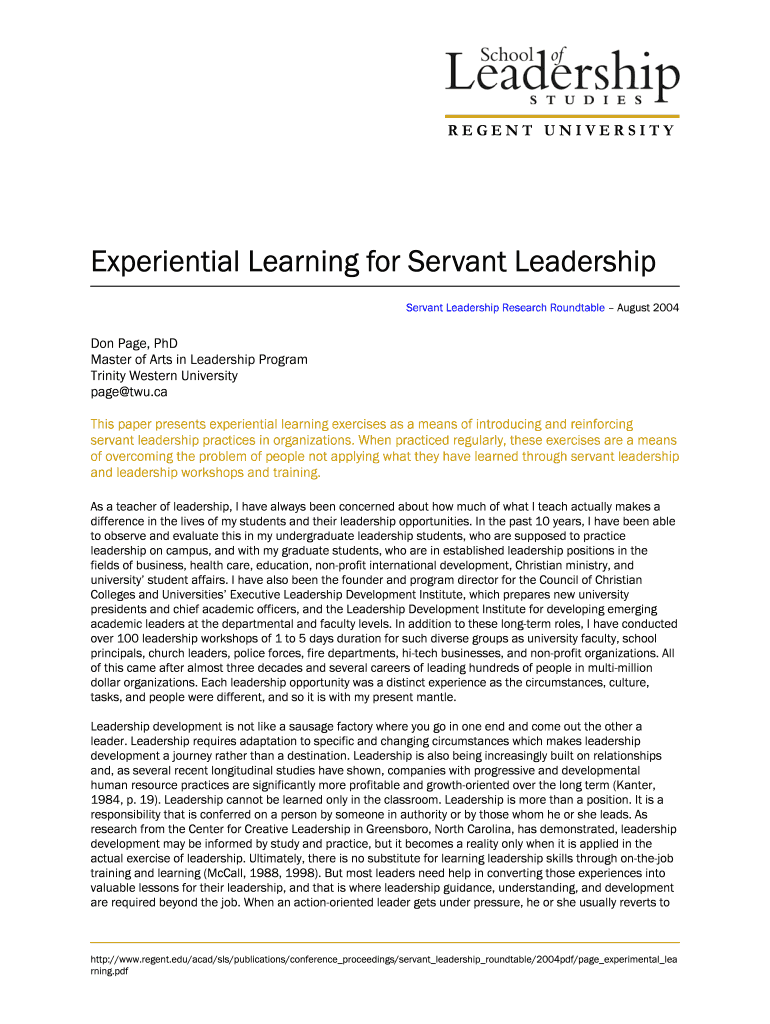
Experiential Learning for servant leadership involves engaging in practical exercises that focus on developing leadership skills centered on serving others. This approach contrasts with traditional classroom learning by emphasizing real-world application and interactive experiences. The goal is to cultivate qualities essential to servant leadership, such as empathy, communication, and teamwork, through hands-on activities and reflection.
Essential Characteristics
- Prioritizes practical experiences over theoretical learning.
- Focuses on developing servant leadership qualities.
- Encourages collaboration and reflection for stronger learning retention.
Key Learning Outcomes
- Improved communication and teamwork skills.
- Increased ability to empathize and understand others' perspectives.
- Stronger focus on community and service within leadership roles.
How to Use Experiential Learning for Servant Leadership
To effectively implement experiential learning for servant leadership, select suitable exercises that promote the development of core servant leadership qualities. These exercises should provide challenges that require participants to collaborate and engage with real-world problems. Incorporate reflection and feedback sessions to help participants internalize lessons and apply them to their leadership approach.
Example Exercises
- Role-playing scenarios that require empathy and understanding.
- Group projects that emphasize cooperative problem-solving.
- Service-learning projects that engage with community issues.
Steps to Complete Experiential Learning for Servant Leadership
- Identify Learning Goals: Define the servant leadership qualities you wish to develop.
- Select Exercises: Choose experiential activities that align with your learning goals.
- Engage Participants: Facilitate exercises in a supportive environment that encourages active participation.
- Reflect and Feedback: Host sessions where participants can share experiences and provide feedback.
- Apply Lessons: Encourage participants to implement learned skills in their daily leadership roles.
Tips for Successful Implementation
- Ensure a safe space for open communication and sharing.
- Provide diverse exercises to cater to different learning styles.
- Adjust exercises based on participants' feedback for continued improvement.
Why Should You Use Experiential Learning for Servant Leadership
Experiential learning offers tangible benefits for developing servant leadership qualities. By engaging in practical, hands-on activities, leaders can solidify their learning and improve their ability to serve and lead effectively. This approach fosters a culture of collaboration and encourages leaders to focus on the needs of their teams and communities.
Benefits
- Enhances long-term retention of leadership concepts.
- Encourages continuous improvement and adaptation.
- Cultivates a servant leadership culture focused on team and community well-being.
Key Elements of Experiential Learning for Servant Leadership
- Real-world Application: Exercises should closely mimic real leadership challenges.
- Collaboration: Group activities that promote teamwork and communication.
- Reflection: Opportunities for participants to think critically about their experiences and growth.
Considerations for Effective Design
- Tailor activities to the specific needs and contexts of participants.
- Ensure a balance between challenge and support.
- Incorporate feedback mechanisms to assess the effectiveness of activities.
Who Typically Uses Experiential Learning for Servant Leadership
This approach is commonly used by organizations seeking to enhance their leadership development programs. It is especially prevalent in sectors that prioritize service and community engagement, such as non-profits, educational institutions, and service-oriented businesses.
Examples of Users
- Non-profit organizations aiming to strengthen community leadership.
- Educational programs focusing on character and leadership development.
- Businesses looking to foster a collaborative and service-oriented work culture.
Examples of Using Experiential Learning for Servant Leadership
One notable example is a leadership development seminar where participants engage in community service projects. These projects not only address local needs but also allow future leaders to practice empathy and teamwork. Another example could be a simulation exercise where team members must work together to solve complex problems, mimicking real-life leadership challenges.
Real-world Scenarios
- Community cleanup initiatives as a platform for leadership roles.
- Crisis management simulations to test leadership skills under pressure.
- Team-based service projects promoting a sense of collective achievement.
Versions or Alternatives to Experiential Learning for Servant Leadership
There are various adaptations and alternatives to traditional experiential learning, each offering unique approaches to developing servant leadership qualities. Some programs may incorporate digital tools, while others may integrate cultural elements to enhance the learning experience.
Alternative Approaches
- Virtual Simulations: Using technology to create realistic leadership scenarios.
- Cultural Immersion: Engaging with diverse communities to broaden perspectives and understanding.
- Peer Mentoring: Utilizing experienced leaders to guide and provide feedback during exercises.
Each approach offers different benefits and can be tailored to fit the unique needs of the learning group.