






Definition & Meaning
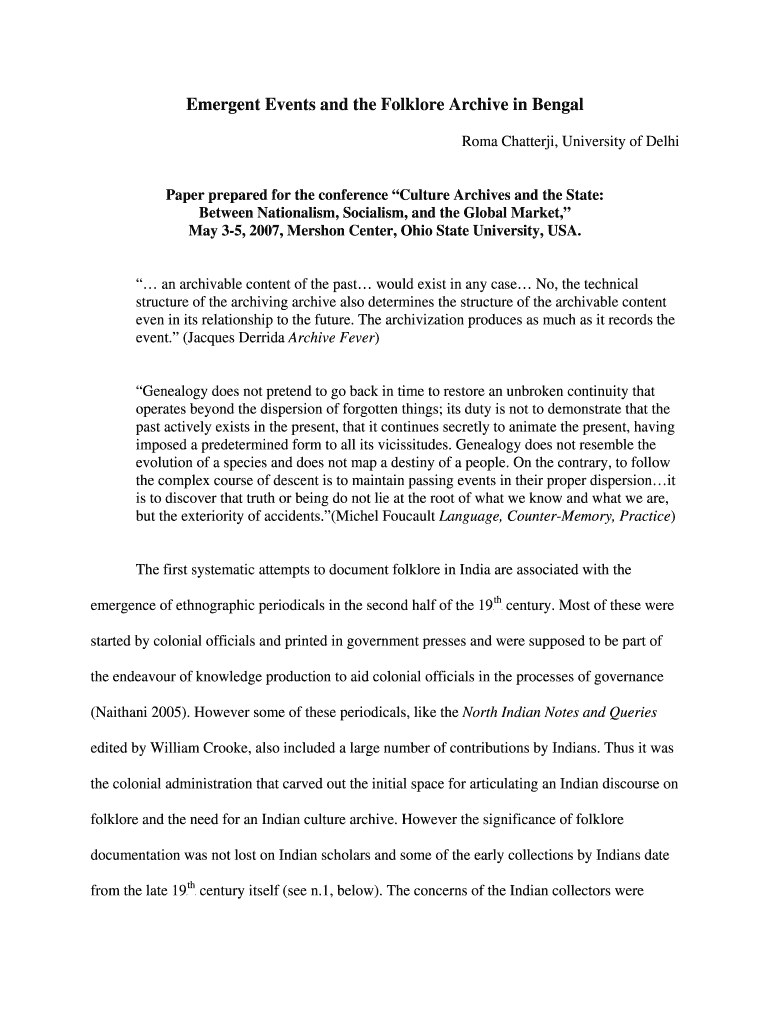
The Folklore Archive - The Knowledge Bank at The Ohio State is a comprehensive repository preserving the diverse cultural narratives, history, and folklore associated with various communities in Ohio and beyond. It serves as a valuable resource for researchers, historians, and anyone interested in understanding the cultural evolution and traditional stories that shape regional and national identities. Offering a broad spectrum of documents and records, the archive is instrumental in academic exploration and cultural preservation, encapsulating the rich tapestry of folklore that contributes to historical and contemporary cultural narratives.
How to Use The Folklore Archive - The Knowledge Bank at The Ohio State
Using the Folklore Archive involves navigating its extensive digital database to access an array of manuscripts, oral histories, and other folkloric materials. Users can conduct searches by keyword, subject, or category to locate specific pieces of interest. The interface allows for efficient filtering and browsing, enabling scholars to gather pertinent documents quickly. Once found, these documents can be studied for various purposes, such as academic research, enrichment projects, or featured in educational programs. The archive supports diverse formats, ensuring accessibility for a wide audience.
How to Obtain The Folklore Archive - The Knowledge Bank at The Ohio State
The archive is accessible primarily through The Ohio State University’s digital library platform. Interested individuals can grant access by visiting the university's library website, where they may be required to create an account or obtain guest access credentials. Once logged in, users can explore the vast collections online. For non-digital content, requests can be made for in-person visits to view physical documents, although prior arrangements might be necessary to manage access to certain rare or fragile items.
Steps to Complete The Folklore Archive Exploration
- Access the Archive Portal: Begin by visiting The Ohio State University's library website where the archive is hosted.
- Create an Account: If needed, register for an account to gain full access to the archive's digital resources.
- Conduct a Search: Use the search bar to find materials by typing in keywords or selecting from available categories like story type, geography, or cultural group.
- Select Documents: Review the search results and select documents of interest for further exploration.
- Download or Save: Many documents can be downloaded or saved for offline review; confirm digital rights may vary for each item.
- Arrange In-Person Visits: For non-digitized materials, contact the library to schedule a viewing visit if necessary.
Why Study The Folklore Archive - The Knowledge Bank at The Ohio State
The archive offers invaluable insight into the cultural and historical underpinnings of various ethnic and regional groups. By studying this collection, researchers can unravel the complexities of identity formation and cultural expression. The materials serve as a foundation for academic studies in folklore, anthropology, and history, and they often play a crucial role in interdisciplinary research. Institutions leverage this archive to develop inclusive curricular content that reflects the diversity of cultural heritage. It also provides a wellspring of narratives that enrich teaching, storytelling, and cultural appreciation.
Who Typically Uses The Folklore Archive - The Knowledge Bank at The Ohio State
The archive appeals to a wide range of users, including:
- Academics and Researchers: Individuals investigating cultural studies, folklore, and history use the archive as a primary source for their research and publications.
- Students and Educators: Those involved in learning and teaching courses related to folklore, American studies, or anthropology utilize the archive for coursework and lesson development.
- Cultural Enthusiasts: Anyone with an interest in regional folklore and societal narratives explores the archive to enhance their understanding of cultural dynamics and stories.
- Historians and Archivists: Professionals dedicated to preserving and interpreting historical materials make use of the archive to assemble comprehensive cultural records.


Important Terms Related to The Folklore Archive
- Manuscripts: Handwritten documents included in the archive, offering primary insights into historical folklore narratives.
- Oral Histories: Recorded interviews that capture personal narratives and stories passed down through generations.
- Ethnography: A term referring to the systematic study and recording of cultural phenomena, often documented in the archive.
- Narrative: A representation of a particular sequence of events within folklore, crucial for cultural storytelling and identity formation.
- Cultural Identity: The sense of belonging to a distinct cultural group, often explored through the materials in the archive.
Key Elements of The Folklore Archive
The archive comprises diverse elements that are essential for a holistic understanding of its contents:
- Digital Access: A well-structured online presence facilitating easy navigation and retrieval of documents.
- Comprehensive Collections: Encompassing a broad range of cultural and historical documents, including letters, diaries, and illustrations.
- Multimedia Materials: Incorporating audio and visual records that enrich the folklore storytelling tradition.
- Contextual Annotations: Providing necessary background information to decipher and understand the cultural significance of the archived materials.
- Cross-Referencing Tools: Instruments to link materials across different categories, enhancing research depth and connectivity.
Examples of Using The Folklore Archive
- Academic Publications: Researchers might use materials from the archive to substantiate theories on cultural identity or publish comparative studies on folklore traditions.
- Cultural Festivals: Organizers may draw inspiration from narratives within the archive to design festival themes or events that celebrate regional cultural heritage.
- Documentary Projects: Filmmakers exploring cultural history might rely on the archive for authentic narratives and historical context.
- Curriculum Development: Educators use the contents of the archive to develop comprehensive and inclusive educational materials reflective of diverse cultural stories.
Eligibility Criteria
Accessing the archive typically requires an affiliation with The Ohio State University, either as a student, employee, or registered researcher. External individuals can often obtain access through guest registration processes, or institutional partnerships, ensuring inclusivity while maintaining the integrity of resource distribution.