






Definition & Meaning of "Making the Framers Case, and a Modern Case"
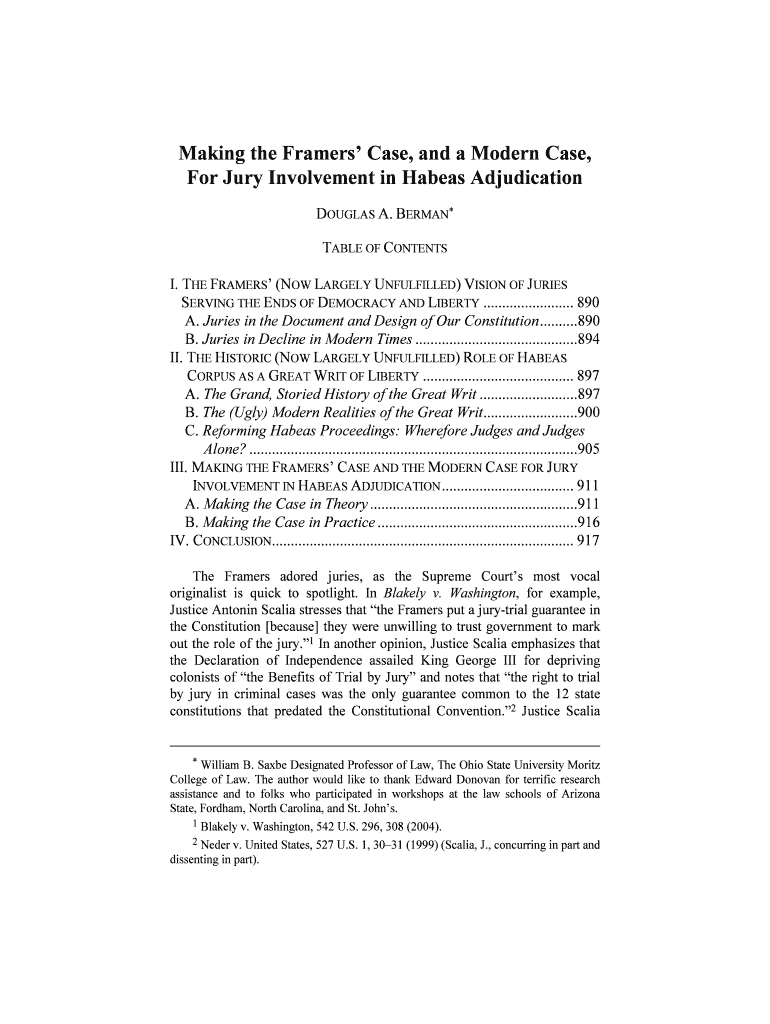
"Making the Framers Case, and a Modern Case" refers to the examination and argumentation concerning the involvement of juries in the habeas corpus process as envisioned by the Framers of the U.S. Constitution. The document discusses both the historical and contemporary contexts, focusing on the role juries were intended to play and the potential benefits of their reintroduction in modern legal proceedings.
Historically, juries were seen as a safeguard for democracy and individual liberties. The current landscape sees a predominantly judge-centric approach, which some argue undermines the fairness and effectiveness of habeas corpus actions. This case highlights the need for community involvement as a check on governmental power, positing that it can address systemic issues within the justice system.
How to Use "Making the Framers Case, and a Modern Case"
To effectively use this material, it is important to understand its dual focus on historical insights and current legal reforms. The document can be used as a scholarly reference for legal practitioners advocating for jury involvement in habeas corpus cases. Additionally, it can serve as educational material for students and researchers examining constitutional law and the evolution of legal procedures in the U.S.
Readers should approach this document with a view to exploring how jury reintroduction could augment fairness in legal proceedings. Lawyers, judges, and policymakers may employ the insights to inform legislative proposals or courtroom strategies advocating for systemic reforms.
Key Elements of "Making the Framers Case, and a Modern Case"
The document is composed of several critical elements that underscore its central argument:
- Historical Context: Analysis of the Framers' intentions regarding jury use in protecting liberties.
- Modern Critique: Examination of current habeas corpus proceedings that are primarily judge-driven.
- Argument for Change: Advocacy for the reintroduction of juries to enhance legal fairness and effectiveness.
- Community Involvement: Emphasis on the role of juries as a communal check against state power.
- Systemic Flaws: Identification of imperfections within modern justice systems lacking jury involvement.
Each element provides a comprehensive view of both historical aspirations and modern necessities, illustrating why some advocates call for a return to jury-based adjudication.
Steps to Complete "Making the Framers Case, and a Modern Case"
Engagement with the document involves a few deliberate steps:
- Historical Analysis: Begin by understanding the role of juries as intended by the Framers.
- Current Evaluation: Investigate the predominance of judge-centric habeas corpus proceedings today.
- Comparative Study: Compare and contrast historical intentions with modern practices.
- Argument Formation: Develop arguments for jury reintroduction based on your findings.
- Application: Use the insights to inform legal strategies or policy creation.
Each step helps create a robust understanding of the legal issues at hand, along with forming persuasive arguments for stakeholders.
Who Typically Uses "Making the Framers Case, and a Modern Case"
The primary users of this case include:
- Legal Academics: Those engaged in research on constitutional law and legal history.
- Lawyers and Judges: Legal professionals advocating for reforms or interpreting habeas corpus rights.
- Policy Analysts: Individuals engaged in legal reform initiatives who seek to understand jury roles.
- Students: Law or political science students focusing on constitutional frameworks and their evolution.
These users rely on the document to gain insights and strengthen their advocacy in the debate surrounding jury involvement.
Legal Use and Implications
In legal contexts, the document serves as a foundational argument for reshaping the landscape of habeas corpus adjudication in the U.S. By highlighting historical intentions and current deficiencies, it supports legal opinions and courses of action that press for the reinstitution of jury trials within certain legal procedures.
Practically, these arguments might be submitted in briefs, used in courtroom debates, or cited in policy papers promoting legislative updates. Understanding legal implications helps ground these arguments in actionable terms.
Examples of Using "Making the Framers Case, and a Modern Case"
Examples illustrating the document's application can enlighten its practical use. Consider the following scenarios:
- A lawyer references the case in a court brief arguing for defendant rights in habeas actions, stressing juries are historical bulwarks against injustice.
- A policy maker leverages the document when drafting new legislation aimed at integrating community members into legal processes for enhanced transparency and accountability.
- A professor uses the text in coursework to stimulate discussions among students about how historical practices can inform modern judicial reform.
### State-Specific Rules for Implementing Reforms
While the conceptual framework of the document is universally applicable across the U.S., certain state-specific regulations could influence the implementation of jury involvement in habeas corpus proceedings. Understanding these local variations is crucial for legal practitioners operating within distinct jurisdictions.
- California: Known for progressive legal interpretations may be more conducive to adopting such changes.
- Texas: Might require more rigorous legislative lobbying due to traditional legal practices.
- New York: Offers a mixed landscape with both support and resistance to altering established procedures.
Adapting the arguments within this document to fit state-specific contexts enhances their practicality and effectiveness.