






Definition and Meaning
"Doing it All in the Small Shop - Ohio Northern University" refers to a comprehensive approach adopted by professionals in small advancement services teams. It highlights the challenges of multitasking and the need for efficiency in resource-constrained environments. The concept revolves around maximizing productivity by effectively managing multiple tasks, leveraging technology, and implementing strategic operations to enhance fundraising and donor relations.
Steps to Complete the Doing it All in the Small Shop
-
Identify Key Responsibilities: Determine the various roles and tasks that need to be managed within the small shop. This could include fundraising, donor communications, event planning, and data management.
-
Utilize Technological Tools: Implement software solutions like DocHub to streamline document workflow, which can help in editing, sharing, and securing documents related to fundraising and event planning.
-
Develop a Strategy: Create a plan that aligns with the team's objectives. This should include setting priorities, allocating resources efficiently, and scheduling regular progress reviews.
-
Engage in Continuous Learning: Encourage team members to engage in professional development opportunities, such as webinars or online courses, to stay updated on the latest trends and methods in fundraising and donor engagement.
-
Collaborate and Communicate: Foster a collaborative environment where team members can easily exchange ideas and provide feedback. Effective communication can lead to improved strategies and operations.
-
Evaluate and Adapt: Regularly assess the effectiveness of current strategies and make necessary adjustments to meet changing needs and goals.
Key Elements of the Doing it All in the Small Shop
-
Multitasking Skills: Team members should possess the ability to handle various tasks simultaneously without compromising on quality.
-
Technology Integration: Use tools like DocHub to facilitate collaborative document management and efficient workflow processes.
-
Strategic Planning: Developing clear, actionable plans to align team efforts with organizational goals.
-
Professional Development: Provision of resources and time for staff to enhance their skills in relevant areas.
-
Efficient Resource Management: Optimal use of available resources, including time, budget, and personnel, to drive maximum impact.
Importance and Benefits
Engaging with the "Doing it All in the Small Shop" concept provides several benefits:
-
Enhanced Efficiency: By mastering the art of multitasking and strategic planning, teams can achieve more within limited timeframes and budgets.
-
Improved Fundraising Outcomes: Efficient operations lead to better engagement with donors and improved fundraising results.
-
Stronger Team Dynamics: Emphasizing collaboration and communication fosters a supportive work environment.
-
Increased Adaptability: The ability to quickly adapt to new challenges and opportunities is enhanced.
Who Typically Uses the Doing it All in the Small Shop
-
Advancement Professionals: Those in small shop environments at universities or nonprofits who must manage multiple roles.
-
Development Officers: Individuals responsible for donor relations and fundraising campaigns.
-
Small Team Leaders: Managers and directors leading small teams with limited resources but extensive responsibilities.


Examples of Using the Doing it All in the Small Shop
-
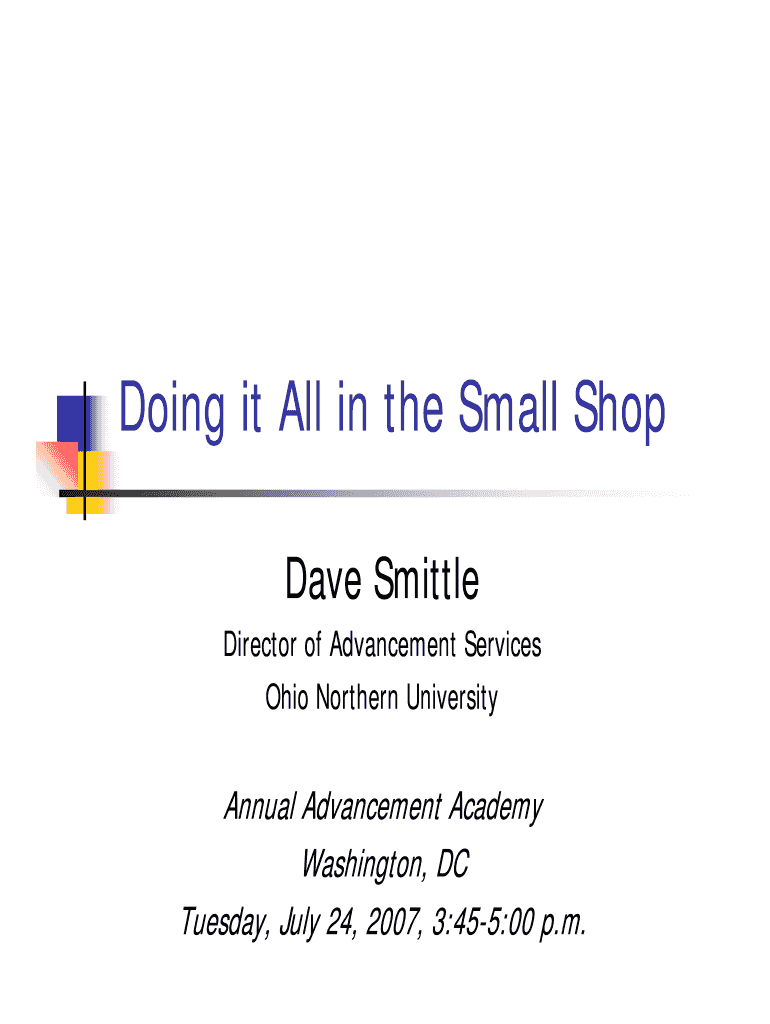
Ohio Northern University: As illustrated by Dave Smittle’s document, the university exemplifies the small shop model, implementing best practices for efficiency and effectiveness in advancement services.
-
Nonprofit Organizations: Small nonprofits often adopt this approach to maximize their impact with constrained resources.
-
Academic Institutions: Colleges and universities with smaller administrative teams may use these strategies to optimize operations and engage effectively with their stakeholders.
Legal Use of the Doing it All in the Small Shop
It is crucial to ensure compliance with legal standards when implementing the "Doing it All in the Small Shop" approach:
-
Data Protection Laws: Ensure all donor and participant data are handled per legal standards to protect privacy and confidentiality.
-
Best Practices Compliance: Follow industry best practices to maintain ethical standards in operations and fundraising activities.
State-Specific Rules for the Doing it All in the Small Shop
-
Ohio-Specific Regulations: Ohio may have unique requirements for nonprofit and educational institutions, which must be adhered to during implementation.
-
Financial Reporting Standards: Different states might have varying financial disclosure and reporting requirements for nonprofit organizations.
Understanding and implementing the above elements can significantly enhance the effectiveness of small shops in various organizational contexts.