




01. Edit your form online
Type text, add images, blackout confidential details, add comments, highlights and more.

Type text, add images, blackout confidential details, add comments, highlights and more.

Draw your signature, type it, upload its image, or use your mobile device as a signature pad.

Send it via email, link, or fax. You can also download it, export it or print it out.
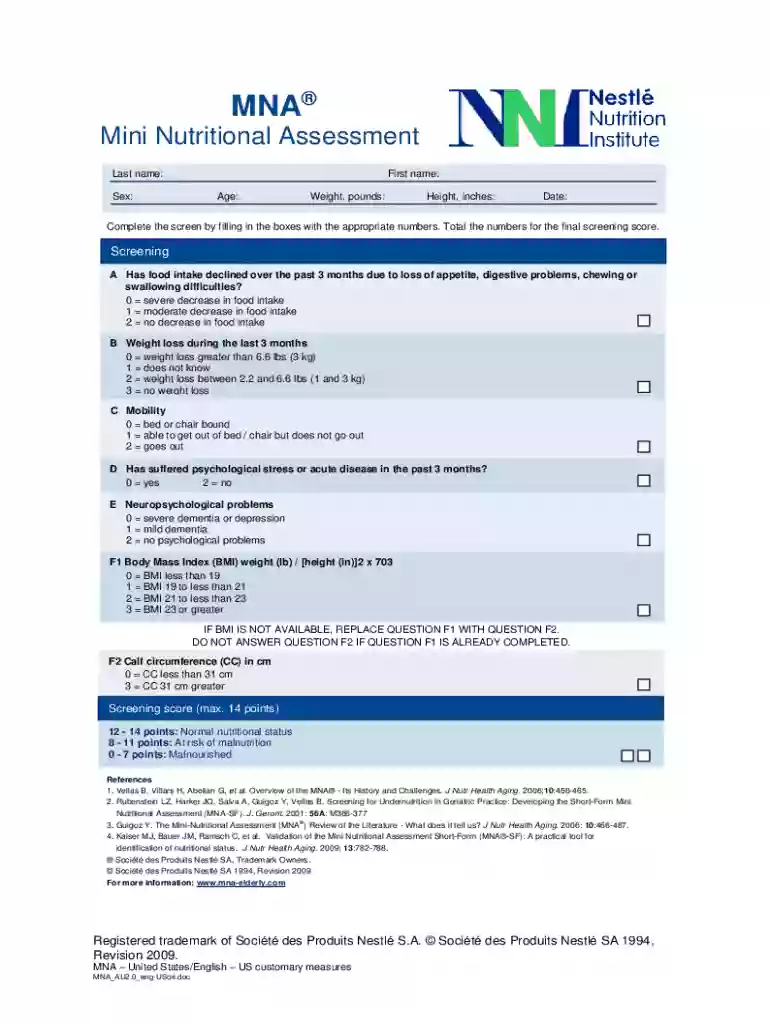
The Mini Nutritional Assessment TOOL, commonly abbreviated as MNA®, is a comprehensive screening instrument designed to evaluate the nutritional status of individuals, primarily focusing on the elderly population. It is widely used in clinical settings to identify individuals who are malnourished or at risk of malnutrition. The tool comprises a series of questions analyzing various aspects of an individual's health, including eating habits, weight changes, and physiological measurements such as body mass index (BMI) or calf circumference. The data collected through this tool aids healthcare providers in making informed decisions regarding the need for dietary interventions or adjustments in health care plans.
Using the MNA involves several steps to ensure accurate and reliable nutritional assessment. Initially, professionals administer a series of questions covering dietary intake, weight loss history, levels of mobility, and experiences of psychological stress. Additionally, it requires gathering specific anthropometric measurements. Each item is scored according to a standardized scale, and the total score classifies the individual into one of three categories: normal nutritional status, at risk of malnutrition, or malnourished. An understanding of each question's intent and the scoring system is crucial for accurate evaluation.
The MNA plays a critical role in preventative health care by allowing early detection of nutritional problems. Identifying at-risk individuals enables timely intervention, which can prevent the onset of more severe health issues associated with malnutrition. It is particularly valuable in settings such as hospitals, nursing homes, and community clinics where the elderly may be at greater risk. The tool's simplicity and effectiveness make it a staple in comprehensive patient assessments.
The MNA is typically utilized by healthcare professionals, including dietitians, nurses, and physicians, especially those working with geriatric populations. It is also relevant for caregivers in long-term care facilities and community health workers involved in elder care. The tool assists these users in identifying nutritional needs and developing appropriate care plans.


Key elements of the MNA include questions on:
Each of these components contributes to an overall picture of the individual's nutritional health, allowing for a nuanced understanding beyond mere weight or diet alone.
Preparing and conducting an MNA involves the following:
While the MNA is a widely respected tool in nutritional assessment, alternative tools might be used in certain contexts. These include the Malnutrition Universal Screening Tool (MUST) or the Nutritional Risk Screening (NRS). Each alternative comes with its advantages and may be more suitable depending on specific patient demographics or the healthcare setting's needs.
By ensuring that the MNA is applied correctly, healthcare providers can effectively contribute to the maintenance and improvement of elder nutritional health, supporting overall wellness and quality of life.
We've got more versions of the MINI Nutritional Assessment TOOL - Complete the screen form. Select the right MINI Nutritional Assessment TOOL - Complete the screen version from the list and start editing it straight away!
At DocHub, your data security is our priority. We follow HIPAA, SOC2, GDPR, and other standards, so you can work on your documents with confidence.


