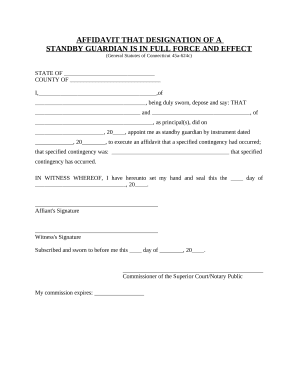
01. Edit your form online
Type text, add images, blackout confidential details, add comments, highlights and more.

Type text, add images, blackout confidential details, add comments, highlights and more.

Draw your signature, type it, upload its image, or use your mobile device as a signature pad.

Send it via email, link, or fax. You can also download it, export it or print it out.
The AB 540 Affidavit at CSU, Chico is a critical document allowing eligible students to claim exemption from paying nonresident tuition at California State University campuses. Designed under the provisions of California Assembly Bills 540 and 2000, the affidavit primarily aids undocumented students, certain visa holders, and U.S. citizens or permanent residents who meet specified requirements. Key elements of this affidavit include affirming residency status and educational attainment in California, crucial for financially benefiting through reduced tuition costs.
Eligibility for the AB 540 Affidavit requires students to meet particular mandates: attending a California high school for three or more years and graduating or obtaining an equivalent credential, such as passing the GED. Moreover, applicants must file the affidavit declaring they meet these educational prerequisites and that they will apply for legal residency as soon as they are eligible, if they are not already U.S. citizens or permanent residents.


Acquiring the AB 540 Affidavit at CSU, Chico can typically be done through their Admissions Office or the financial aid section on the university's website. CSU, Chico often provides downloadable forms directly from their online portal, ensuring students have easy access to apply for this tuition benefit. Additionally, academic advisors can assist in guiding students through obtaining and understanding the affidavit process.
Completing the AB 540 Affidavit involves several focused steps:
The completion process ensures that the institution can verify your eligibility for the tuition exemption accurately.
The AB 540 Affidavit requires comprehensive information that verifies eligibility. Essential elements include personal identification details, educational history, and a signed declaration. Crucially, the affidavit must be signed under oath, as it confirms your adherence to the eligibility criteria and affirms your intent to seek legal residency. This legal obligation underscores the affidavit's importance in securing residency-based tuition rates.
Understanding terms associated with the AB 540 Affidavit enriches comprehension. These terms include:
This terminology is essential for grasping the affidavit's application and benefits.
The legal use of AB 540 Affidavit involves declaring the residency and educational compliance under state law. Misrepresentation in this affidavit can lead to penalties, including legal consequences for perjury. Thus, it is imperative for students to provide accurate information and ensure understanding of their legal obligations to avoid future repercussions.
Practical applications of the AB 540 Affidavit can be seen in various scenarios:
These examples highlight the affidavit’s role in promoting educational equity at CSU, Chico.
We've got more versions of the AB 540 Affidavit - CSU, Chico - csuchico form. Select the right AB 540 Affidavit - CSU, Chico - csuchico version from the list and start editing it straight away!
At DocHub, your data security is our priority. We follow HIPAA, SOC2, GDPR, and other standards, so you can work on your documents with confidence.