






Definition & Meaning
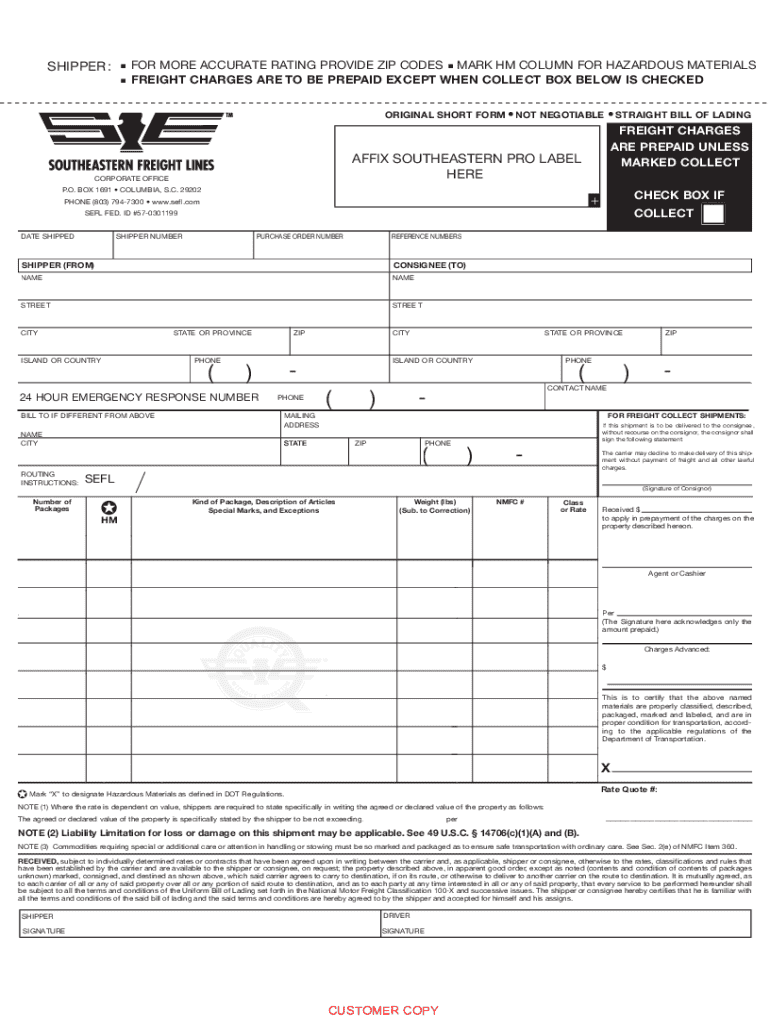
The Straight Bill of Lading (B/L) is a crucial document used in the shipping and freight industry to outline the terms of a shipment between a shipper and a consignee. This document serves as a binding contract that specifies the responsibilities and agreements of both parties involved. Typically, the Straight Bill of Lading is non-negotiable, meaning that the consignee taking possession of the goods cannot transfer the title of the goods to another party. It details the nature and quantity of the shipments along with instructions for its delivery.
Key Elements of the Straight Bill of Lading
The Straight Bill of Lading comprises several key components that help define its use and efficacy in freight transportation:
- Shipper and Consignee Details: Clearly identifies the parties involved, including contact information and physical addresses.
- Description of Goods: Provides a detailed description of the shipped items, including any identifiers like serial numbers or marks.
- Payment Terms: Indicates if the shipping charges are prepaid or need to be collected upon delivery.
- Weight and Dimensions: Lists the weight and dimensions of the shipment, crucial for freight calculation.
- Liability Limitations: Includes any limitations on liability for the goods being shipped, essential for managing risk.
- Instructions for Dangerous Goods: If applicable, additional information is required for handling hazardous materials, ensuring safety compliance.
Steps to Complete the Straight Bill of Lading
Filling out a Straight Bill of Lading accurately is imperative to ensure proper handling and legal compliance. Here is a step-by-step guide:
- Gather Required Information: Collect details about the shipper, consignee, and the goods being transported.
- Fill in Shipper Details: Enter the name, address, and contact information of the shipper.
- Provide Consignee Information: Input the consignee's name, address, and phone number.
- Describe the Goods: Provide a detailed description of the contents, including weight, dimensions, and any special instructions, especially if hazardous.
- Specify Payment Terms: Indicate whether the freight charges are prepaid or collect.
- Sign the Document: Both the shipper and any authorized parties must sign the form to confirm its accuracy.
Legal Use of the Straight Bill of Lading
The Straight Bill of Lading is legally binding, underscoring its importance in shipping operations. It defines the responsibilities of involved parties and ensures that shipments follow regulatory requirements. Here are several legal implications:
- Title of Goods: The title signifies ownership and cannot be transferred, keeping goods securely within specified trade channels.
- Regulatory Compliance: Details necessary compliance, especially pertinent for international shipping and hazardous materials.
- Proof of Contract: Serves as a contract between a shipper and carrier, outlining the agreed-upon terms of transportation.
Important Terms Related to Straight Bill of Lading
Understanding specific terms is critical for anyone dealing with a Straight Bill of Lading. Here are a few essential ones:
- Carrier: The party responsible for transporting the shipment to the consignee.
- Freight Forwarder: An entity that organizes shipments for individuals or corporations.
- Bill of Lading Number: A unique identifier for the B/L, crucial for tracking and records.
- Consignment: The act of delivering goods to a consignee.
Examples of Using the Straight Bill of Lading
While examples vary widely, here are generalized scenarios where a Straight Bill of Lading could be utilized:
- A U.S.-based electronics company ships laptops to a retail store. The Straight Bill of Lading outlines the shipment details, ensuring legal transfer upon delivery.
- A chemical manufacturer ships goods across state lines, requiring clear guidelines for transporting hazardous materials per regulatory standards.
Who Typically Uses the Straight Bill of Lading
A range of entities may leverage a Straight Bill of Lading, including:
- Manufacturers and Producers: Utilize it for shipping their finished products to distributors or retail outlets.
- Freight Forwarders: Often fill out and manage Straight Bills of Lading on behalf of clients.
- Logistics Companies: Ensure that they meet all compliance requirements and responsibilities through detailed documentation.


State-Specific Rules for the Straight Bill of Lading
Certain states may have specific legal frameworks or additional requirements related to the use of a Straight Bill of Lading. While federal regulations apply, states can impose supplementary mandates, especially concerning:
- Hazardous Materials: States may have additional safety protocols for shipping hazardous goods.
- Local Tax Requirements: Variances in tax regulations might affect shipping costs and payment terms.
Form Submission Methods (Online / Mail / In-Person)
Options for submitting the Straight Bill of Lading can depend on the logistics and preferences of the involved parties. Here are typical submission choices:
- Online Platforms: Many logistics and freight companies provide digital submission and tracking options.
- Mail or Courier: Traditional physical submission can be a requirement or preference.
- In-Person: Typically, involves direct handover during pick-up or drop-off scenarios.
Digital vs. Paper Version
In today’s digital age, the use of electronic documents is increasingly popular, yet paper versions remain relevant. Here’s a comparison:
- Digital Version: Offers ease of sharing and ensures quick modification. It supports environment-friendly practices.
- Paper Version: Essential in certain jurisdictions, ensures physical proof and traditionally accepted in many facets of commerce.