






Definition & Meaning
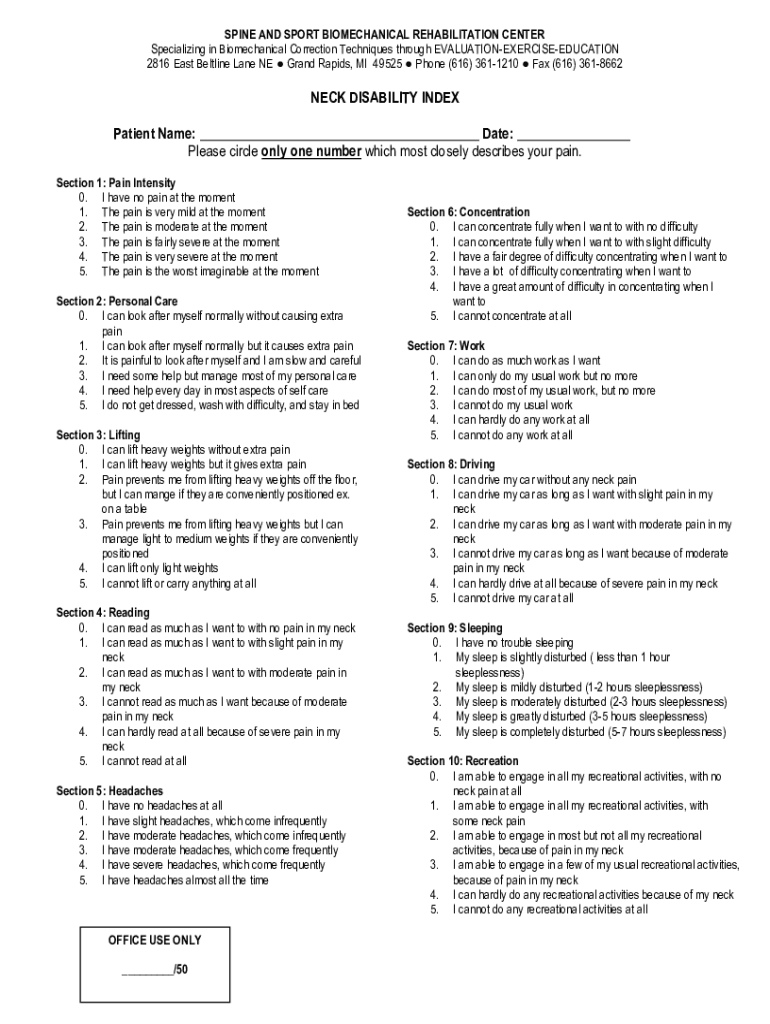
The Neck Disability Index (NDI) is a specialized tool used to evaluate the impact of neck pain on a person's daily life. It consists of a questionnaire that measures the severity of neck-related disabilities across various daily activities. By quantifying pain and functional limitations, the NDI facilitates effective diagnosis and targeted rehabilitation for individuals experiencing neck discomfort. This form is instrumental in both medical and rehabilitation contexts, providing a standardized method for clinicians and researchers to track patient progress and outcomes.
How to Use the Neck Disability Index
To utilize the NDI effectively, individuals should complete the questionnaire, which consists of a series of statements that respondents rate based on their current condition. Each statement is scored, and the cumulative score helps practitioners assess the overall level of neck-related disability. This score can then inform treatment decisions, monitor changes over time, and gauge the effectiveness of therapeutic interventions. The NDI is commonly employed at the outset of treatment and at regular intervals thereafter to track progress.
Scoring and Interpretation
- Each item is scored from 0 to 5, with higher scores indicating greater disability.
- The total score is calculated by summing the individual item scores.
- Interpretation guidelines classify scores into categories such as no disability, mild, moderate, severe, or complete disability.
- Clinicians use these categories to tailor treatment plans according to the severity of the patient's condition.
Important Terms Related to the Neck Disability Index
Understanding key terms associated with the NDI enhances its application and interpretation. Important terms include:
- Pain Intensity: Reflects the level of pain experienced by the patient, often influencing their overall score.
- Functional Limitation: Describes the impact of neck pain on performing daily activities, central to the NDI's assessment.
- Rehabilitation: The therapeutic process aimed at reducing pain and improving function, often guided by NDI results.
Steps to Complete the Neck Disability Index
Completing the NDI requires a methodical approach to ensure accuracy:
- Review Instructions: Carefully read the provided instructions to understand the questionnaire format and objectives.
- Rate Each Statement: Respond to each statement by selecting the answer that best describes your current state.
- Calculate the Total Score: Add up the scores for each item to obtain the total.
- Discuss with Healthcare Provider: Share the completed form with your healthcare provider for further analysis and discussion of treatment options.
Key Elements of the Neck Disability Index
The NDI includes several critical components that address various aspects of daily life:
- Pain Intensity: Assesses the level of neck pain.
- Personal Care: Evaluates the impact on dressing and washing.
- Lifting: Measures difficulty in lifting objects.
- Reading and Concentration: Assesses the interference of pain with reading and focus.
- Work and Driving: Evaluates limitations in work capacity and driving due to neck pain.
Legal Use of the Neck Disability Index
The NDI is a legally recognized tool in clinical settings, ensuring that practitioners utilize standardized measures to assess neck disability. It is important for healthcare providers to adhere to confidentiality guidelines when handling completed indices, protecting patient information under the Health Insurance Portability and Accountability Act (HIPAA) regulations. The legal standing of this tool also enables its use in research, providing reliable data for studies on neck pain and disability.
Examples of Using the Neck Disability Index
The NDI is frequently employed in various scenarios to support patient care:
- Clinical Assessments: Used by physiotherapists to determine the severity of a patient’s condition and tailor rehabilitation programs.
- Research Studies: Provides data on the effectiveness of new treatments for neck pain, contributing to the broader body of knowledge.
- Workplace Evaluations: Enables occupational health professionals to assess and address neck pain among employees, enhancing workplace ergonomics.
Digital vs. Paper Version
The NDI is available in both digital and paper formats, offering flexibility based on preference and convenience:
- Digital Version: Allows for easy sharing and electronic scoring, suitable for telehealth and digital record-keeping.
- Paper Version: Useful in settings without digital access or during initial consultations where technology may not be available.
Both versions provide the same content and scoring system, ensuring consistency in assessments regardless of the format used.