






Definition & Meaning
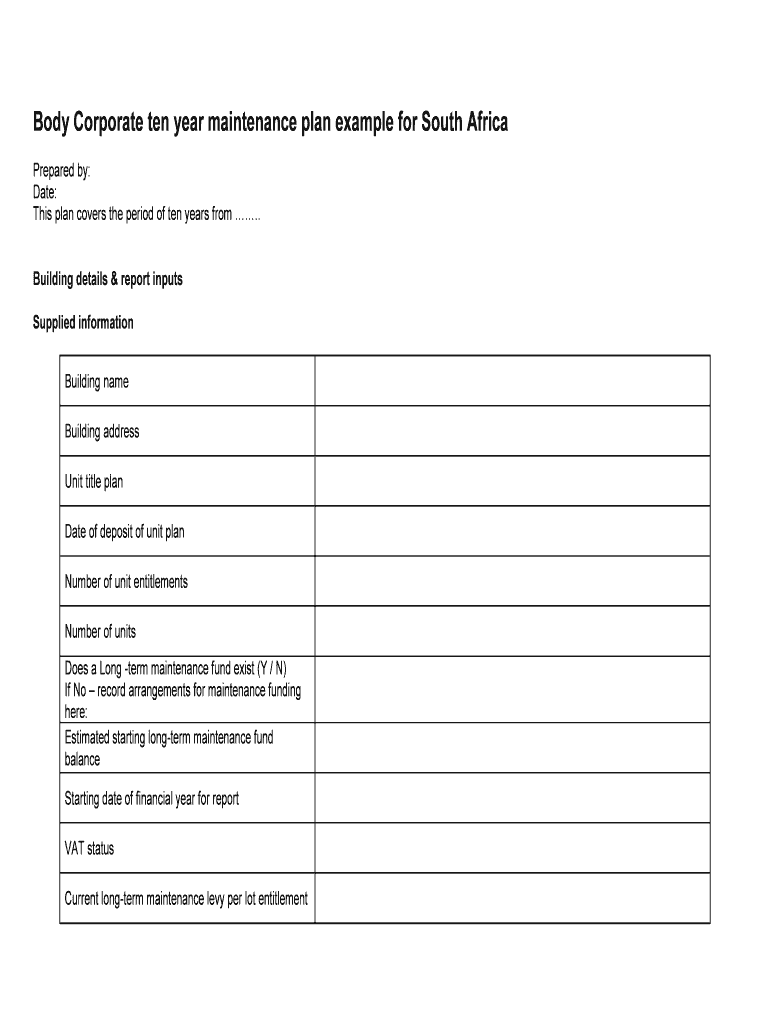
A "Body Corporate ten year maintenance plan example for South Africa" refers to a structured document outlining the long-term maintenance strategies of a body corporate, which is responsible for managing a sectional title scheme in South Africa. This plan details the anticipated maintenance projects over a decade, including repairs, upgrades, and new installations required to keep the property in optimal condition. It serves as a financial planning tool that provides an estimate of costs involved over the plan's duration, ensuring sustainable and effective property management.
Purpose of the Plan
- Financial Planning: It helps forecast the financial requirements over ten years.
- Maintenance Scheduling: Sets timelines for various maintenance activities.
- Essential Funding: Establishes a maintenance fund to cover all projected costs.
- Mitigating Risks: Accounts for unforeseen repairs with contingency provisions.
Key Elements of the Body Corporate Maintenance Plan
A comprehensive maintenance plan for body corporates includes several key components that ensure effective building management and financial planning.
Building Information
- Property Description: Details about the property, including its age, condition, and specific features.
- Maintenance History: Past maintenance activities and their outcomes to inform future actions.
Financial Forecasts
- Budget Estimates: Projected costs for each maintenance item over ten years.
- Cash Flow Analysis: Tracks how funds will be allocated over the period.
Scheduled Maintenance Activities
- Preventive Measures: Regular checks and maintenance to avoid deterioration.
- Major Repairs and Replacements: Items that require significant investment, such as roofs or boilers.
How to Use the Body Corporate Maintenance Plan
This plan serves as a guide for implementing and recording maintenance activities over a decade. Here's how it can be utilized effectively:
Steps to Implement the Plan
- Establish Goals: Define the maintenance and financial objectives.
- Assess Current State: Evaluate the current condition and maintenance needs.
- Develop the Plan: Create a detailed plan covering all necessary elements.
- Assign Responsibilities: Allocate tasks and roles to specific team members.
- Regular Updates: Review and update the plan periodically to reflect current conditions and economic changes.
Monitoring and Reporting
- Regular Inspections: Conduct periodic checks to ensure work aligns with the plan.
- Progress Reports: Keep detailed accounts of completed activities and financial expenditures.
Important Terms Related to Maintenance Plans
Understanding the terminology used in maintenance plans is crucial for effective communication and execution.
Essential Terms
- Levy Contributions: Fees paid by owners for the maintenance fund.
- Contingency Allowance: Funds set aside for unexpected expenses.
- Major Capital Expenditure: Large-scale financial outlays for critical repairs or replacements.
Legal Use of the Maintenance Plan in South Africa
The maintenance plan must adhere to local regulations and industry standards to remain compliant and effective.
Compliance Requirements
- Act Compliance: Align with Sectional Titles Schemes Management Act (STSMA) requirements.
- Standard Practices: Follow industry best practices for property maintenance planning.
Legal Protections
- Documented Agreements: Ensure all agreements and contracts with vendors or contractors are legally documented.
- Owner Approvals: Secure approvals from owners for significant expenditures and projects.
Steps to Complete the Maintenance Plan
Creating and finalizing a maintenance plan involves several crucial steps:
Detailed Steps
- Initial Consultation: Engage experts and stakeholders for initial planning sessions.
- Property Assessment: Conduct a thorough evaluation of the property's current state.
- Plan Drafting: Draft the maintenance plan with detailed schedules and budgets.
- Review & Approval: Present the plan to the body corporate for review and approval.
- Implementation Strategy: Develop an actionable plan and implement necessary maintenance schedules.
Examples of Using the Body Corporate Maintenance Plan
Real-world applications of the maintenance plan can provide insight into its utility and application:
Case Studies
- Residential Complex: Utilizing the plan to effectively manage shared amenities like pools and parks.
- Commercial Properties: Strategic upkeep of office spaces ensures continuous attractiveness and tenant satisfaction.
Practical Scenarios
- Budget Adjustments: Reallocating funds based on revised cost estimates due to economic changes.
- Unexpected Repairs: Utilizing contingency funds to address sudden infrastructure failures.
Business Types that Benefit Most
Certain types of businesses derive greater advantages from implementing structured maintenance plans.
Applicable Business Entities
- Residential Complexes: Ensures consistent living standards for tenants.
- Mixed-Use Developments: Integrates residential and commercial maintenance requirements.
- Commercial Office Spaces: Maintains the value and safety standards crucial for business operations.
These sections collectively offer a comprehensive overview of a body corporate's ten-year maintenance plan, tailored specifically for the South African context, while maintaining a broad perspective for applicability and understanding across different sectors.