




01. Edit your nspire inspection checklist online
Type text, add images, blackout confidential details, add comments, highlights and more.

Type text, add images, blackout confidential details, add comments, highlights and more.

Draw your signature, type it, upload its image, or use your mobile device as a signature pad.

Send hud inspection checklist via email, link, or fax. You can also download it, export it or print it out.
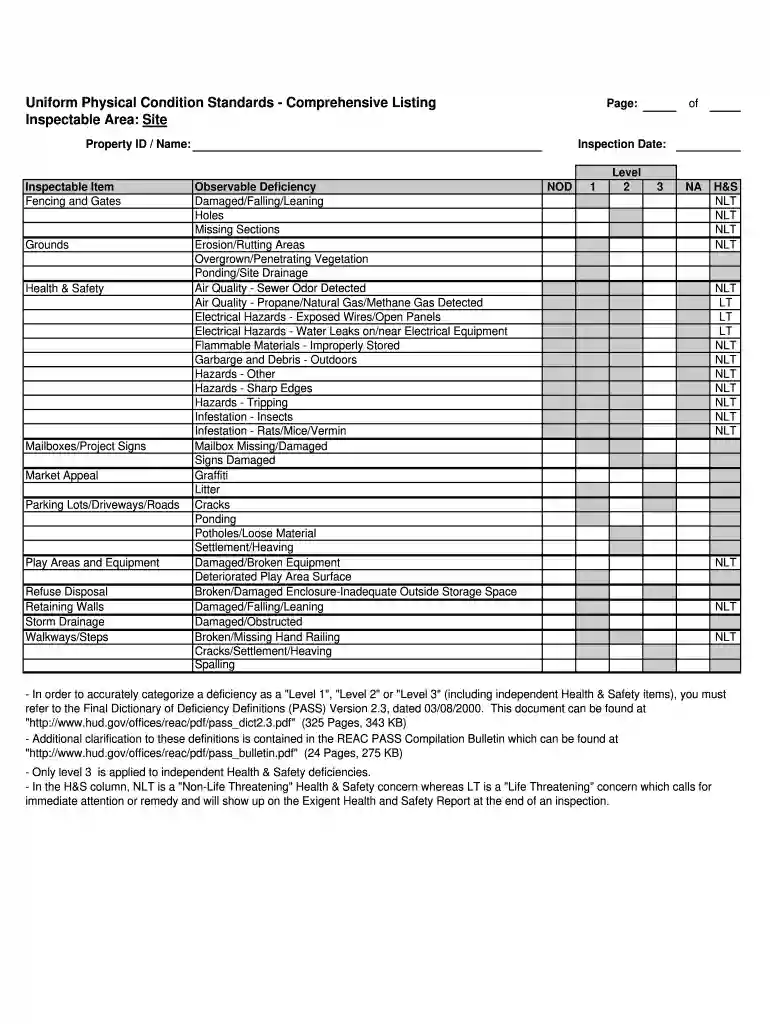
The UPCS (Uniform Physical Condition Standards) inspection checklist is a structured tool utilized to evaluate the physical condition of properties, particularly those involved in housing assistance programs such as Section 8. It is established by the Department of Housing and Urban Development (HUD) to ensure properties meet specific health and safety standards for residents. This checklist covers various elements, including the building's interior, exterior, and surrounding environment, facilitating consistent evaluations of housing quality.
Key components of the UPCS inspection checklist include:
The primary aim is to ensure that properties are safe and habitable, thereby protecting residents' well-being.
Effectively using the UPCS inspection checklist requires a systematic approach to guarantee all inspection areas are covered. The checklist organizes the evaluation process into defined sections for easy navigation and thorough assessment.
Using the UPCS inspection checklist methodically ensures comprehensive property evaluations that promote tenant safety and comfort.
The UPCS inspection checklist serves multiple stakeholders involved in housing and property management:
Utilizing the checklist contributes to ensuring accountability and safety across the housing spectrum.


The UPCS inspection checklist encompasses several critical elements that are mandatory for compliance with HUD’s standards. Understanding these elements is essential for satisfactory inspection outcomes.
These elements address various physical aspects of properties while promoting tenant safety, comfort, and compliance with legislative requirements.
Utilizing the UPCS inspection checklist effectively involves a variety of real-world scenarios that demonstrate its application in maintaining housing quality.
Such uses underscore the importance of the UPCS inspection checklist in promoting safe and habitable living conditions across various housing contexts.
At DocHub, your data security is our priority. We follow HIPAA, SOC2, GDPR, and other standards, so you can work on your documents with confidence.
The information is used to determine if a unit meets the housing quality standards of the Section 8 rental assistance program. The Personally IdentifiableRead more
Oct 3, 2025 The FIS UPC and BUPC will each conduct urinalysis screenings at least twice a month, for a total of at least four tests across the UIC, usingRead more
Nov 28, 2025 The three key types of defectsmajor, minor, and criticalform the basis of factory inspection protocols and buyer acceptance criteria.Read more


