Definition and Meaning of Real Estate Seller Disclosure Form
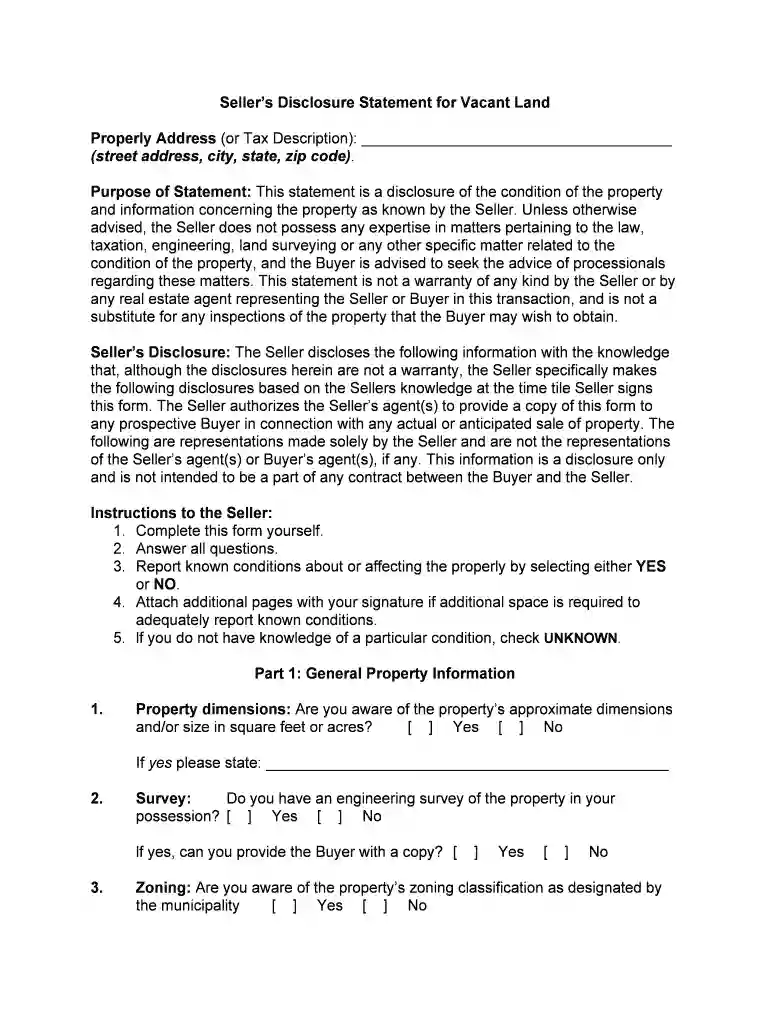
The real estate seller disclosure form is a legal document used in real estate transactions to provide information about the condition and aspects of a property being sold. The form is completed by the seller and is meant to disclose any known issues or defects with the property that might affect the buyer's decision-making process. By offering transparency, the form helps protect both parties, ensuring the buyer is fully informed before finalizing the purchase.
Key Aspects of the Disclosure
- Property Condition: Details about the structure, plumbing, electrical systems, and other physical components.
- Known Issues: Disclosures of any past or present problems such as water damage, pest infestations, or foundation problems.
- Legal Compliance: Information related to zoning, city ordinances, and any legal restrictions or disputes.
How to Use the Real Estate Seller Disclosure Form
Using the real estate seller disclosure form involves several key steps. Sellers must carefully review and complete each section, providing honest and accurate information.
- Collect Preliminary Information: Gather all necessary documentation about the property's condition.
- Complete Each Section: Systematically fill out the form, addressing every question with detailed responses.
- Review for Accuracy: Double-check all entries to ensure no errors or omissions.
- Sign and Date: Provide official signatures where required to validate the document.
Practical Tips for Use
- Be Honest and Thorough: Full disclosure of known issues helps avoid future legal disputes.
- Consult Professionals: Engage real estate agents or legal advice for complex issues or uncertain answers.
Steps to Complete the Real Estate Seller Disclosure Form
Completing the real estate seller disclosure form requires precision and a methodical approach. Here's a detailed guide to ensure it is filled correctly:
- Identify Property Details:
- Address, size, and legal description.
- Assess Condition and Utilties:
- Structural integrity, water, electric, heating, and cooling systems.
- List Environmental Concerns:
- Soil issues, nearby industry, or pollution risks.
- Highlight Restrictions:
- Zoning laws, HOA requirements, easements.
- Note Previous Repairs and Modifications:
- Document all major fixes and upgrades.
Key Elements of the Real Estate Seller Disclosure Form
The real estate seller disclosure form contains several crucial elements, each serving a necessary function for complete transparency.
Major Components
- General Information: Basic property and ownership details.
- Structural Details: Materials used in construction, age of the property.
- Utilities and Services: The availability and condition of essential services like water, sewage, and electricity.
- Environmental Risks: Proximity to flood zones, known environmental hazards.
- Legal or Other Obligations: Any pending litigation or unpaid taxes.
Important Terms Related to the Real Estate Seller Disclosure Form
Understanding the terms associated with the real estate seller disclosure form is vital for interpretation and compliance.
Commonly Used Terms
- As-Is Sale: Selling the property in its current state, where buyers accept existing conditions without warranties.
- Material Fact: Any information that would influence the buyer's purchase decision.
- Easement: The legal right for others to use part of the property for a specific purpose.
Legal Use of the Real Estate Seller Disclosure Form
The real estate seller disclosure form has significant legal implications and should be handled with diligence. Sellers must ensure that their disclosures are accurate to avoid potential litigation.
Compliance and Liabilities
- Mandatory Completion: Most states require this form as part of real estate transactions.
- Seller Liability: Failure to disclose known issues could lead to legal disputes and financial penalties.
- Evidentiary Role: Serves as a record of disclosures if disputes arise during or after the sale.
State-Specific Rules for the Real Estate Seller Disclosure Form
The requirements for real estate seller disclosure forms can vary significantly by state. Each state has its own regulations dictating what must be included.
Examples of State Variations
- California: Requires additional environmental hazard disclosures.
- Texas: Typically emphasizes water rights and methane gas issues.
- New York: Offers sellers the option to pay a credit fee instead of completing extensive disclosures.
Typical Users
- Homeowners: Individuals selling a residential property.
- Real Estate Agents: Professionals guiding clients through the selling process.
- Property Developers: Companies or individuals selling newly developed properties.