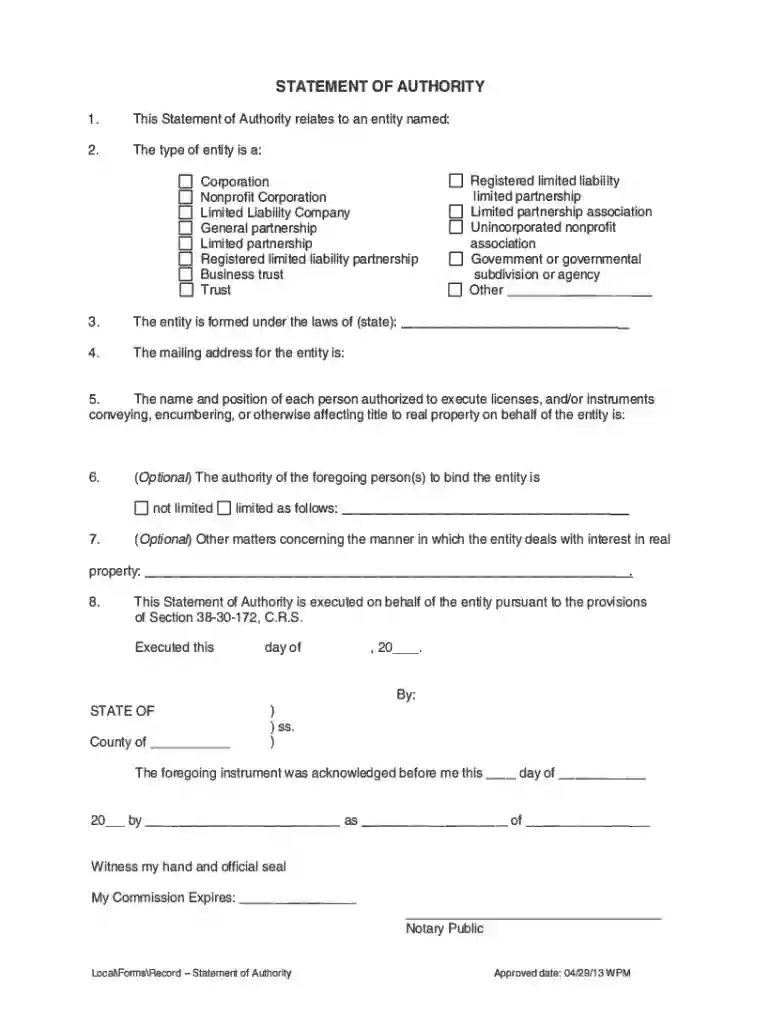
Definition and Meaning of Statement of Authority
A Statement of Authority is a legal document that identifies details about an entity, such as its type, formation state, and mailing address. It also specifies the individuals authorized to execute legal documents on behalf of the entity, particularly concerning real property interests. The document serves to define and limit the powers that authorized individuals have, ensuring that only those named in the statement can act on behalf of the entity in legal and financial matters.
Practical Applications
- Real Estate Transactions: When businesses acquire or sell real estate, the statement clarifies who can sign the documents.
- Banking Needs: Used in financial dealings to ensure bank representatives know who is authorized to act for the entity.
- Contract Signings: Important in ensuring the correct individuals sign contracts on behalf of the organization.
How to Use the Statement of Authority
The Statement of Authority is used to formalize who within an entity can legally bind the organization in matters involving property or financial interests. Whether starting a new venture or updating existing records, this document provides clarity to both internal and external parties.
Usage Scenarios
- Verification: Entities use this document to reassure third parties, such as banks or contractors, regarding authorization validity.
- Internal Controls: Helps in setting clear boundaries within an organization to prevent unauthorized actions.
- Audit Trails: Provides a clear audit trail of who was responsible for decisions involving real estate or financial negotiations.
Steps to Complete the Statement of Authority
Filling out a Statement of Authority involves several detailed steps to ensure accuracy and legality.
- Gather Entity Information: Collect all necessary details about the entity, including its legal name, type, and state of formation.
- Identify Authorized Individuals: Determine who within the organization will be given authority to execute documents.
- Define Limits of Authority: Specify any limitations on the authority regarding the types of transactions or maximum amounts.
- Review Legal Provisions: Ensure the document complies with relevant state and federal laws.
- Notarization: Have the document notarized to verify the authenticity of the signatures.
Common Mistakes to Avoid
- Incomplete Information: Failure to provide full details can invalidate the document.
- Wrong Authorized Person: Naming incorrect or unauthorized individuals can cause legal issues.
- Neglecting Notarization: Omitting the notarization step may prevent the document's acceptance in legal contexts.
Key Elements of the Statement of Authority
Understanding the components of the Statement of Authority helps ensure it is comprehensive and legally binding.
Essential Components
- Entity Details: Includes legal name, type, and formation state.
- Authorized Individuals: Names, titles, and the scope of authority of each person.
- Limitations: Specific conditions or limits on the powers granted.
- Effective Date: Start date of the authority granted.
- Signatures: Includes signatures of those granting the authority and, if applicable, those accepting it.
Ensuring Accuracy
- Cross-Check Information: Verify all details are correct and up-to-date to prevent any disputes or legal issues.
- Consult Legal Advisors: Engage legal counsel to ensure the document aligns with jurisdiction-specific laws and regulations.
Legal Use of the Statement of Authority
The Statement of Authority plays a crucial role in legal compliance and proper governance of entities, especially in real estate and financial contexts.
Legal Validity
- Common Law: Typically enforced under common law to affirm corporate or organizational authorizations.
- Compliance Assurance: Ensures all actions are compliant with both internal governance policies and external legal requirements.
Importance of the Statement of Authority
The Statement of Authority brings numerous benefits and is an important tool for any organization engaging in significant financial or real estate transactions.
Benefits
- Clarity and Transparency: Provides clear guidelines on who can act on the entity’s behalf, reducing confusion.
- Legal Protection: Protects the entity from unauthorized transactions and potential liabilities.
- Operational Efficiency: Streamlines business processes by having clearly defined roles and responsibilities.
Considerations
- Regular Updates: Entities must regularly review and update the document to reflect changes in personnel or organizational structure.
- State Requirements: Organizations need to ensure compliance with state-specific regulations which may affect the validity of the document.
State-Specific Rules for the Statement of Authority
Different states may have varying requirements for the Statement of Authority, affecting how it is completed and enforced.
State Regulations
- Notary Requirements: Some states demand certain types of notarization to validate the document.
- Filing Procedures: States may have specific filing requirements that must be adhered to for the document to be legally recognized.
Example Variations
- California: Requires specific forms of entity verification for added legitimacy.
- Florida: Emphasizes detailed descriptions of authorized powers to prevent misuse.
Examples of Using the Statement of Authority
Examining real-world scenarios where this document is vital demonstrates its diverse applications and impacts.
- Case Study: An LLC purchasing a commercial property utilized the Statement of Authority to designate who would handle negotiations and sign deeds.
- Scenario: A nonprofit organization expanding its operations used the statement to authorize fundraising activities, ensuring all funds were appropriately managed.
This comprehensive exploration connects users with every conceivable nuance of the Statement of Authority form, offering the maximum possible utility.