






Definition and Purpose of the Rental Registration Application
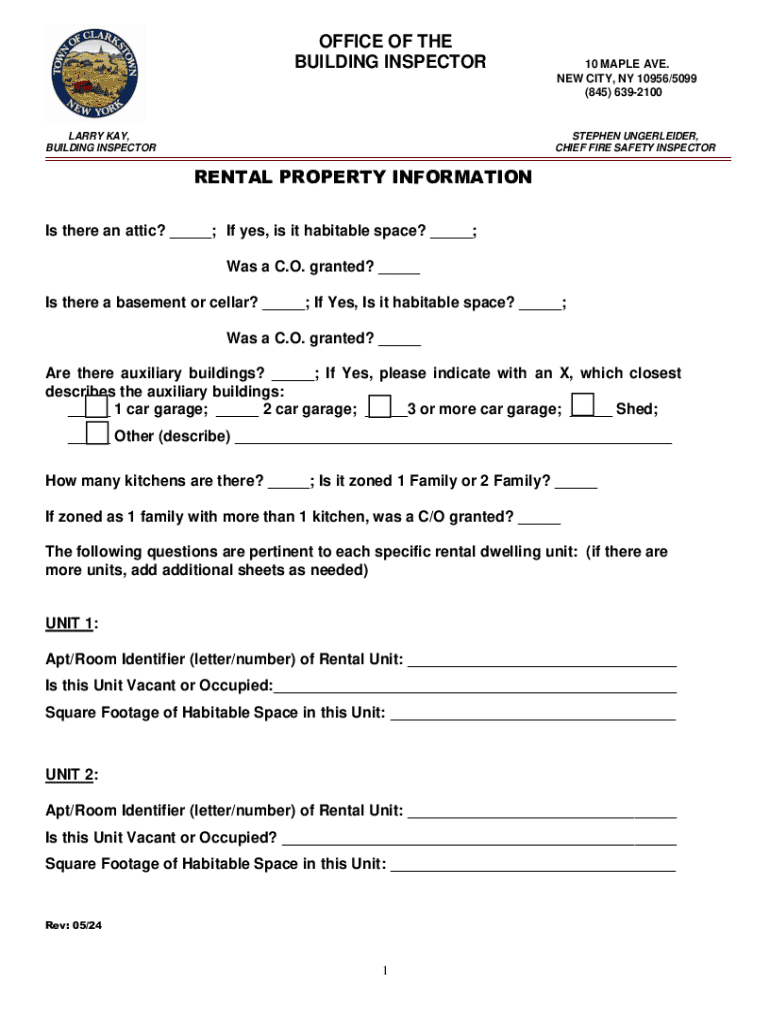
The Rental Registration Application is an essential document utilized to register rental properties officially. Its primary function is to ensure that property owners comply with local regulations by providing all necessary details about their rental properties. By completing this form, property owners offer transparency regarding the ownership, safety standards, and usage of the property. This application helps municipalities maintain accurate records, aiding them in property inspections and ensuring adherence to local housing laws.
Steps to Complete the Rental Registration Application
-
Gather Required Information: Start by collecting essential details about the property, including the address, number of units, and types of dwellings (one-family, two-family, etc.). Owners should also prepare background information such as ownership documents and personal identification.
-
Fill Out Property Details: Complete the section regarding property specifications. This may include square footage, rental rates, and the current occupancy status.
-
Provide Ownership Information: Include information about the owner or responsible party. Attach copies of photo ID and proof of ownership when submitting the application.
-
Safety and Compliance Checklist: Address safety requirements by detailing installed safety measures, such as smoke detectors, carbon monoxide detectors, and fire extinguishers.
-
Submit Additional Documents: Attach additional required documents, such as affidavits and layout diagrams, as specified by local jurisdiction.
-
Pay the Registration Fee: Ensure that the $250 fee (or applicable fee per jurisdiction) is submitted with the application, as processing does not begin until payment is complete.
Required Documents for the Rental Registration Application
- Proof of Ownership: This could include deeds, titles, or any legal documents verifying property ownership.
- Identification: A copy of the owner’s valid photo ID, such as a driver’s license or passport.
- Property Layout Description: Diagrams showing the property's floor plan for approval and inspection purposes.
- Affidavit: A legally sworn statement declaring the truthfulness of the provided information.
- Safety Compliance Proof: Certificates or records that confirm compliance with local safety regulations.
Legal Use and Implications of the Rental Registration Application
The application plays a critical role in legal compliance, ensuring that property owners adhere to local housing laws and zoning regulations. Filing it legally binds the owner to maintain standards of habitation, safety, and transparency. Failure to comply with these regulations can result in penalties, including fines, injunctions, or even termination of the rental license, depending on local government enforcement policies.
State-Specific Rules and Variations
Different states or municipalities may impose varying rules on the Rental Registration Application process. For instance, while the Town of Clarkstown requires submission within 90 days of the effective law date, other areas might have different deadlines or additional documentation requirements. Research local regulations or consult a legal expert to ensure compliance with specific state mandates when registering a rental property.
Penalties for Non-Compliance
Property owners who fail to submit a completed Rental Registration Application may face significant penalties. These can include monetary fines, legal notices, or the suspension of rental operations. For instance, landlords in non-compliance might incur fines up to multiple hundreds of dollars per unregistered unit per day, depending on jurisdiction. Additionally, operating an unregistered rental could result in legal complications, impacting trustworthiness and lease agreements with tenants.
Key Elements of the Rental Registration Application
- Owner and Property Identification: Documenting who owns the property and its specific details.
- Compliance Affirmation: A commitment to adhere to regional housing codes, zoning laws, and safety standards.
- Inspection Scheduling: Arranging for property inspections to ensure it meets legal and safety regulations.
- Fee Payment Confirmation: Verification that the applicable registration fee has been paid.
Form Submission Methods: Options for Filing
- Online Submission: Many municipalities offer online portals where property owners can submit their applications digitally. This method is often more efficient and includes immediate confirmation of receipt.
- Postal Mail: If online submissions are not available, forms can be printed and mailed to the appropriate municipal office. It is recommended to use certified mail for tracking purposes.
- In-Person Filing: Some local jurisdictions allow forms to be submitted in person at dedicated offices, ensuring personal verification of attachments and immediate feedback from officials.
Form Variants and Alternatives
Rental Registration Applications might have different names or versions across regions. Some might be incorporated into broader housing compliance forms, while others might be an independent document. It is crucial to verify with local administrative bodies to use the correct form variant and avoid processing delays.