






Definition and Meaning of "aufta"
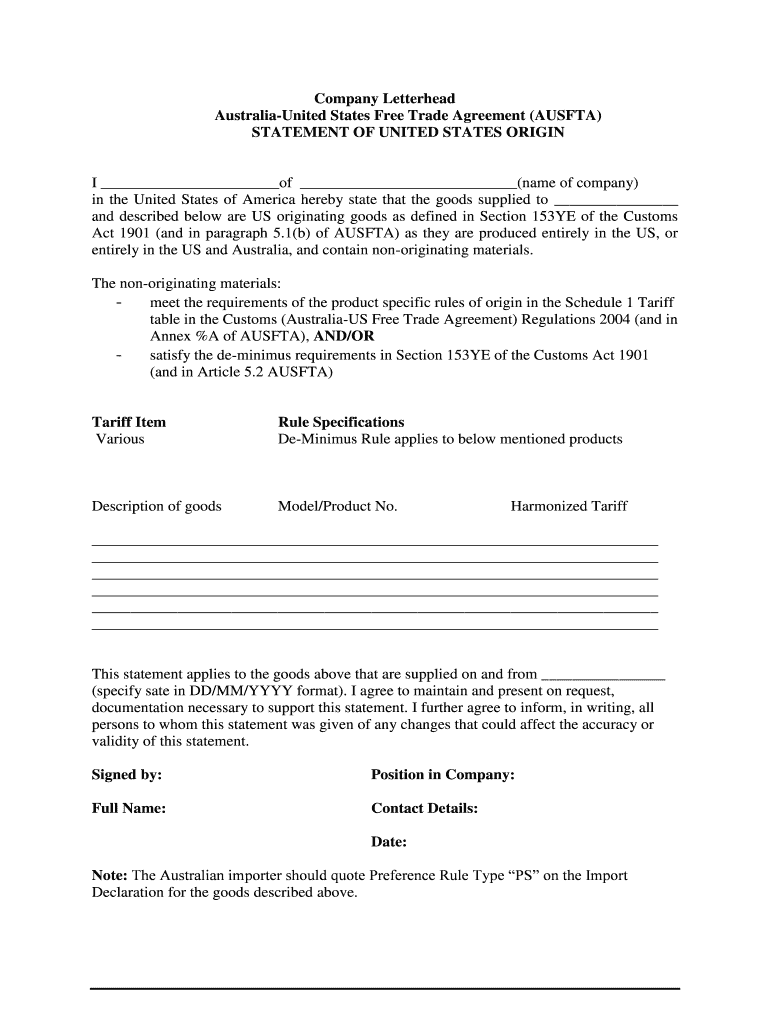
The Australian-United States Free Trade Agreement (AUSFTA) is a comprehensive trade agreement between the United States and Australia. This agreement facilitates the elimination or reduction of trade barriers, making it easier for businesses in both countries to engage in the exchange of goods and services. Companies must certify that their goods are U.S. originating as this forms the basis for preferential tariff treatment under AUSFTA. Compliance with specific rules and de-minimis requirements is crucial for the issuance of this certification. The AUSFTA form is essential for importers and exporters to demonstrate that their products meet the necessary criteria for trade benefits.
How to Use the "aufta"
To effectively use the "aufta," businesses must first understand the qualifying criteria for their goods. This involves a thorough review of the rules of origin specified under AUSFTA, ensuring that the products meet the necessary standards. The form requires detailed information on company identity, product descriptions, and compliance with origin rules. Users must accurately complete the form to prevent delays or denials of preferential treatment. There are often sections for both exporter declarations and importer certifications, making collaboration between parties critical. The completed form should be presented to the customs authorities to claim the benefits of the agreement.
Steps to Complete the "aufta"
Completing the "aufta" involves a series of methodical steps:
- Review the rules of origin to confirm eligibility.
- Collect necessary business information, including company name, address, and the manufacturing processes involved.
- Determine the appropriate tariff classifications and ensure compliance with the AUSFTA requirements.
- Fill out the form with accurate product descriptions and originating status.
- Validate all details with supporting documentation to avoid potential issues during submission.
- Submit the form to the appropriate authorities either electronically or through a paper-based process, as stipulated by the customs regulations.
Key Elements of the "aufta"
Several essential components define the "aufta" document:
- Company Information: Including name and contact details.
- Product Descriptions: Detailed entries describing each item, including its tariff classification and origin.
- Certification Statements: Declarations from importers and exporters attesting to the accurate representation of goods.
- Supporting Documentation: Backing evidence that affirms the claims made within the form.
- Origin Criteria: Specific rules that define how goods qualify under AUSFTA rules.
Each element must be diligently addressed to ensure the document's effectiveness in securing trade advantages.
Legal Use of the "aufta"
The "aufta" holds significant legal weight as it directly impacts the duties levied on imports and exports. The form must comply with U.S. customs regulations and align with AUSFTA stipulations. Accurate completion and submission ensure that businesses remain compliant and eligible for tariff benefits. Any misrepresentation or errors could lead to legal repercussions, including fines or revocation of trade benefits. Therefore, companies are advised to adhere strictly to both domestic laws and international agreements.
State-Specific Rules for the "aufta"
While the "aufta" largely operates under federal guidelines, certain nuances may apply at the state level. These differences might include handling procedures, submission locations, or additional documentation requirements. Companies need to understand the variations specific to the states in which they operate or trade. Engaging with local customs offices or consulting legal experts can provide clarity and facilitate smoother form completion and submission processes.
Penalties for Non-Compliance
Failure to comply with "aufta" requirements can result in significant penalties. These may include:
- Fines and Financial Penalties: Imposed for incorrect or fraudulent filings.
- Revocation of Benefits: Loss of preferential tariff treatment.
- Legal Actions: Potential lawsuits or sanctions against the business.
Ensuring compliance protects companies from these risks and maintains their trading integrity under the AUSFTA framework.
Required Documents for the "aufta"
Several documents are typically required to accompany the "aufta":
- Proof of Origin: Such as manufacturing records or supplier statements.
- Product Invoices: Detailing the items being traded, including values and quantities.
- Customs Declarations: These may need to be supplemented with the form.
- Certificates of Compliance: Attesting to adherence with relevant standards and regulations.
Having these documents ready helps expedite the verification process and underpins the validity of the claims made within the form.