Definition and Meaning of Graduation Requirements
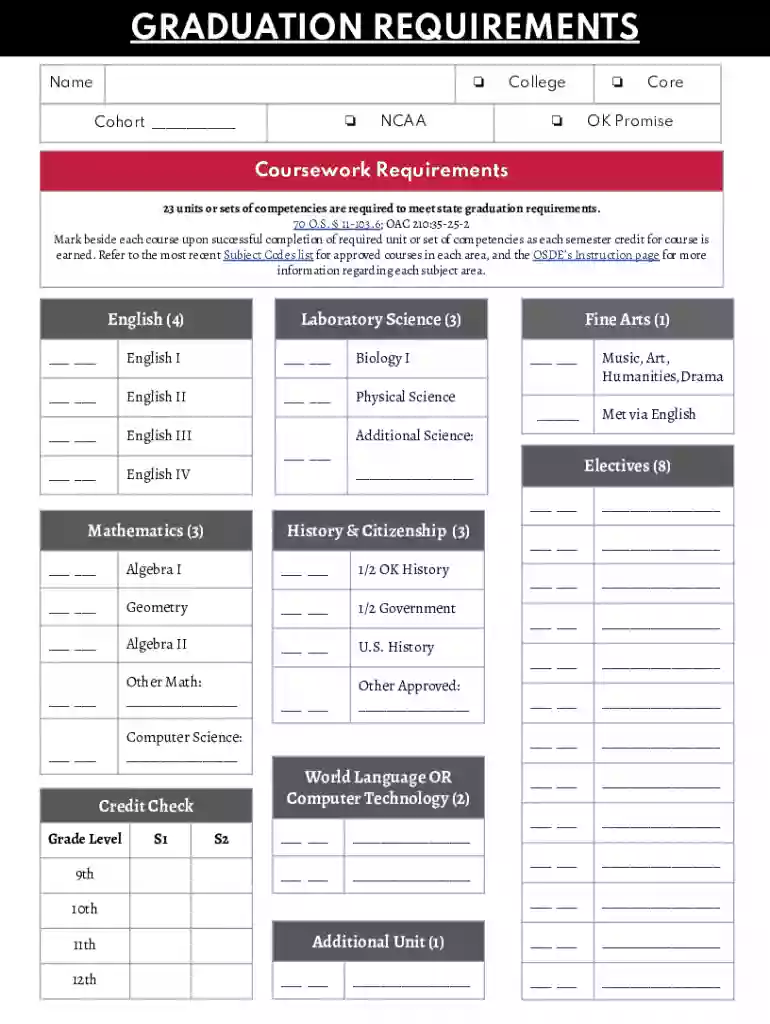
Graduation requirements are a set of academic, procedural, and experiential conditions that students must fulfill to qualify for a high school diploma. These conditions include completing specific coursework in core subjects such as English, Mathematics, and Science, as well as electives. The requirements are typically outlined by educational authorities at the state level and can vary across different regions in the United States. They often aim to ensure that students are equipped with essential skills and knowledge needed for higher education or entry into the workforce.
Core Coursework Components
- English: Usually four years of coursework are required to ensure proficiency in reading, writing, and comprehension.
- Mathematics: A minimum of three to four years, covering fundamental topics like Algebra, Geometry, and potentially advanced subjects such as Calculus.
- Science: Three years are often required, including disciplines like Biology, Earth Science, and Chemistry.
- History/Social Studies: Typically three years, encompassing U.S. History, Government, and Economics.
Elective Subjects
Electives constitute additional courses chosen by students based on interest, allowing them to explore other academic areas or develop specific skills. These could include art, foreign languages, technology, or physical education.
How to Use the Graduation Requirements
Understanding and utilizing graduation requirements is essential for students, parents, and educators to ensure timely and successful diploma attainment. Accurate knowledge of these requirements can significantly influence academic planning and decision-making.
Navigating Course Selection
- Students should regularly review their progress with guidance counselors to ensure they are meeting all necessary criteria.
- Schools often provide curriculum guides, detailing which courses fulfill specific requirements, aiding students in smarter course selection.
Implementing the Individual Career Academic Plan (ICAP)
The ICAP is an individualized framework that guides students through their educational journey, aligning with their career goals and interests. It helps students:
- Set academic and career objectives.
- Choose courses that integrate with their goals.
- Regularly evaluate and adapt their plans based on performance and changing interests.
Steps to Complete Graduation Requirements
Fulfilling graduation requirements involves a series of strategic actions planned throughout a student's high school career. The steps are designed to systematically ensure that all academic and experiential prerequisites are met.
Year-by-Year Breakdown
- Freshman Year: Begin with foundational courses in core subjects; explore potential elective interests.
- Sophomore Year: Continue with core courses while expanding elective choices; start developing the ICAP.
- Junior Year: Focus on completing advanced courses in core subjects; engage in service learning or vocational experiences.
- Senior Year: Finalize any remaining coursework; complete work-based learning activities; fulfill all requirements of the ICAP.
Participation in Extracurricular Activities
Involving oneself in extracurricular activities can support service-based learning requirements and may provide additional benefits such as leadership skills and community recognition.
Who Typically Uses the Graduation Requirements
Graduation requirements serve as a guide mainly for high school students in public and private educational institutions. However, several other stakeholders significantly depend upon these requirements for various purposes.

Key Stakeholders
- Students: Primary users, as they directly engage with the curriculum and activities to fulfill requirements.
- Parents: They assist in course selection, monitor progress, and support extracurricular engagement.
- Educators and School Administrators: Develop curriculum plans, monitor student progress, and provide guidance.
- Policy Makers: Determine and update state regulations regarding graduation criteria to align with educational goals and workforce needs.
Key Elements of Graduation Requirements
Graduation requirements are composed of several integral elements that together create a comprehensive criterion students must meet to graduate.
Coursework and Credits
- Units of Competency: Usually amount to 23 or more units spanning core subjects and electives, with credits indicating successful completion.
Additional Components
- Service or Work-Based Learning: Many states mandate that students complete an equivalent of service learning hours to promote community involvement.
- State-Required Assessments: Exams or evaluations in core areas to measure proficiency and readiness.
State-Specific Rules for Graduation Requirements
States across the U.S. may have variations in their graduation requirements, which reflect local priorities and standards. Understanding these differences is crucial for harmonious compliance and qualification.
Examples of Variability
- Minimum Credit Requirements: Some states might require 24 credits, while others require only 20.
- Assessment Criteria: The benchmark for passing state assessments can differ, affecting how students prepare.
- Additional Requirements: Certain states include unique components such as technology proficiency or foreign language mandates.
Steps to Obtain the Graduation Requirements
Successfully obtaining a copy of the graduation requirements involves coordinating with educational bodies and utilizing available resources for accurate and timely information.
Accessing Official Documents
- School Websites: Most high schools post graduated requirements on their websites for easy access.
- Guidance Offices: Counselors can provide detailed guides tailored to student needs and specific inquiries.
- State Educational Departments: They publish standardized criteria, offering official documentation and updates.
Examples of Using the Graduation Requirements
Real-world scenarios can illustrate how students and educators apply graduation requirements in their academic planning and achievement processes.
Scenario Illustrations
- Student Success Stories: Profiles on how adhering to requirements paved the way for successful college admissions.
- Adaptations for Diverse Needs: Exploring how students with special educational needs have navigated these requirements with appropriate accommodations and adjustments.
- Cross-disciplinary Benefits: Demonstrating how electives supported by core requirements have led students into non-traditional academic or career paths.