




Definition and Meaning of "Form Online"
Online forms have revolutionized how individuals and businesses collect and process information. Unlike traditional paper forms, online forms provide a digital solution for data entry, streamlining processes across various industries. A "form online" refers to any structured digital document designed to capture specific information electronically. These forms are typically accessible via a web platform, allowing users to submit their responses in an organized manner. Commonly used across legal, medical, educational, and financial sectors, online forms offer flexibility and efficiency, reducing the need for manual data entry and physical storage. They can be used for various applications such as surveys, feedback collection, registrations, and application forms, making them an essential tool in today's digital landscape.
How to Use the Form Online
Utilizing an online form is generally a straightforward process, and platforms like DocHub provide a user-friendly interface to facilitate this. Here’s a general guide:
-
Access the Form: Navigate to the website or online platform where the form is hosted. For forms hosted on DocHub, you might access them directly through your browser without needing any installations.
-
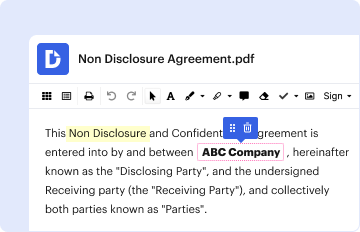
Fill in Required Information: Use the form fields to enter the required information. These fields can include text boxes, checkboxes, dropdown menus, and signature fields for data entry. Each field is typically accompanied by a label that indicates the type of information required.
-
Review the Information: Before submitting, it's crucial to review all entries for accuracy and completeness to avoid delays or errors in processing.
-
Submit the Form: Once you have verified the information, you can submit the form by clicking the designated "submit" button.
-
Receive Confirmation: After submission, you often receive a confirmation message or email, ensuring your data was successfully sent.
Steps to Complete the Form Online
Completing an online form involves a series of methodical steps to ensure all sections are appropriately addressed:
-
Begin with Basic Information: Start filling out the sections requiring basic information, such as your name, contact details, and any other preliminary data.
-
Proceed to Detailed Sections: Move on to sections that require more detailed responses or the submission of additional documents. This could include questionnaires or specific declarations relevant to the form's purpose.
-
Attach Necessary Files: If the form requires supporting documentation, use the upload feature to attach files such as identification or proof of address. Ensure all attachments meet the file size and format specifications.
-
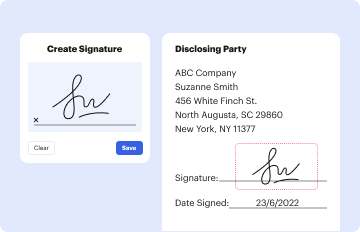
Finalize with Signatures: Some forms may require an electronic signature. Platforms like DocHub enable you to create and save your digital signature for easy reuse.
-
Submit and Save: Once all sections are complete, submit the form. It's also beneficial to download or save a copy for your records.
Why Should You Use Forms Online
The benefits of using forms online are substantial, providing both efficiency and effectiveness in information gathering:
-
Convenience: Access and complete forms from any location with internet access, eliminating the constraints of physical presence and postal delays.
-
Efficiency: Reduce processing times with instant submissions and automated data handling.
-
Organization: Digital forms allow for automated tracking and management of submissions, which ensures every entry is stored systematically without the need for physical storage.
-
Accessibility: Accommodate users with disabilities through compatibility with assistive technologies.
Important Terms Related to Form Online
Understanding key terms associated with forms online enhances user experience and comprehension:
-
Digital Signature: An electronic form of a signature that verifies the authenticity of the document and the signer’s identity.
-
Field: A designated area within the form where users provide specific information, such as text boxes or checkboxes.
-
Form Template: A pre-designed form with a standardized layout, which can be reused for multiple purposes.
Legal Use of the Form Online
When using online forms for official purposes, it's important to consider:
-
Compliance: Ensure all forms comply with relevant laws and regulations, such as data protection and electronic signature legislation.
-
Legality: Online forms and digital signatures, like those created on DocHub, adhere to legal standards such as the ESIGN Act, offering the same validity as paper documents.
-
Privacy: Implement adequate security measures, like encryption, to protect sensitive information during transmission and storage.
Digital vs. Paper Versions
Comparing digital forms to their paper counterparts reveals several advantages:
-
Environmental impact: Digital forms reduce paper usage, lessening environmental impact.
-
Cost: Minimize expenses related to printing, mailing, and storage.
-
Editability: Allows for easier correction and resubmission without producing additional paper waste.
Software Compatibility
DocHub and similar platforms offer compatibility with major software systems to streamline document management:
-
Integration: Seamlessly integrate with cloud storage services such as Google Drive, Dropbox, and OneDrive for easy access and storage.
-
Software Systems: Compatible with accounting and tax software like TurboTax and QuickBooks, enhancing utility for financial applications.
These facets ensure that using forms online is efficient, reliable, and adaptable to a wide range of needs and systems.