






Definition & Meaning
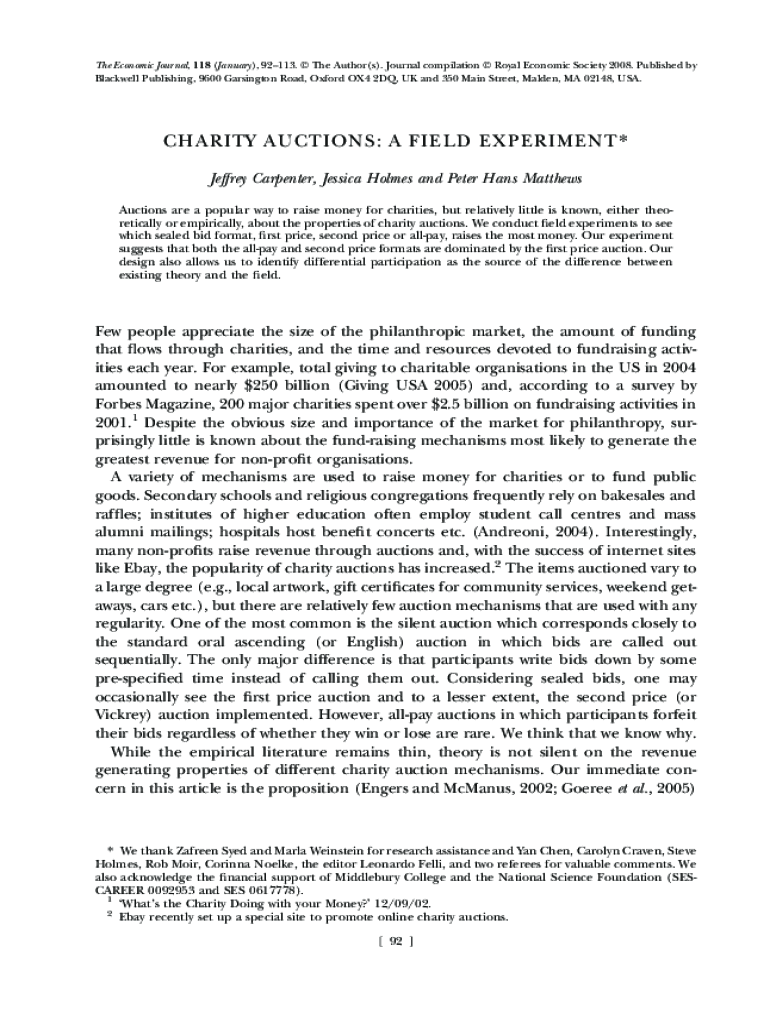
Revenue in divisible goods auctions refers to the total income generated from auctions where goods are sold in portions or lots that can be divided among buyers. This contrasts with auctions where single, indivisible items are sold. Such auctions often involve items like bulk goods, agricultural products, or wholesale merchandise, and are characterized by a higher number of participants due to the ability to purchase smaller quantities. The methodology behind these auctions allows sellers to cater to a wider market, potentially increasing participation rates and, consequently, revenue.
Key Elements of the REVENUE IN DIVISIBLE GOODS AUCTIONS
Key elements of these auctions include:
- Lot Division: Goods are divided into lots, allowing multiple buyers to purchase varying amounts.
- Bidding Format: Auctions may use different formats such as first-price or second-price sealed-bid auctions.
- Participation Rates: High participation is essential, as it typically correlates with higher revenue outcomes.
- Auctioneer Role: The auctioneer manages the bidding process, ensures the rules are followed, and finalizes the sales.
- Market Demand: Understanding market demand helps set reserve prices and predict revenue outcomes.
Who Typically Uses the REVENUE IN DIVISIBLE GOODS AUCTIONS
Typically, businesses and individuals involved in bulk trading, such as wholesalers, agricultural producers, and distributors, utilize divisible goods auctions. These auctions offer benefits like cost savings and flexibility for buyers needing specific quantities or price points. Sellers gain access to varied buyer bases and can maximize their revenue by selling to multiple bidders at different price levels.


Examples of Using the REVENUE IN DIVISIBLE GOODS AUCTIONS
One practical example is an agricultural auction where a farmer divides their grain into lots for sale to various buyers. Each buyer bids on the quantity they require, allowing smaller buyers, who cannot afford or do not need the entire supply, to participate. Another example involves wholesale electronics distributors auctioning products in bulk lots, providing opportunities for retailers to purchase inventory at competitive prices.
State-Specific Rules for the REVENUE IN DIVISIBLE GOODS AUCTIONS
State regulations regarding divisible goods auctions can vary widely across the United States. Some states may impose more stringent licensing requirements for auctioneers, while others might have specific disclosure obligations for sellers. Understanding the local legal landscape is crucial for auctioneers to ensure compliance and for participants to understand their rights and obligations within these auctions.
Legal Use of the REVENUE IN DIVISIBLE GOODS AUCTIONS
Legal considerations are integral to conducting divisible goods auctions. Key legal aspects include setting reserve prices, ensuring transparency in the bidding process, maintaining proper documentation of sales, and adherence to state auction laws. Auctioneers must also comply with consumer protection laws to prevent fraudulent activities and ensure fair competition.
Steps to Complete the REVENUE IN DIVISIBLE GOODS AUCTIONS
- Preparation of Goods: Divide goods into lots and set reserve prices.
- Auction Promotion: Advertise the auction to attract bidders.
- Registration of Bidders: Ensure all participants are registered and aware of the auction terms.
- Conducting the Auction: Manage bidding, ensure adherence to auction rules, and facilitate communication between buyers and sellers.
- Finalization: Record winning bids, process payments, and transfer goods to the buyers.
Business Types That Benefit Most from REVENUE IN DIVISIBLE GOODS AUCTIONS
Businesses that benefit from divisible goods auctions include:
- Agricultural Producers: They can sell crops in bulk lots to various buyers.
- Manufacturers: They can offload excess inventory or products not sold through regular retail channels.
- Wholesalers: They benefit from increased buyer interest by allowing smaller volume purchases.
These auction types offer a flexible, efficient way to manage inventory and meet buyer demand in competitive markets.
State-by-State Differences
Understanding state-specific rules is crucial, as auction regulations can differ, affecting how divisible goods auctions are conducted. This includes variations in required auctioneer licenses, bidder regulations, and taxation on auction sales. Awareness of these differences ensures businesses operate legally and optimize their auction strategies.