






Definition and Meaning
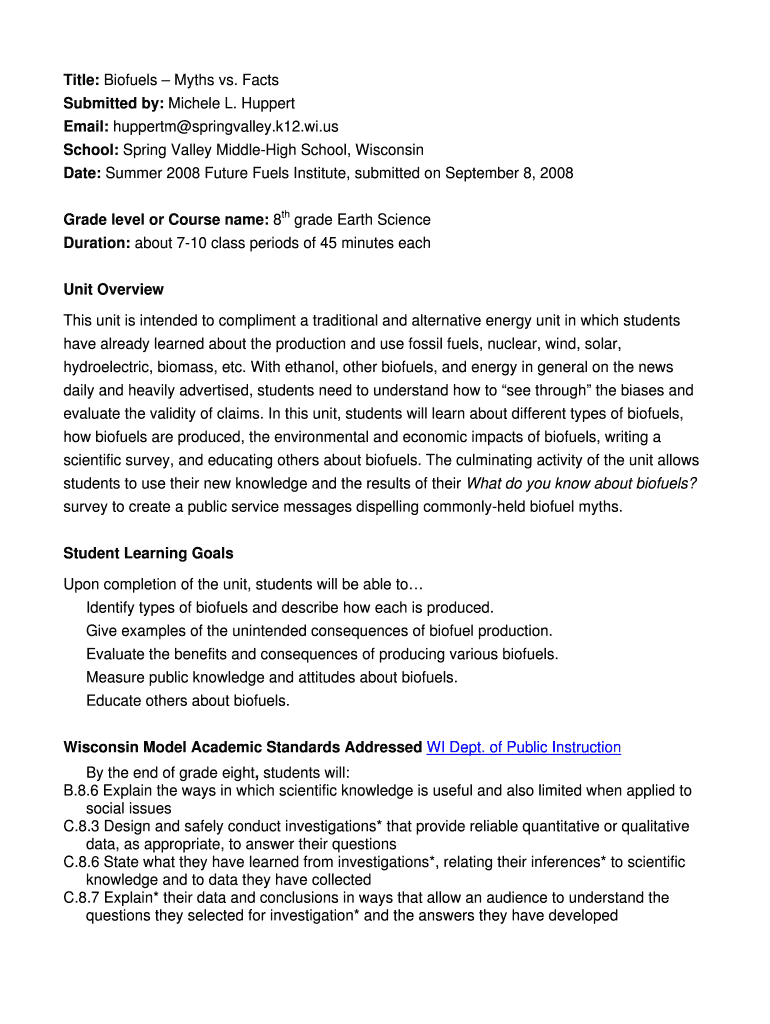
The "Biofuels Myths vs Facts" document, curated by Michele of the WUP Center, aims to clarify misconceptions and truths about biofuels. The guide serves as an educational unit for teaching 8th-grade students about the science, production, and impact of biofuels. The intent is to foster critical thinking by challenging existing media narratives regarding biofuels while aligning with the Wisconsin Model Academic Standards.
How to Use the Document
Educators can integrate this resource into classroom discussions, focusing on engaging students with its content through activities and project-based learning. Over 7 to 10 class periods, students explore biofuel production processes and engage in public service projects to disseminate accurate information about biofuels. Teachers are encouraged to use this resource to develop scientific literacy and communication skills among students.
Steps to Complete the Educational Unit
To effectively implement the "Biofuels Myths vs Facts" unit, educators should:
- Introduce the Concept: Begin with an overview of what biofuels are and why they are significant.
- Explore Myths and Facts: Guide students through common misconceptions and correct information.
- Engage in Activities: Conduct experiments or discussions that illustrate biofuel production.
- Critical Evaluation: Encourage students to critique media representations and develop their surveys.
- Public Service Project: Conclude the unit by having students present their findings to the community in a creative format.
Key Elements of the Document
The document encompasses:
- Myths and Facts: Separating reality from misconception about biofuels.
- Educational Activities: Practical tasks designed to reinforce learning outcomes.
- Standards Alignment: Ensures the curriculum meets educational standards.
- Public Engagement: Tasking students with sharing accurate biofuels information.
Examples of Usage
Use of this document in classrooms can lead to various outcomes:
- Interactive Learning: Students may create posters or digital content dispelling biofuel myths.
- Critical Analysis: Class debates on media pieces focusing on biofuel news.
- Community Involvement: Projects aimed at educating the local community about biofuels.
Legal Use and Compliance
This educational material aligns with U.S. educational standards and is intended for instructional use within academic settings. Ensuring comprehensive coverage of biofuels, it addresses both legal and environmental considerations in teaching the subject matter.
Important Terms Related to Biofuels
Understanding critical terminology is crucial:
- Biofuels: Fuels derived from organic materials.
- Sustainability: Practices ensuring resources for future generations.
- Carbon Footprint: Total greenhouse gas emissions caused by an individual or activity.
State-by-State Differences
Considering state-specific biofuel policies can enrich the learning experience:
- Wisconsin Focus: The curriculum ties closely with Wisconsin policies and standards.
Application Process & Approval Time
Educators planning to use this unit should:
- Review the Curriculum: Ensure understanding of each section's learning objectives.
- Seek Approval: May require department-level approval if part of a standardized curriculum.
Key Takeaways
Highlighting the primary insights:
- Biofuels' Role: Gain a nuanced understanding of the significance and complexity of biofuels.
- Critical Thinking: Develop skills to evaluate and communicate scientific information effectively.
- Community Engagement: Empower students to become informed advocates for sustainable practices.