






Definition and Meaning
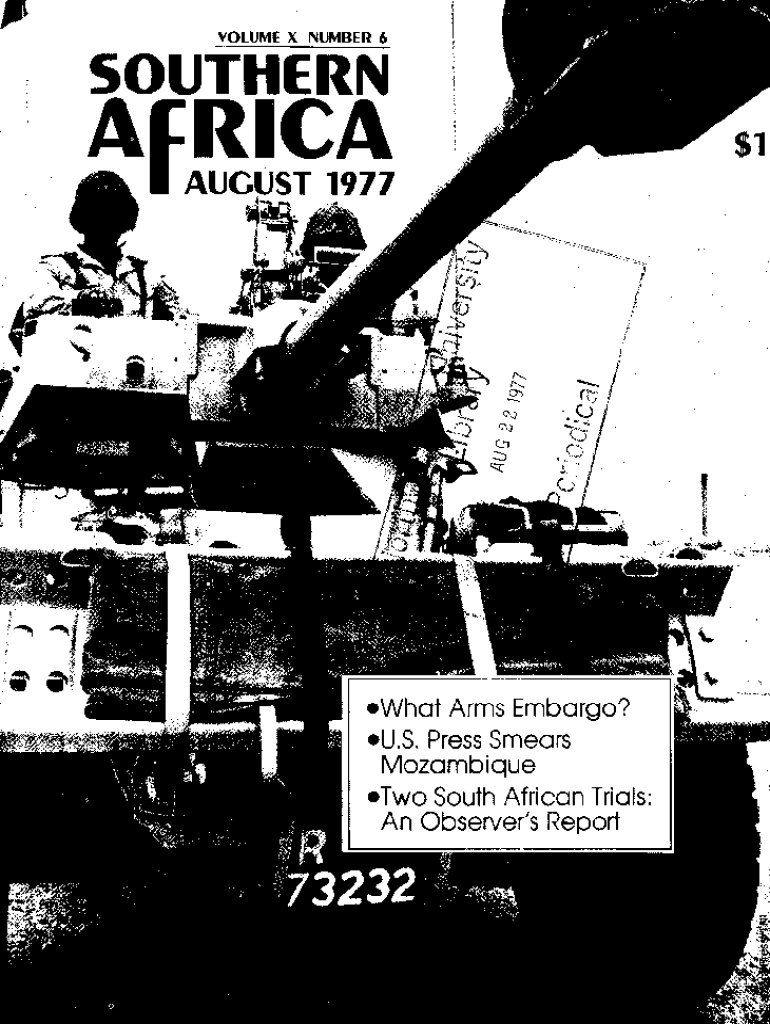
The form titled "2 Groups Say U S Violates South Africa Arms Embargo" addresses allegations regarding U.S. involvement in contravening the arms embargo imposed on South Africa. The embargo refers to international restrictions placed to prevent the sale or distribution of military equipment to South Africa, particularly during its apartheid era. This document typically involves discussions on legal, political, and ethical implications surrounding the reported violations and seeks to hold accountable any entities involved.
Key Elements of the Allegation
The primary elements covered in this form would include:
-
Specific Allegations: The nature and scope of the violations alleged by the two groups. It includes details on the types of arms involved and how they contravene international laws.
-
Involved Parties: Identifying the main parties accused of the embargo breach, including any government, corporation, or individuals.
-
Legal Framework: Examination of the international laws and local laws relevant to the arms embargo, including any resolutions from international bodies like the United Nations.
Who Typically Uses This Form
This form is generally used by organizations, legal entities, and human rights groups concerned with international relations and compliance with arms control agreements. It might also be utilized by:
-
Legal Experts: To argue or defend a case based on the formal understanding of the embargo.
-
Policy Analysts: Evaluating the implications of the reported violations on international politics.
-
Government Officials: Assessing the impact of allegations on national policies and foreign relations strategies.
How to Obtain the Form
Obtaining the form "2 Groups Say U S Violates South Africa Arms Embargo" can be achieved through:
-
Government Archives: Inquiries can be made to governmental or international bodies overseeing arms control.
-
Legal Databases: Extensive legal repositories may offer downloadable versions of the form for scrutiny and analysis.
-
Human Rights Organizations: These groups may provide the form for individuals researching violation claims.
Legal Use of the Allegation
Legally, this form sets the foundation for:
-
Litigation: As a part of the evidence in international courts or legal hearings to seek redress or uphold sanctions.
-
Policy Formulation: Assists governments in shaping their foreign policy and reinforcing or lifting embargoes.
-
Public Awareness: Facilitating discussions and raising awareness about the implications of violating international embargoes.
Examples of Using the Allegation Form
Practical scenarios where this form might be utilized include:
-
Research Studies: Scholars and researchers might use the documented allegations to conduct studies on the effectiveness of arms embargoes.
-
Casebuilding: Legal teams might rely on this document for compiling cases against alleged violators of the embargo.
-
Media Reports: Journalists could use the information to craft in-depth investigative pieces on the global arms trade and its implications.
Important Terms Related to the Allegation
Key terminology associated with the form would cover aspects such as:
-
Embargo: A ban or restriction imposed by one country or multiple countries on the supply of military equipment.
-
Apartheid: Referring to the specific political and social system of racial segregation that was in place in South Africa.
-
Compliance: Monitoring adherence to the rules and regulations of international agreements.
State-Specific Rules for Compliance with Embargo
While the embargo on South Africa was internationally defined, different states may have specific rules concerning its enforcement:
-
Federal Regulations: Examining how U.S. federal laws align with enforcing embargoes internationally.
-
State Legislation: Exploring any additional compliances required at the state level within the U.S. for companies involved in defense exports.
Required Documents for Allegation Submissions
To support claims or defenses related to the form, the following documents may be necessary:
-
Proof of Violation: Evidence demonstrating breach, such as contracts or shipment details.
-
Testimonies: Eyewitness accounts or expert analysis reports that support the allegations.
-
Certification of Compliance: Documents showing due diligence on arms dealings, verifying adherence to the embargo.