






Key Elements of Brick Paving Requirements
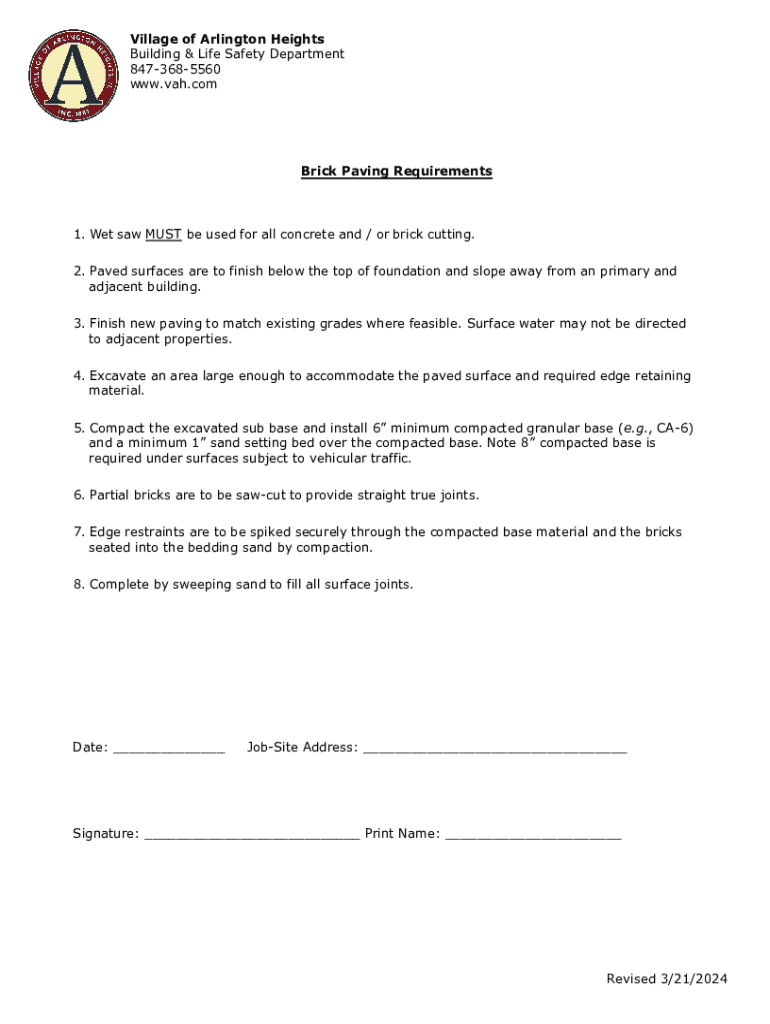
Brick paving requirements are essential guidelines that ensure the structural integrity and aesthetic appeal of paved surfaces. These requirements cover various aspects, including grading, excavation, and base installation. Understanding these key elements is crucial for successful paving projects.
-
Grading and Drainage: Proper grading ensures water does not pool on the surface, which can cause damage over time. Adequate drainage systems are integral to maintaining the durability of brick pavements.
-
Excavation Standards: Excavation lays the groundwork for the paving project. It involves removing existing surfaces and soil to create a level base, which is vital for the stability of the installation.
-
Base Installation: A stable base is crucial for the longevity of brick paving. This typically involves layered materials such as crushed stone or other aggregates that provide a firm foundation.
Steps to Complete Brick Paving Requirements
Completing the brick paving requirements involves a series of organized steps to ensure that the project is executed correctly.
-
Site Assessment: Begin with a thorough evaluation of the site to identify any potential obstacles or specific needs.
-
Planning and Design: Draft a comprehensive design plan that includes all measurements, the layout of the paving stones, and any additional elements like borders.
-
Permitting and Approvals: Check with local municipal offices to obtain necessary permits and ensure compliance with local regulations.
-
Installation: Follow outlined procedures for grading, excavation, base installation, and the actual laying of bricks.
-
Inspection and Finalization: Conduct a final inspection to ensure all requirements are met, making adjustments where necessary to adhere to guidelines.
How to Use Brick Paving Requirements
Using brick paving requirements effectively involves understanding how each guideline impacts the construction process and the final product.
-
Reference for Construction Teams: Provide these guidelines to construction teams to ensure uniformity and adherence during paving projects.
-
Checklist for Compliance: Utilize the requirements as a checklist to verify compliance at different stages of the project.
-
Guide for Issue Resolution: Refer to requirements to troubleshoot and resolve any issues that arise during construction.
Legal Use of Brick Paving Requirements
Legal compliance is vital for any construction project. Brick paving requirements provide a framework to ensure legal adherence.
-
Building Codes Compliance: Align with local and national building codes to avoid legal complications.
-
Liability Protection: Properly following these requirements can help protect against liability issues related to structure failure or accidents.
-
Documentation for Inspections: Maintain thorough documentation of adherence to these requirements, as this is often needed during inspections or audits.
Important Terms Related to Brick Paving Requirements
Understanding key terms related to brick paving is crucial for interpreting requirements accurately.
-
Load-bearing: Refers to the capacity of the pavement to support weight without shifting or cracking.
-
Permeability: The ability of the paving surface to allow water to pass through, which affects drainage and environmental impact.
-
Subgrade: The native soil prepared to support a structure or pavement system, crucial for ensuring paving stability.
Examples of Using Brick Paving Requirements
Practical examples can clarify how brick paving requirements are applied.
-
Residential Driveway Installation: Ensures adherence to guidelines for grading and drainage to prevent water damage to a home’s foundation.
-
Commercial Pathways Construction: An example where structural integrity must support high foot traffic while complying with accessibility standards.
-
Municipal Park Renovations: Illustrates the use of these requirements to meet both aesthetic and functional needs while ensuring longevity.
Who Typically Uses Brick Paving Requirements
Various stakeholders utilize brick paving requirements to ensure successful project outcomes.
-
Contractors and Builders: These professionals use the requirements as part of their construction standards to ensure quality and compliance.
-
Landscape Architects: Utilize the guidelines to create aesthetically pleasing and functional outdoor spaces.
-
Municipal Planners: Employ these requirements to design and maintain public spaces that are safe, durable, and compliant with local regulations.
State-Specific Rules for Brick Paving Requirements
While many paving principles are universal, certain rules can vary by state.
-
Climate Considerations: Requirements may differ based on regional climate conditions, affecting choices like material types and installation techniques.
-
Local Regulations: Each state may have unique building codes and permits that need attention during the planning phase to ensure compliance.
-
Environmental Restrictions: Certain states might have specific environmental guidelines that influence drainage solutions and material sourcing decisions.