




01. Edit your form online
Type text, add images, blackout confidential details, add comments, highlights and more.

Type text, add images, blackout confidential details, add comments, highlights and more.

Draw your signature, type it, upload its image, or use your mobile device as a signature pad.

Send it via email, link, or fax. You can also download it, export it or print it out.
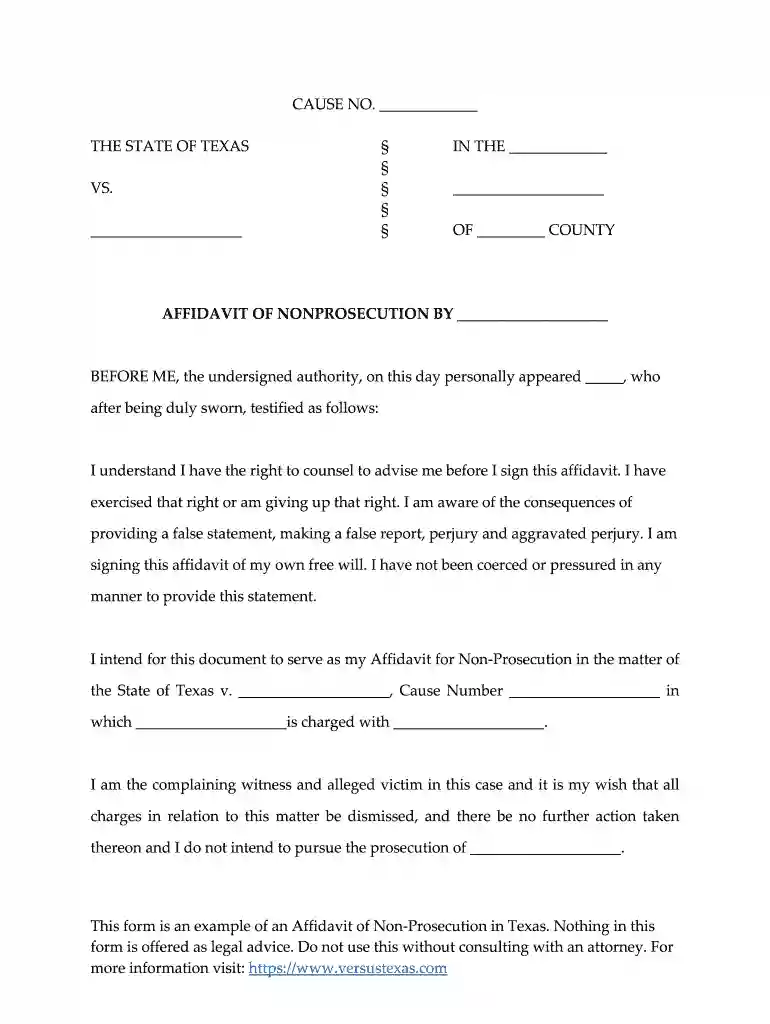
The Affidavit of Non-Prosecution Form is a legal document primarily used in the state of Texas, allowing a complaining witness to formally state their desire to dismiss charges against the accused individual. This form serves as a testament that the witness no longer wishes to pursue prosecution and is done voluntarily. Understanding the implications of this form is crucial as it directly impacts the legal proceedings related to an accused party. Often, this affidavit includes detailed declarations regarding the witness's testimony and the choice to withdraw any allegations. It's essential to consult with legal counsel before using this form, ensuring that the witness's rights are fully understood and respected.
Read the Entire Form: Before filling out the document, thoroughly read each section to ensure comprehension of the language and the legal consequences involved.
Fill in Personal Details: Enter the full legal names of both the witness and the accused, along with relevant case information, such as case numbers and court details.
State Your Intentions Clearly: The core of this affidavit is the statement of intent to not pursue prosecution. Clearly articulate that decision, ensuring it's expressed as a voluntary action.
Include Declarations: Add any necessary declarations regarding the initial testimony and why the decision to withdraw charges is being made.
Sign and Date the Document: The affidavit must be signed by the witness, confirming the statements made are accurate and true to their knowledge. Consider having the document notarized for added legal validity.
Consult an Attorney: It's highly recommended to review the filled form with a legal expert to verify that all information is accurately captured and the form is legally compliant.
This form is legally binding in the state of Texas and holds significant weight in court proceedings regarding criminal charges. Its primary function is to inform the court and prosecutors that the witness does not wish to proceed with the case. While it can influence the outcome, the final decision about continuing prosecution lies with the state. Courts may consider this affidavit during hearings or trials, but it's essential to note that filing this document does not guarantee charges will be dropped. Prosecutors retain the discretion to move forward with charges irrespective of the affidavit.
To acquire this form, individuals can typically contact legal counsel or visit state-specific legal resources online. Many local court websites provide downloadable templates that can be filled out as needed. It's advisable to seek this form from a reputable source to ensure it meets all state legal standards. Legal aid organizations may also offer it, along with assistance in completing and filing it.
Texas law specifically provides the framework within which this form operates. While the general intention and usage are consistent across the state, local jurisdictions could have additional rules or preferences regarding how these affidavits must be filed or presented in court. Therefore, one should check with local court regulations and guidelines to ensure compliance and the correct processing of the form.
Complaining Witnesses: Individuals who have initially filed charges and now wish to retract them for any reason, often used in cases related to personal disputes, family, or domestic issues.
Legal Representatives: Attorneys and legal aid providers who assist clients in processing and filing documentation of this nature.
Courts and Prosecutors: As part of the overall case management and legal procedures to assess the viability of continuing the prosecution without the complaining witness's support.


Domestic Disputes: Often used in cases where an initial altercation or misunderstanding has been resolved amicably between private parties, and the complainant no longer wishes for legal action.
Miscommunications: Situations where charges were filed based on misinterpretations or lack of complete information, and the complainant wishes to retract the statement.
Personal Resolution: Instances where parties involved have reached a private settlement outside of court and seek dismissal of pending legal proceedings.
These sections collectively provide a comprehensive overview of the Affidavit of Non-Prosecution Form, offering detailed insight into its usage, completion, and legal implications while maintaining focus on its application within Texas legal proceedings.
We've got more versions of the Affidavit-of-NonProsecution-Form-2020 doc form. Select the right Affidavit-of-NonProsecution-Form-2020 doc version from the list and start editing it straight away!
At DocHub, your data security is our priority. We follow HIPAA, SOC2, GDPR, and other standards, so you can work on your documents with confidence.


