




01. Edit your form online
Type text, add images, blackout confidential details, add comments, highlights and more.

Type text, add images, blackout confidential details, add comments, highlights and more.

Draw your signature, type it, upload its image, or use your mobile device as a signature pad.

Send it via email, link, or fax. You can also download it, export it or print it out.
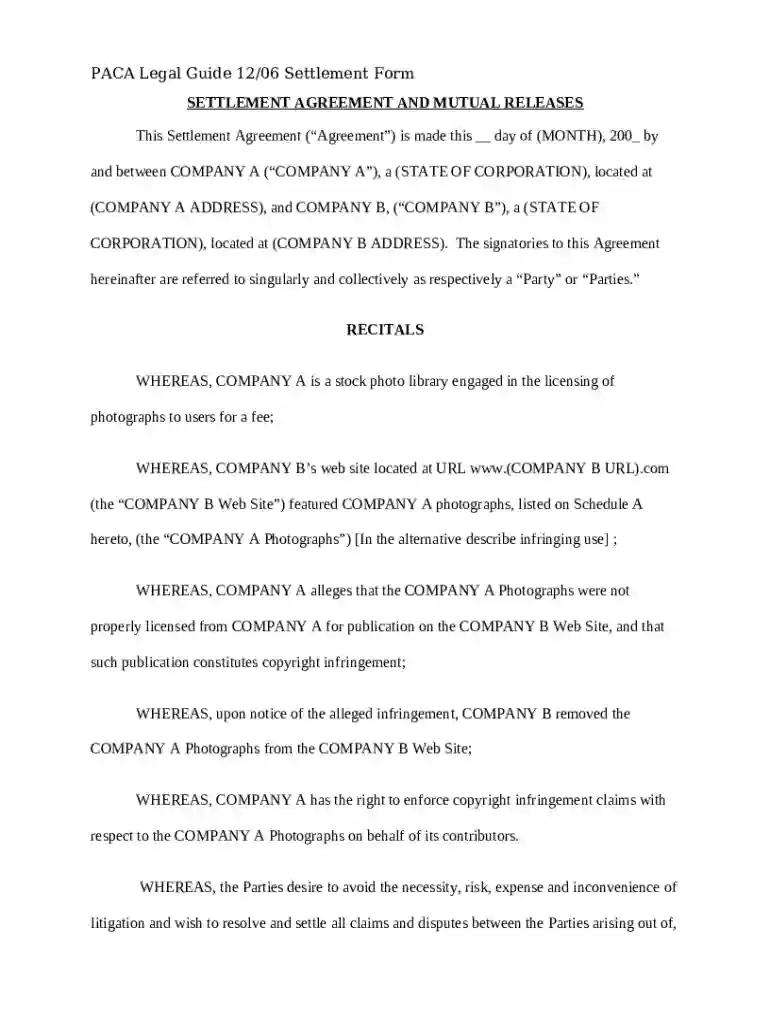
A Settlement Agreement and Mutual Releases is a legal document designed to resolve disputes between parties without resorting to litigation. This agreement usually outlines the terms under which the parties agree to settle their differences. It includes provisions that define the obligations of each party, any financial settlements, and the release of each party from liability relating to the dispute. Such agreements are commonly used to avoid lengthy and costly court battles, providing a legally binding resolution that both parties accept.
When using a Settlement Agreement and Mutual Releases, the parties involved should first clearly outline the terms of settlement. This involves specifying the actions each party must undertake, such as payments, and any ongoing obligations or prohibitions, like ceasing the use of someone's intellectual property. Parties must carefully draft the agreement to ensure all elements of the dispute are addressed. Once the draft is complete, both parties should review and sign the document, ensuring it is legally binding and enforceable.
Completing a Settlement Agreement and Mutual Releases involves several key steps to ensure that the document is legally sound and precise.
Effective Settlement Agreements typically include several essential components that ensure mutual understanding and enforcement:
In legal terms, a Settlement Agreement and Mutual Releases is enforceable as a contract, providing a framework for resolving the matter without court intervention. The document must comply with applicable federal and state laws, and parties should ensure the agreement does not contravene public policy or legal statutes. Including robust legal language helps safeguard against future claims, making it essential to work with legal counsel during its preparation.
Organizations and individuals across various sectors use Settlement Agreements to resolve disputes efficiently:


State laws can impact the provisions and enforceability of a Settlement Agreement and Mutual Releases:
Practical scenarios illustrate the broad application of Settlement Agreements:
These examples reveal the versatility of Settlement Agreements in providing a practical resolution to diversely rooted disputes.
At DocHub, your data security is our priority. We follow HIPAA, SOC2, GDPR, and other standards, so you can work on your documents with confidence.


