01. Edit your form online
Type text, add images, blackout confidential details, add comments, highlights and more.

Type text, add images, blackout confidential details, add comments, highlights and more.

Draw your signature, type it, upload its image, or use your mobile device as a signature pad.

Send it via email, link, or fax. You can also download it, export it or print it out.
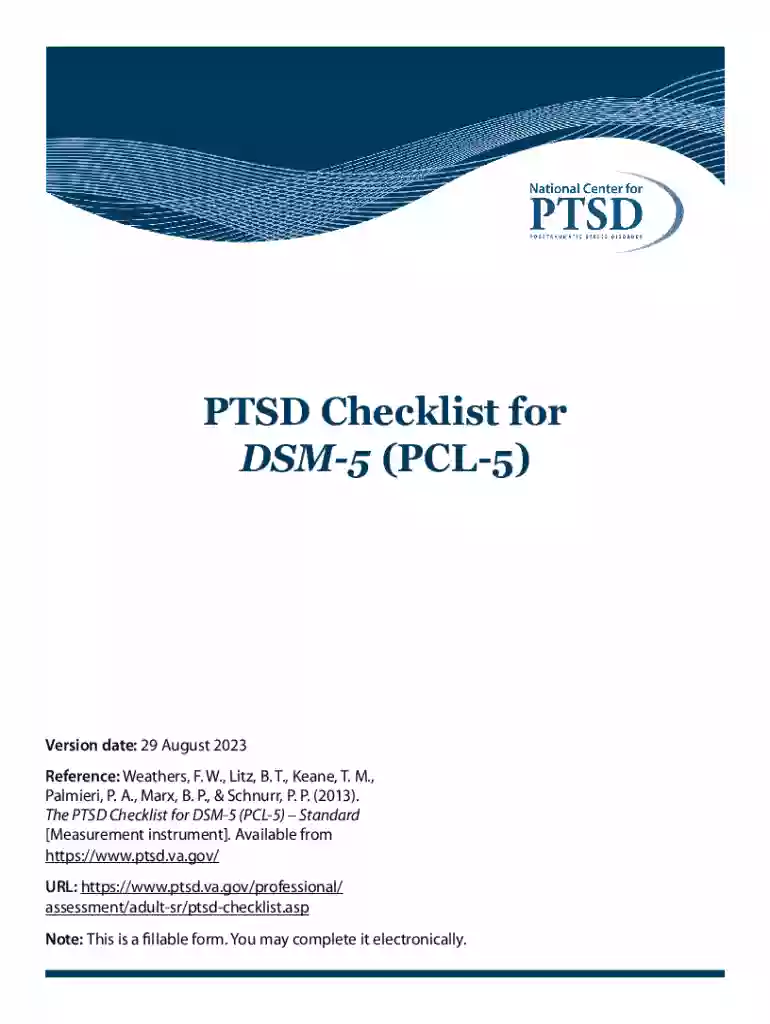
The PTSD Checklist for DSM-5 (PCL-5) is a standardized self-report tool used to measure symptoms of post-traumatic stress disorder (PTSD) as outlined in the Diagnostic and Statistical Manual of Mental Disorders, Fifth Edition. It comprises a list of questions that assess the frequency and severity of PTSD symptoms experienced over the previous month. These symptoms include intrusive memories, avoidance, cognitive and mood alterations, and arousal changes. The PCL-5 is widely used in clinical settings to support diagnosis, monitor treatment progress, and contribute to research data.
To use the PCL-5 effectively, individuals need to rate each item based on how much a particular symptom has bothered them in the past month. The scale ranges from zero ("Not at all") to four ("Extremely"). Scoring the checklist involves summing the scores for each of the 20 items, with a higher total score indicating more severe PTSD symptoms. Clinicians interpret these scores to determine the presence and severity of PTSD, guiding treatment decisions.
A veteran might complete the PCL-5 at different points during their therapy to track progress. Initially, they might report high scores across questions related to hypervigilance and avoidance. With ongoing treatment, these scores might decrease, indicating improvement.
There are various ways to obtain the PCL-5 for use. Many healthcare providers and institutions provide the checklist as part of their assessment tools. It can also be accessed through the website of mental health organizations or clinical handbooks related to PTSD.
The PCL-5 serves various purposes in both clinical and research contexts. It helps in diagnosing PTSD, crafting treatment plans, evaluating treatment outcomes, and conducting epidemiological research.
The checklist includes 20 items reflecting the core symptom criteria for PTSD according to DSM-5. These elements classify symptoms into four main categories: re-experiencing, avoidance, negative alterations in cognition and mood, and arousal.
Using the PCL-5 requires adherence to ethical standards and guidelines to ensure proper application and interpretation. Only trained professionals should administer the checklist to avoid misdiagnosis or misuse of results.
The PCL-5 is primarily used by mental health professionals including psychologists, psychiatrists, and clinical social workers. It is also valuable in research settings for gathering data on PTSD prevalence and symptomatology.


Each section of the PTSD Checklist for DSM-5 brings nuanced insights into diagnosing and treating PTSD, enhancing the ability to provide tailored care based on an individual's unique experiences with trauma.
We've got more versions of the Ptsd Checklist for Dsm-5 (pcl-5) form. Select the right Ptsd Checklist for Dsm-5 (pcl-5) version from the list and start editing it straight away!
At DocHub, your data security is our priority. We follow HIPAA, SOC2, GDPR, and other standards, so you can work on your documents with confidence.