






Definition & Meaning
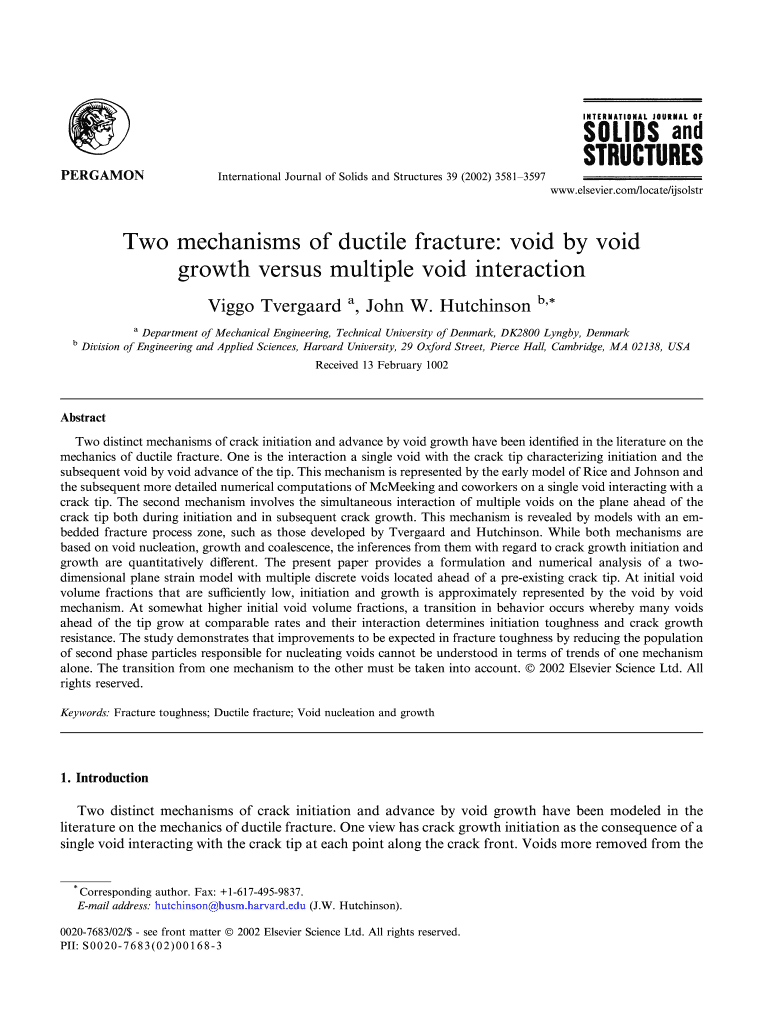
In the realm of material science, ductile fracture is a form of failure characterized by extensive plastic deformation before rupture. This phenomenon is critically analyzed by the Harvard School of Engineering, focusing on two primary mechanisms: void by void growth and multiple void interaction. The first mechanism involves the gradual coalescence of voids, while the second entails interactions among multiple voids, influencing the integrity and toughness of the material.
Steps to Complete the Study on Two Mechanisms of Ductile Fracture
- Understanding the Basics: Familiarize yourself with the essentials of ductile fracture to establish a foundation. This involves studying plastic deformation, void formation, and crack progression.
- Reviewing the Models: Learn about the two-dimensional numerical models used in the study. These models simulate void interactions and provide insights into fracture processes.
- Analyzing Void Growth: Delve into how low initial void volume fractions predominantly exhibit single void interactions, impacting crack growth.
- Exploring Multiple Void Interaction: Examine how higher void volume fractions lead to significant interactions between multiple voids.
- Interpreting the Findings: Evaluate the implications of these interactions for predicting material toughness and reliability.
Key Elements of the Two Mechanisms
- Void Initiation: Examines how voids originate within the material structure.
- Crack Tip Interactions: Focuses on the role of voids around the crack tip and their influence on fracture dynamics.
- Volume Fractions: Details the influence of initial void volume fractions on crack propagation.
- Numerical Analysis: Utilizes two-dimensional models to simulate real-world fracture scenarios.
Why Study the Mechanisms of Ductile Fracture
Understanding the mechanisms of ductile fracture is paramount for industries where structural integrity is critical, such as aerospace and construction. It aids in predicting material failure, enhancing design processes, and ensuring safety.
Important Terms Related to Ductile Fracture
- Plastic Deformation: The permanent shift in material shape under stress before breaking.
- Void Coalescence: The merging of small voids into larger cavities within a material.
- Fracture Toughness: A material’s ability to resist crack propagation.
- Numerical Simulation: A mathematical representation of physical forces and properties within materials.
Examples of Ductile Fracture in Materials
- Metallic Alloys: Often subjected to ductile fracture due to their ability to undergo significant plastic deformation.
- Polymers: Can demonstrate ductile characteristics at certain temperature ranges, showcasing void growth and coalescence.
- Composite Materials: Studied for void interaction due to their heterogeneous nature, affecting toughness and durability.
Legal Use of the Harvard Study on Ductile Fracture
The insights from this study are utilized in developing standards for material testing and structural design. It assists engineers in complying with safety regulations by predicting and mitigating failure in structural components.
Application Process & Approval Time for Methods
Adopting the study's findings into practical applications involves collaboration with regulatory bodies to ensure compliance with safety standards. The approval process encompasses method validation and industry feedback, with timelines dependent on the application's complexity and regulatory requirements.
Who Typically Uses This Study
- Material Scientists: Engage in research to develop advanced materials with improved fracture toughness.
- Mechanical Engineers: Apply knowledge from fracture mechanisms to enhance design safety in structures and machinery.
- Quality Control Managers: Utilizes insights to predict potential failures, ensuring product safety and reliability.