






Definition and Purpose
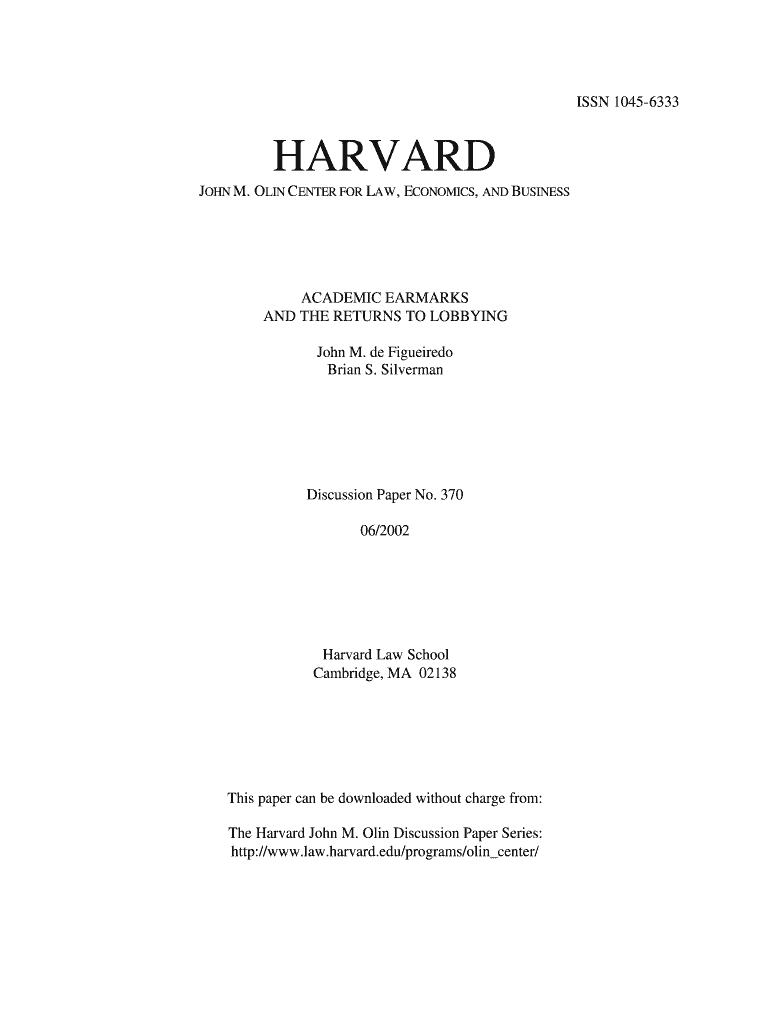
Academic earmarks refer to federal funds allocated for specific university projects through a process often influenced by lobbying. They play a significant role in higher education financing, particularly for research initiatives. Lobbying efforts aimed at securing these earmarks can significantly impact a university's revenue and resources. The paper "Academic Earmarks and the Returns to Lobbying" examines the financial returns universities experience from lobbying activities for earmarks, uncovering the pivotal role congressional representation plays in these efforts.
Key Concepts
- Earmarks: Designated funds allocated by Congress, often bypassing the competitive grant process.
- Lobbying: Activities aimed at influencing political decisions, crucial for securing earmarks.
- Congressional Representation: Having representation on key committees can exponentially increase the efficacy of lobbying.
How to Use the Academic Earmarks and the Returns to Lobbying Analysis
Understanding the strategic importance of lobbying can be instrumental for universities looking to optimize their funding strategies. Institutions can use insights from this paper to assess the effectiveness of their lobbying efforts and adapt strategies that may lead to improved federal funding through earmarks.
Implementation Strategies
- Analyze Representation: Evaluate the congressional representation of your district and its role in Appropriations Committees.
- Lobbying Optimization: Strategize lobbying efforts, focusing not only on increasing expenditure but also on improving representation and strategic alliances.
Steps to Complete an Effective Lobbying Strategy
Formulating a lobbying strategy informed by the paper's insights involves assessing key parameters and developing a structured approach.
- Evaluate Current Returns: Analyze past lobbying expenditures and returns in terms of funding secured.
- Identify Influential Representatives: Research potential members of Congress who serve on Appropriations Committees relevant to your institution’s needs.
- Engage Stakeholders: Collaborate with faculty and administrators to align on priorities and coordinate lobbying activities.
- Develop a Persuasive Case: Prepare detailed proposals that align institutional needs with congressional interests.
- Monitor and Adjust: Continuously track the outcomes and refine lobbying activities as needed.
Who Typically Uses These Strategies
Primarily, universities and research institutions leverage lobbying strategies to secure academic earmarks. Senior administrative officials, government relations teams, and policy advocacy professionals are key players in employing these strategies.


Profile of Typical Users
- Universities: Particularly those with strong research programs and a need for federal funding.
- Lobbyists: Professionals hired to represent university interests in legislative processes.
- Policy Makers: Individuals within universities crafting the proposals for funding requests.
Key Elements of Effective Lobbying for Academic Earmarks
Critical Components
- Representation Analysis: Understanding and leveraging political connections and committee representations.
- Strategic Spending: Allocating resources wisely to maximize the return on lobbying investments.
- Targeted Messaging: Crafting messages that resonate with policy makers by highlighting mutual benefits.
Legal Use and Regulations
Lobbying, while beneficial, must comply with legislative and ethical standards. Universities must ensure that all lobbying activities align with federal and state laws governing political advocacy.
Compliance Checklist
- Registration Requirements: Ensure all lobbyists are properly registered at federal and state levels.
- Reporting: Adhere to mandatory disclosure of lobbying activities and expenditures.
- Ethical Guidelines: Follow ethical guidelines to avoid conflicts of interest and maintain integrity in lobbying efforts.
Examples of Successful Lobbying Initiatives
Illustrative cases demonstrate how targeted lobbying efforts, aligned with strong congressional representation, have led to significant federal funding acquisitions.
- Case Study 1: A public research university achieved substantial earmarks by developing a long-term relationship with a member of the Senate Appropriations Committee, focusing lobbying efforts in line with regional and national priorities.
- Case Study 2: A small liberal arts college secured specific funding for new engineering facilities through targeted messaging that aligned its educational goals with federal manufacturing initiatives.
Penalties for Non-Compliance in Lobbying Documentation
Failure to comply with legal requirements can result in severe penalties, including fines and prohibitions on future lobbying activities. Institutions must ensure accurate and timely documentation of lobbying activities and adhere strictly to reporting regulations to avoid damaging financial and reputational consequences.