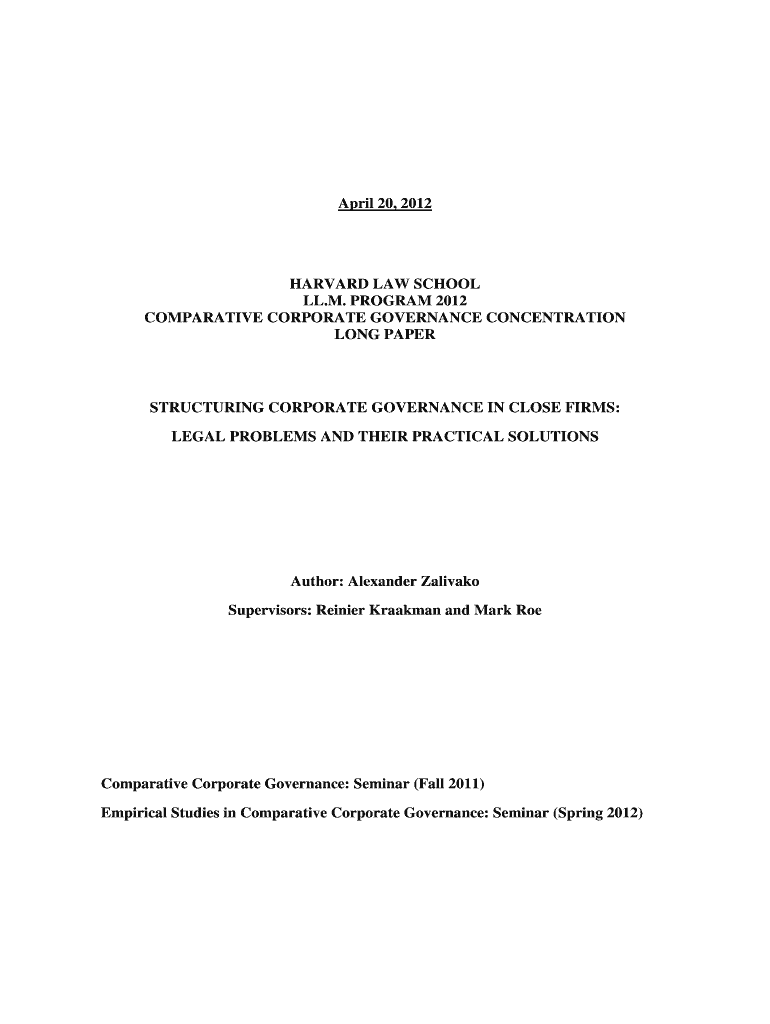







Definition and Meaning of Comparative Corporate Governance Concentration
The term "Comparative Corporate Governance Concentration" refers to the study and evaluation of corporate governance systems across different jurisdictions with a focus on understanding the variations in ownership structures, legal frameworks, and management practices. This concentration is particularly relevant for close firms, which are businesses with a restricted number of shareholders. Such firms require tailored governance strategies that differ significantly from those used in large public corporations.
Corporate governance involves the rules, practices, and processes by which a company is directed and controlled. The "comparative" aspect entails analyzing different governance models to identify strengths, weaknesses, and best practices that can be adapted to improve oversight and performance in varying corporate environments. Traditional governance structures may not address the unique needs of close firms, making a comparative approach crucial for understanding how different frameworks can protect minority investors and facilitate decision-making.
Key Elements of the Concentration
The Comparative Corporate Governance Concentration encompasses several key elements, each of which plays a vital role in shaping how governance is implemented within firms:
- Ownership and Control Dynamics: Examines the relationship between shareholders and management, focusing on issues like principal-agent problems and the concentration of voting power.
- Legal Frameworks: Considers how different legal systems influence corporate governance practices, paying specific attention to fiduciary duties, shareholder rights, and dispute resolution mechanisms.
- Management Structures: Evaluates the composition and functioning of boards of directors, including their responsibilities, composition, and independence from management.
- Stock Transferability and Exit Strategies: Looks at mechanisms for stock transfer, buyout provisions, and strategies for shareholder exit, all of which are critical in close firms with restricted liquidity.
- Minority Shareholder Protections: Explores legal tools and governance provisions aimed at safeguarding the interests of minority investors from oppressive actions by majority shareholders.
Importance of the Comparative Governance Concentration
Embracing a comparative approach to corporate governance is important for several reasons:
- Tailored Solutions: It provides insights into crafting bespoke governance structures that address the distinct needs of private firms.
- Risk Management: Helps identify potential governance risks unique to specific jurisdictions or corporate forms, allowing for better risk mitigation strategies.
- Enhanced Decision-Making: Improves the quality of decision-making by introducing practices that have been successful in different regulatory environments, ultimately benefiting the firm's performance and sustainability.
- Protecting Investor Interests: Ensures that all shareholders, especially those in minority positions, have their interests considered, which is vital in promoting trust and stability in close firms.
Legal Use and Compliance
The legal use of the Comparative Corporate Governance Concentration involves adhering to various jurisdiction-specific corporate laws and governance codes. Key legal compliance aspects include:
- Adherence to Fiduciary Duties: Ensuring directors and officers act in the best interest of the company and its shareholders, upholding duties of loyalty and care.
- Compliance with Shareholder Agreements: Maintaining transparency and adherence to any contractual obligations outlined in shareholder agreements.
- Regulatory Compliance: Meeting the requirements set by financial regulatory bodies within the jurisdiction, which can vary significantly, affecting how governance rules are implemented.
By implementing a comparative governance concentration, firms can align their governance practices with legal mandates, thus avoiding legal disputes and potential penalties. This alignment is crucial in maintaining the organization's credibility and operational integrity.
Steps to Analyze Comparative Corporate Governance
Analyzing comparative corporate governance involves a series of methodical steps:
- Identify the Jurisdictions for Comparison: Choose relevant countries or regions with differing corporate governance systems for in-depth analysis.
- Examine Ownership Structures: Study the ownership layouts of companies in these jurisdictions, focusing on shareholder composition and control.
- Analyze Legal and Regulatory Frameworks: Review the corporate laws and governance codes applicable in each area to understand mandatory governance practices.
- Evaluate Board Structures: Assess how boards are composed, including processes for board appointments and the separation of CEO and chairman roles.
- Review Minority Protections: Consider the safeguards in place for minority shareholders, such as preemptive rights and rights to call meetings.
- Document Insights and Recommendations: Compile findings into actionable recommendations that can be adapted to enhance the governance framework of the target firm.
This structured analysis allows firms to benchmark their practices against international standards and implement changes that align with global best practices.
Benefits for Various Business Types
Different business categories can reap substantial benefits from a focus on comparative corporate governance:
- LLCs and Close Corporations: These entities often have more concentrated ownership, making tailored governance strategies vital for balancing interests and ensuring efficient operations.
- Family Businesses: The need for succession planning and conflict resolution between family members can be better managed with insights from diverse governance models.
- Startups and Entrepreneurial Ventures: Quickly changing environments in startups necessitate flexible governance systems that can evolve from international learnings.
By leveraging the knowledge gained from comparative studies, these business types can create more robust governance structures that support their specific operational needs.
Who Typically Uses the Comparative Corporate Governance Concentration
The comparative governance concentration is primarily utilized by:
- Corporate Lawyers and Advisors: Professionals aiding firms in designing and implementing effective governance structures.
- Business Academics and Researchers: Individuals examining the efficacy and impact of governance practices across different jurisdictions.
- Regulatory Bodies: Organizations setting standards and guidelines for corporate governance that reflect international best practices.
These users apply their understanding of comparative governance to advise, research, and regulate business adherence to both local and international governance standards.


Real-World Application and Examples
Examples of successful application of comparative corporate governance practices include:
- Cross-Border Mergers: Companies undertaking mergers across countries often employ comparative studies to develop governance frameworks that accommodate diverse shareholder groups and regulatory environments.
- Multinational Corporations: Firms with international operations rely on comparative governance insights to ensure that their subsidiaries comply with local norms while maintaining coherent overall governance.
- Private Equity Firms: These firms use comparative analysis to assess governance risks and opportunities within their portfolio companies, especially those with international operations.
Using comparative corporate governance, these entities enhance their ability to navigate complexities and potential pitfalls in varying governance landscapes.
Challenges and Considerations
While comparative corporate governance offers valuable insights, there are challenges and considerations to keep in mind:
- Cultural Differences: Governance approaches may be influenced by local cultural and socio-economic factors, which might not translate seamlessly to other contexts.
- Regulatory Complexity: Different jurisdictions have unique regulatory environments that can complicate direct comparisons.
- Dynamic Governance Standards: As global corporate governance standards evolve, staying updated on changes to ensure compliance and relevancy is critical.
Despite these challenges, adopting a comparative approach helps firms achieve a well-balanced governance structure, positioning them for sustainable success in a competitive global marketplace.